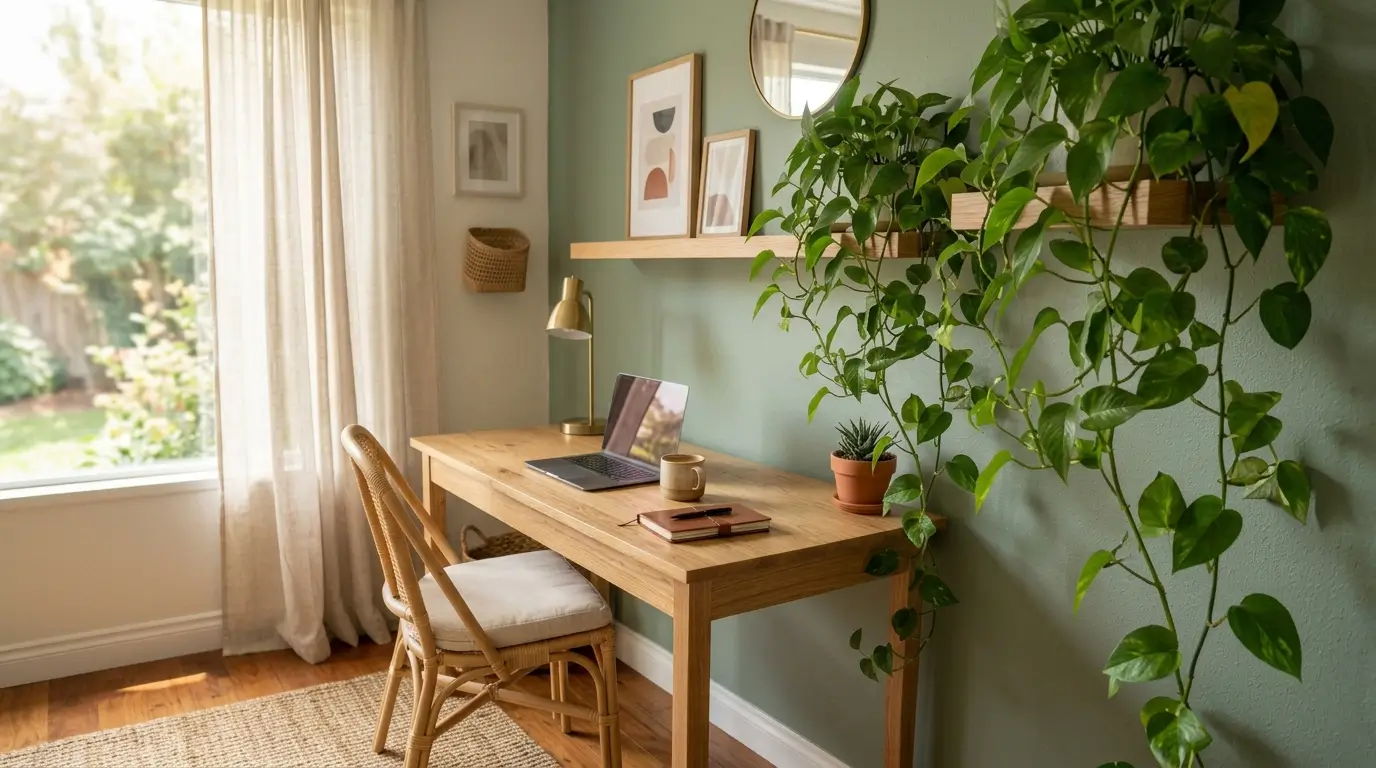
Green and wood might be the easiest color and material combination to get right in a home office. Wood already carries warmth on its own, and green, whether from paint or a real plant, plays off that warmth instead of fighting it the way a cool gray or stark white sometimes can. This pairing also happens to be forgiving. A desk in almost any wood tone tends to look good next to a sage wall or a leafy plant, which makes it a safe, approachable place to start if you are not sure where else to begin decorating a workspace. This list runs through twenty three ideas built around this exact combination, from the desk itself to the small details around it like lighting, storage, and greenery. Some ideas work for a full home office room, others fit a single desk in a shared space, so pick whichever match your actual setup.
1. Solid Oak Desk
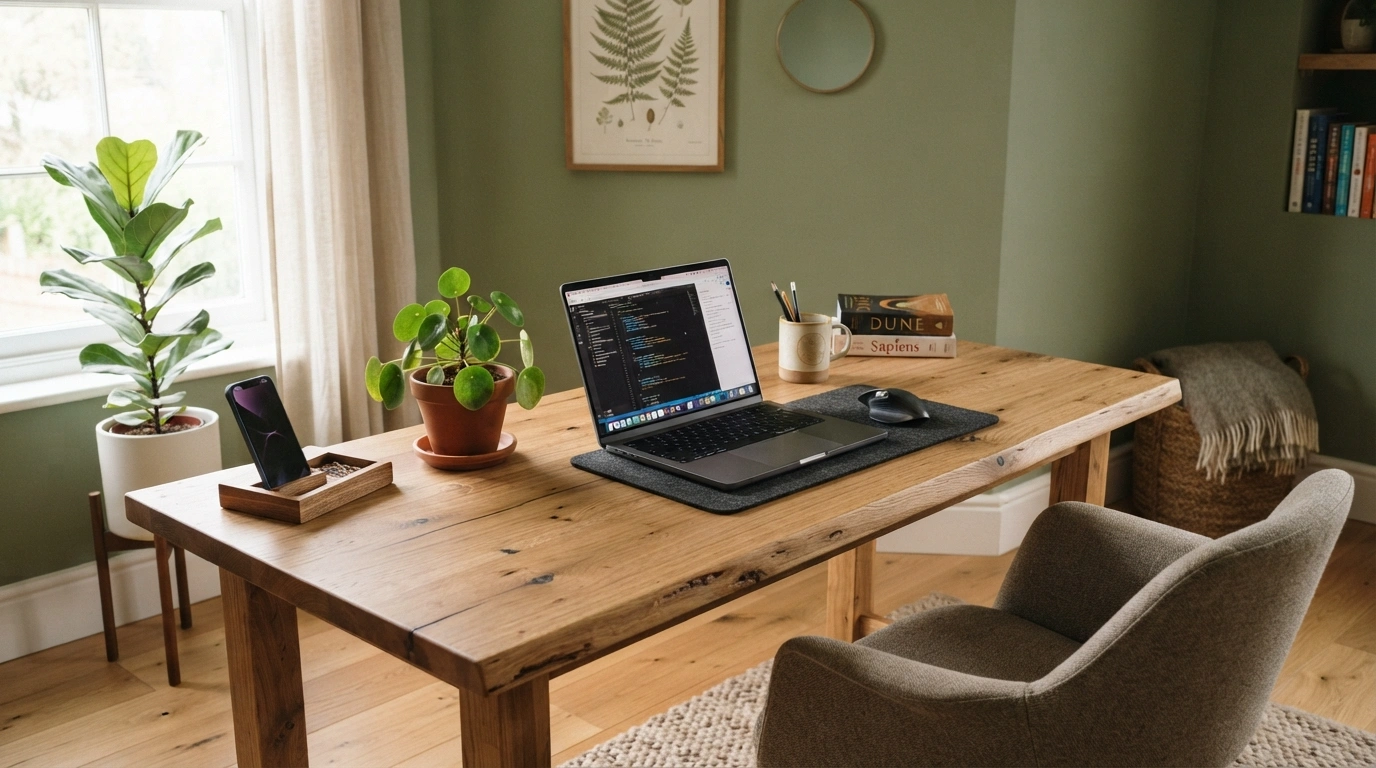
A solid oak desk anchors a home office with warmth and visible natural grain that painted or laminate desks simply cannot copy. Choose a straight leg or slightly tapered design depending on your space, and position it so the wood tone can be seen clearly against the surrounding wall color. Oak pairs especially well with a sage or olive green wall behind it, since the warm undertones in the wood balance the cooler, muted quality of the green. Keep the desk surface itself fairly clear, with just a laptop, a small plant, and one or two accessories, so the wood grain remains the visual star of the setup. Over time, oak develops a slightly deeper patina, which only adds to the sense of warmth and character in the room.
2. Trailing Pothos Shelf
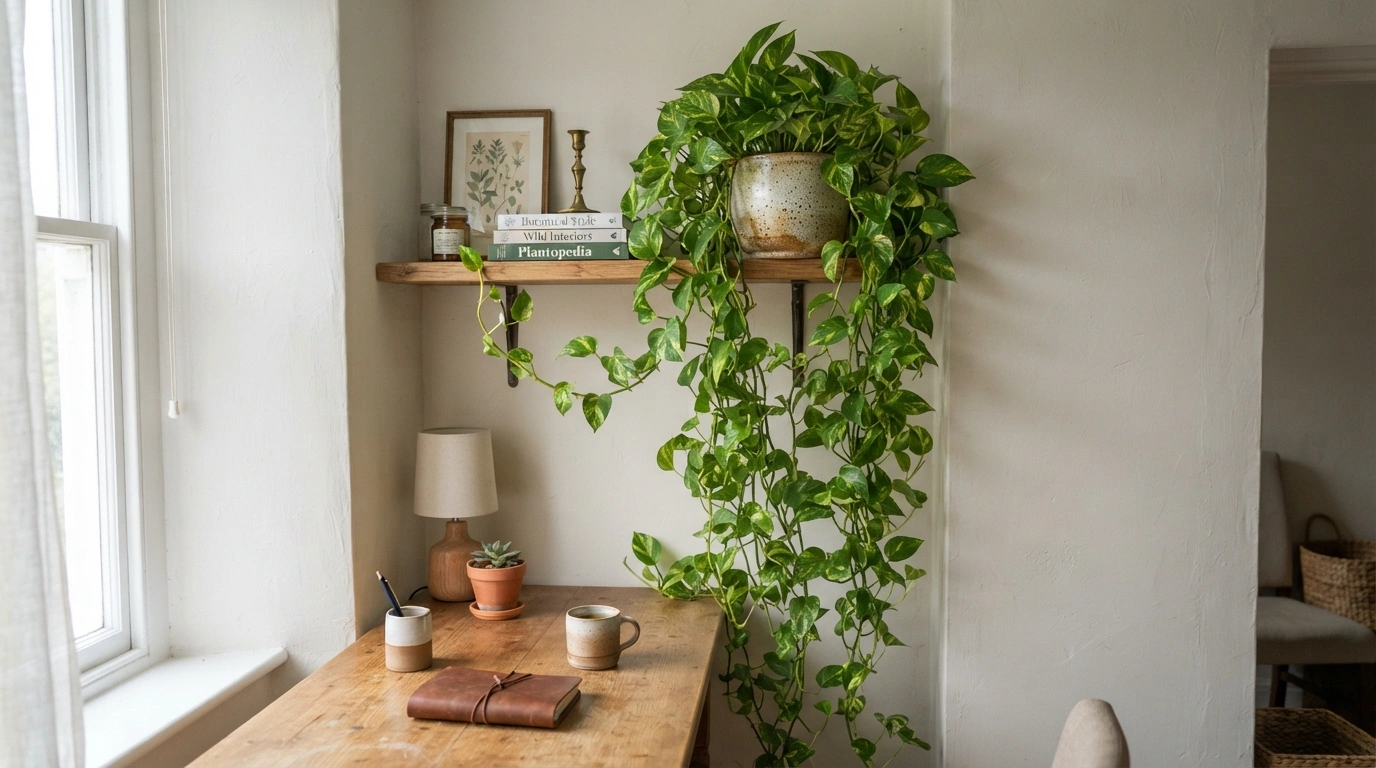
A trailing pothos plant placed on a shelf slightly above the desk lets its vines cascade down naturally, adding a soft, green frame to the edge of your workspace. Choose a simple wood or ceramic pot, and position the shelf high enough that the trailing vines do not interfere with your desk lamp or monitor. Pothos tolerates lower light fairly well, which makes it a practical choice for home offices that do not sit directly next to a window. As the vines grow longer over several months, they add a changing, organic element to the space that a static piece of decor cannot offer. This idea pairs beautifully with a wood desk below, since the green vines and warm wood tone create a natural, layered look without needing any additional accessories.
3. Walnut Floating Desk
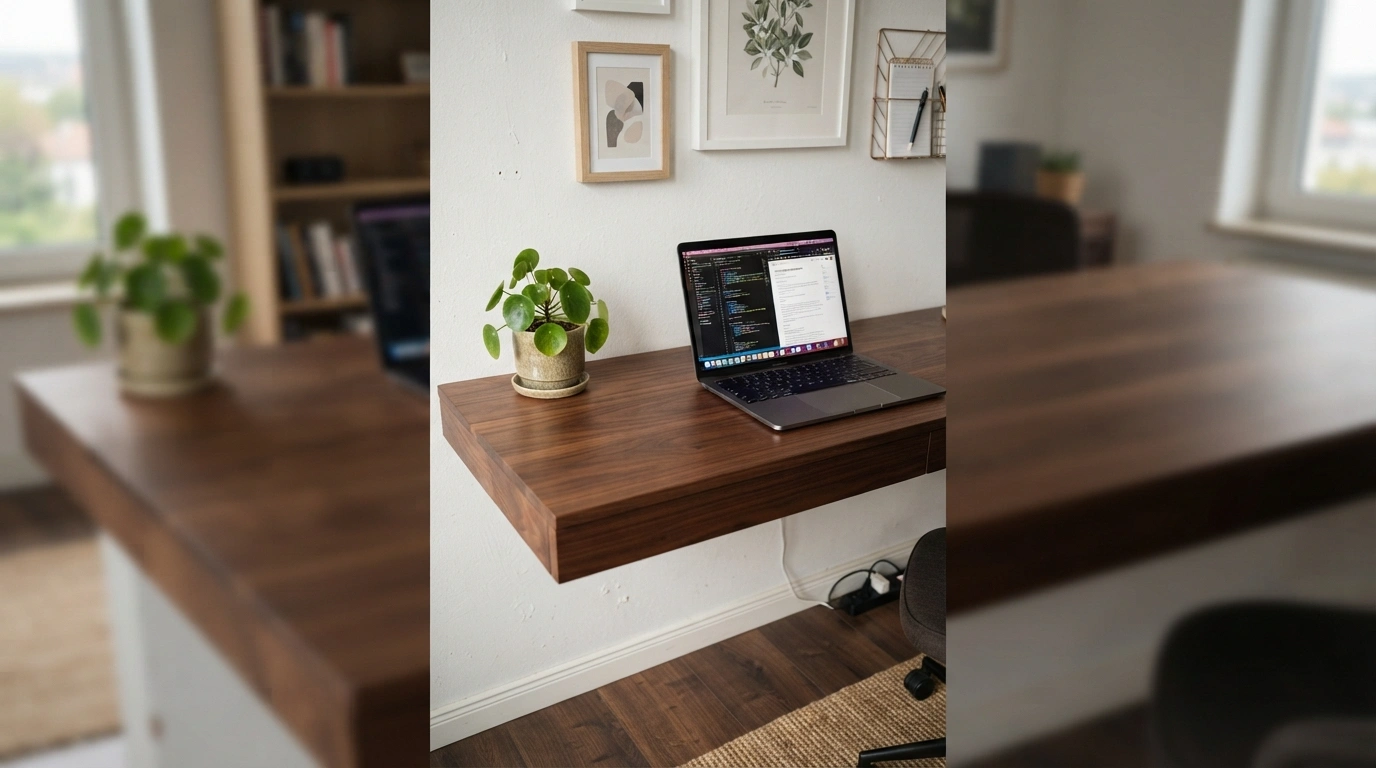
A floating desk in a rich walnut tone mounted directly to the wall saves floor space while still delivering the deep, warm color that walnut is known for. This works especially well in smaller home offices where a freestanding desk with legs would take up more visual and physical space. Because the desk appears to float, the wall beneath it stays visible, which keeps the whole corner feeling lighter even with a darker wood tone. Pair it with a small green plant on one corner and a simple wood or metal shelf above for additional storage. The deep tone of walnut contrasts beautifully against a soft sage or white wall, giving the desk a grounded, intentional presence in the room.
4. Sage Green Accent Wall
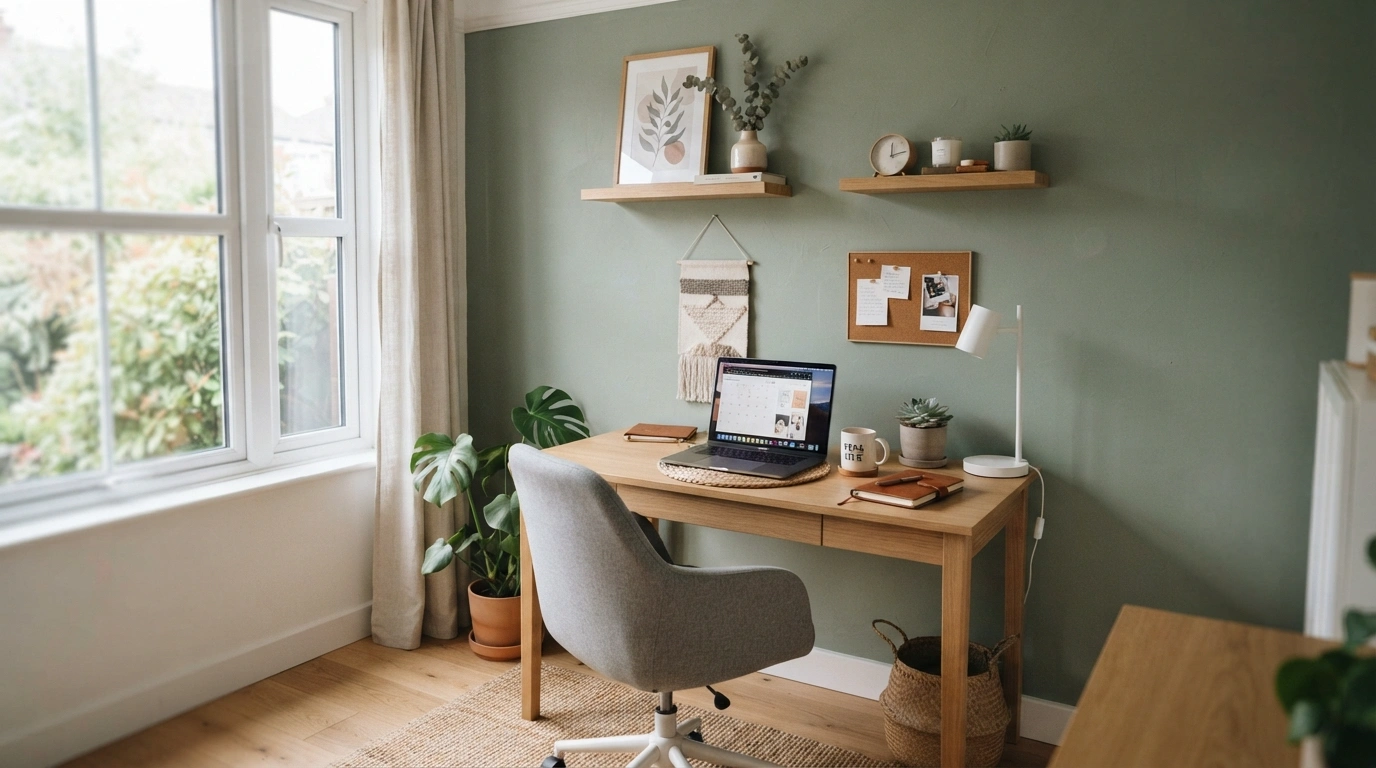
Painting the wall behind your desk in a soft sage green gives the whole workspace a calm, natural backdrop that pairs easily with almost any wood tone. Choose a muted, slightly grayed sage rather than a bright or saturated green, since the softer tone reads as more soothing over long work sessions. This accent wall works particularly well behind a light or medium wood desk, since the contrast between the warm wood and cool green creates a balanced, grounded look. Keep the rest of the room in warm neutrals, like cream or beige, so the sage wall remains the clear focal point rather than competing with other bold colors. This is one of the most effective single changes you can make to bring a green and wood theme into a home office.
5. Rattan Desk Chair
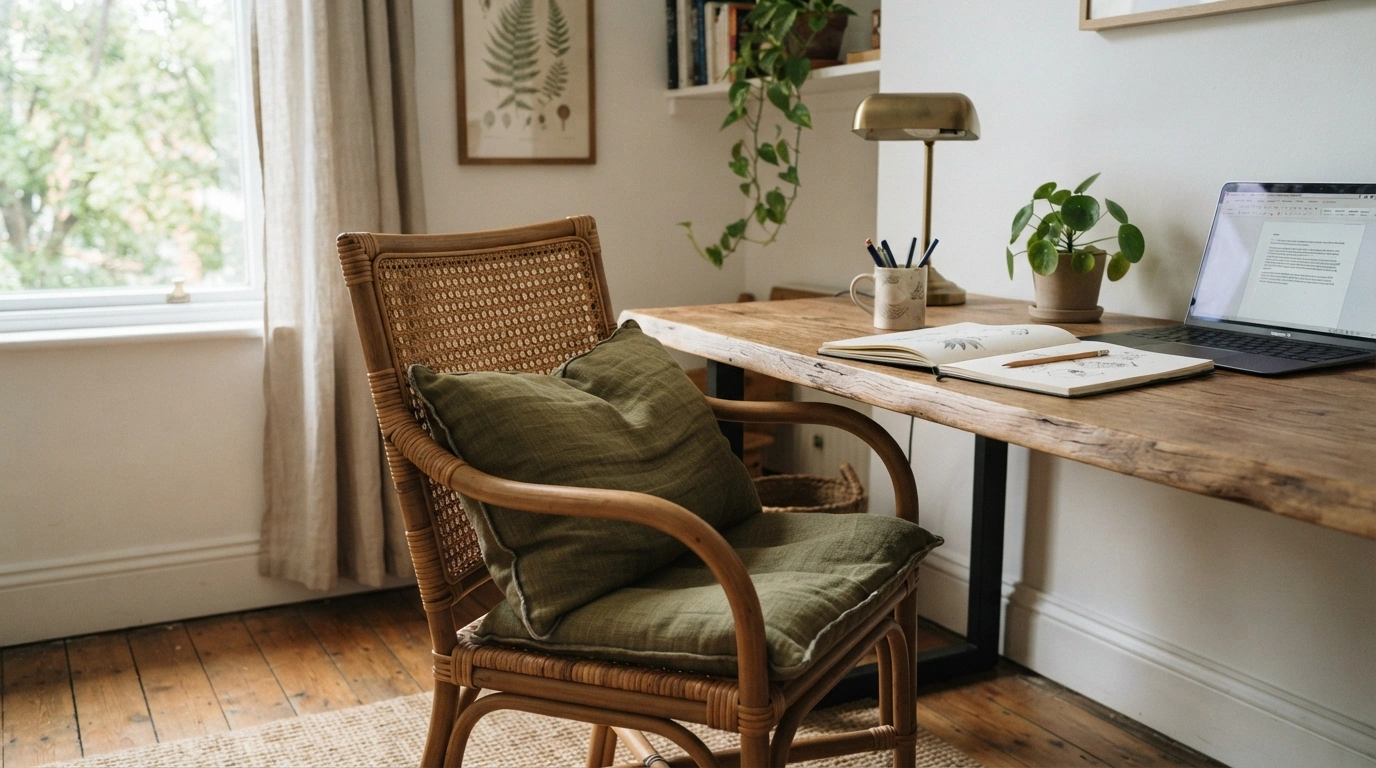
A woven rattan desk chair brings natural texture into the workspace and pairs beautifully with both wood desks and green accents nearby. Choose a chair with a curved back and simple wood or metal legs, adding a cushion in a soft green or neutral fabric for comfort during longer work sessions. The open weave of the rattan lets light pass through slightly, which keeps the chair from feeling visually heavy even in a smaller office corner. This style works especially well positioned against a sage wall or near a leafy plant, since the natural materials all echo each other throughout the space. A rattan chair also tends to suit both traditional desks and floating wall mounted ones, making it a flexible choice for almost any wood desk setup.
6. Wood Ladder Shelf
A leaning wood ladder shelf placed beside or near the desk adds extra storage and display space without requiring any wall mounting. Use the lower shelves for books or supplies and the top shelves for a trailing plant or a small stack of green bound books, letting the natural material and greenery work together. This style suits smaller home offices particularly well, since the angled design takes up very little floor depth compared to a traditional bookshelf. Choose a wood tone that closely matches your desk, whether that is a warm oak or a deeper walnut, so the two pieces feel connected rather than randomly paired. A ladder shelf also gives you room to add greenery at different heights, which creates a more layered, natural look throughout the corner.
7. Fiddle Leaf Fig Corner
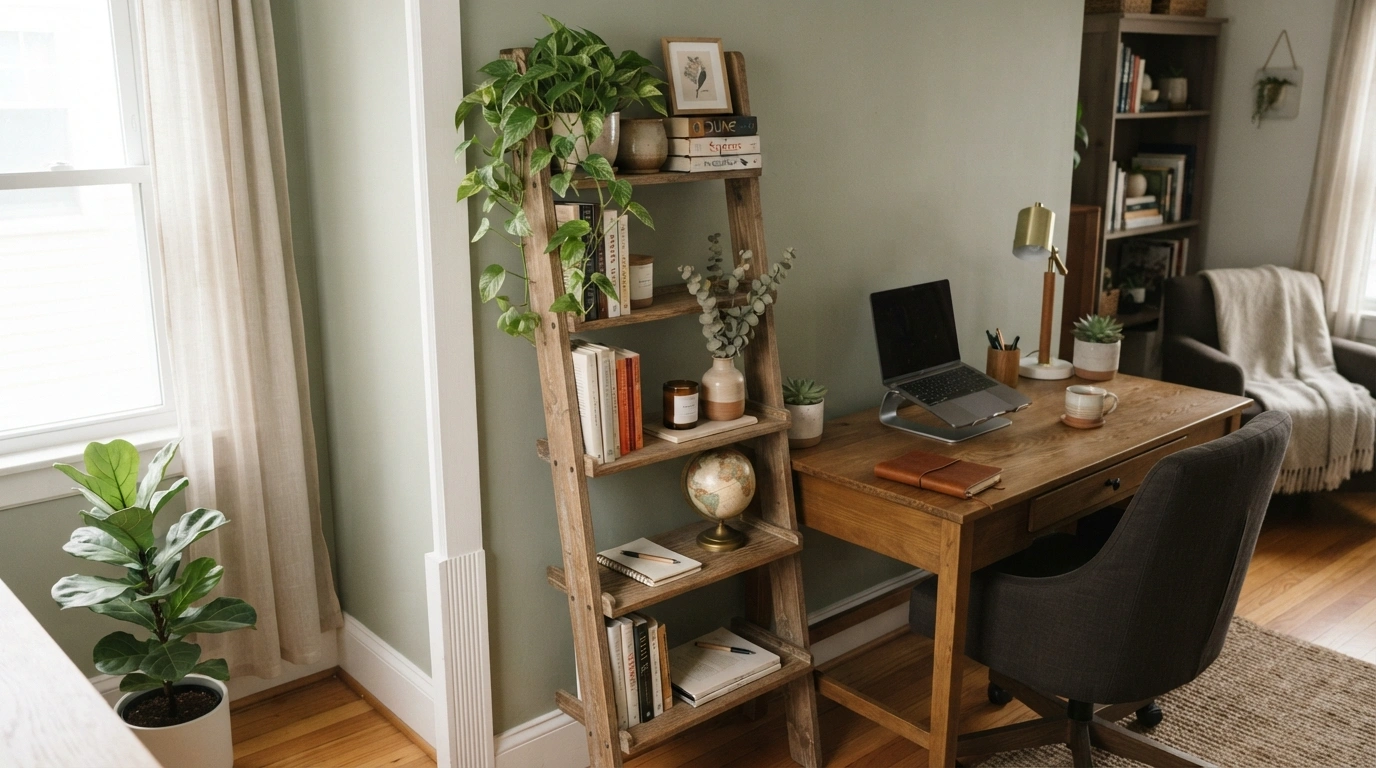
A fiddle leaf fig placed in the corner near your desk adds height and a bold leafy presence that smaller plants cannot match. Choose a simple woven or ceramic planter in a neutral tone, positioning the plant where it can catch bright, indirect light through a nearby window. This plant works especially well in home offices with higher ceilings, since its height draws the eye upward and fills a corner that might otherwise feel empty. Paired with a wood desk nearby, the fig’s green leaves and the desk’s natural grain create a calm, grounded feeling in the room. Rotate the pot slightly every few weeks so the plant grows evenly toward the light instead of leaning heavily in one direction.
8. Green Velvet Chair
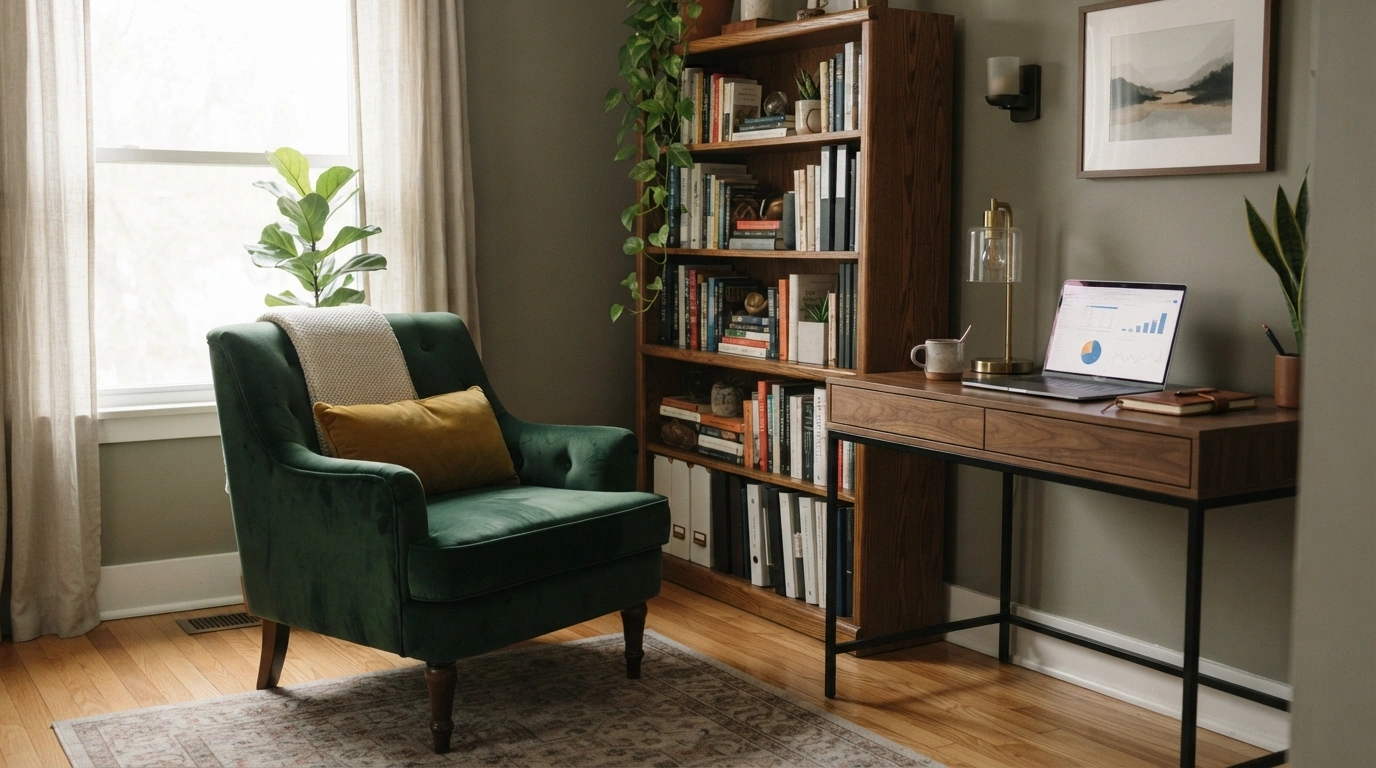
A green velvet accent chair placed near the desk, whether for reading or taking a break from screen time, adds a rich pop of color that pairs beautifully with warm wood furniture. Choose a deep forest or emerald tone for a bold statement, or a softer sage velvet for a more muted, calming look depending on your existing color scheme. Velvet catches light in a way flat cotton upholstery cannot, giving the chair a slightly glowing quality under both natural and lamp light. Position it near a window or beside a wood bookshelf so it becomes a secondary seating spot within the larger office setup. This chair works well even in offices that already have a green wall or plants, since velvet adds texture rather than repeating the same flat color.
9. Reclaimed Wood Desk
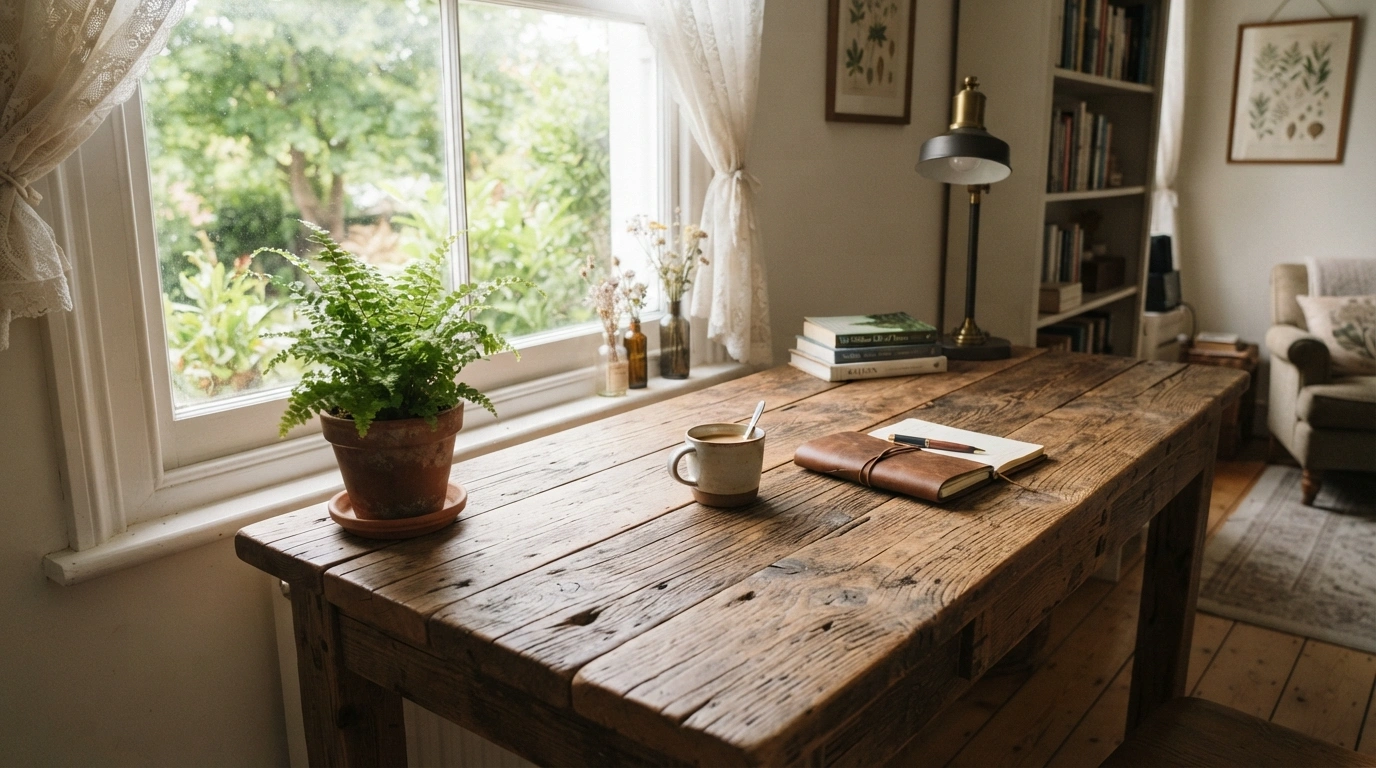
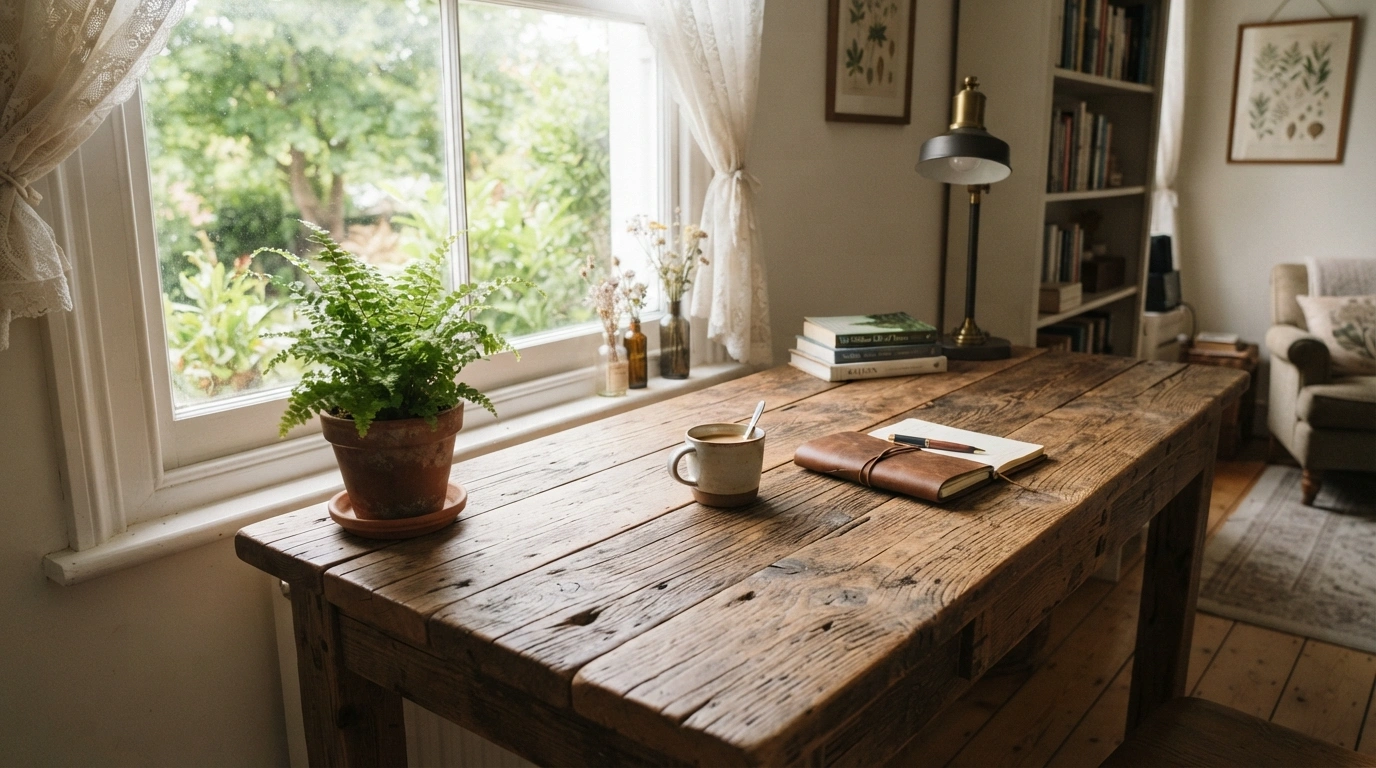
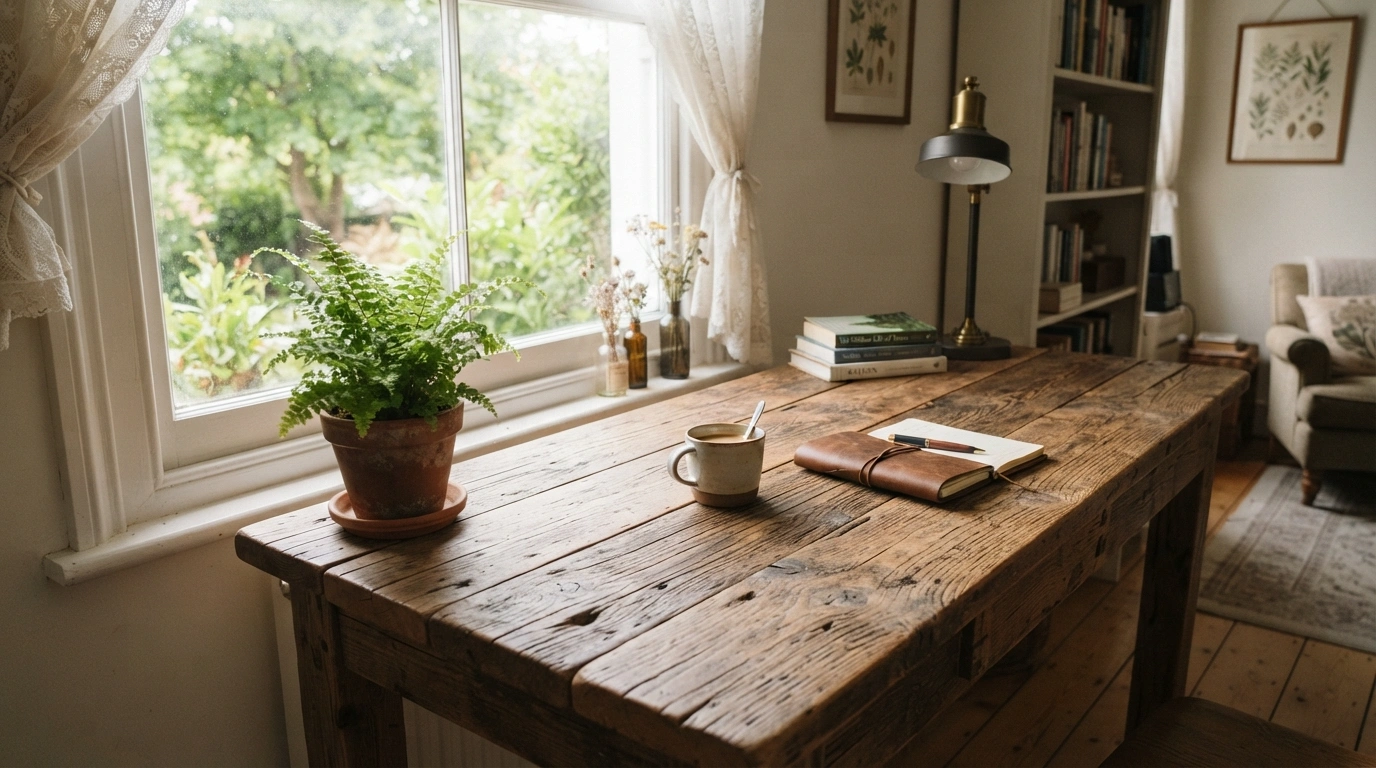
A desk built from reclaimed wood brings visible texture, knots, and character that new, uniform wood simply does not have. Choose a desk with visible grain variation and slightly imperfect edges, which adds a sense of history and warmth to the workspace. This style pairs especially well with simple, modern accessories, letting the wood itself remain the most detailed element in the room. Position the desk near a window if possible, so natural light highlights the texture and variation in the wood grain throughout the day. Adding a single green plant nearby, like a small pothos or fern, softens the rustic edge of the reclaimed wood and ties the whole corner together into a cohesive, natural feeling setup.
10. Snake Plant Corner
A tall snake plant placed in a simple pot beside the desk adds strong vertical lines and a sculptural green element that requires very little maintenance. Choose a ceramic or wood textured pot that complements your desk finish, positioning the plant where its height does not block natural light from reaching your actual workspace. Snake plants tolerate lower light and inconsistent watering better than most other options, making them a practical choice for a busy home office. The stiff, upright leaves contrast nicely against the horizontal lines of a wood desk, adding visual variety to the corner. This plant works well even in offices without much natural light, since it remains one of the more forgiving green additions on this entire list.
11. Wood Pegboard Wall
A wood pegboard mounted above the desk gives you flexible, adjustable storage for supplies, tools, or small plants in hanging pots. Choose a natural wood finish that matches your desk tone, and add a mix of hooks, small shelves, and baskets depending on what you actually need to store. This system works particularly well for anyone who likes to rearrange their setup occasionally, since the pegs and hooks can move without leaving permanent holes beyond the board itself. Hang a small trailing plant from one hook and a set of office supplies from another, mixing function and greenery across the same wall feature. This is one of the more customizable ideas on this list, adapting easily as your storage needs change over time.
12. Olive Green Curtains
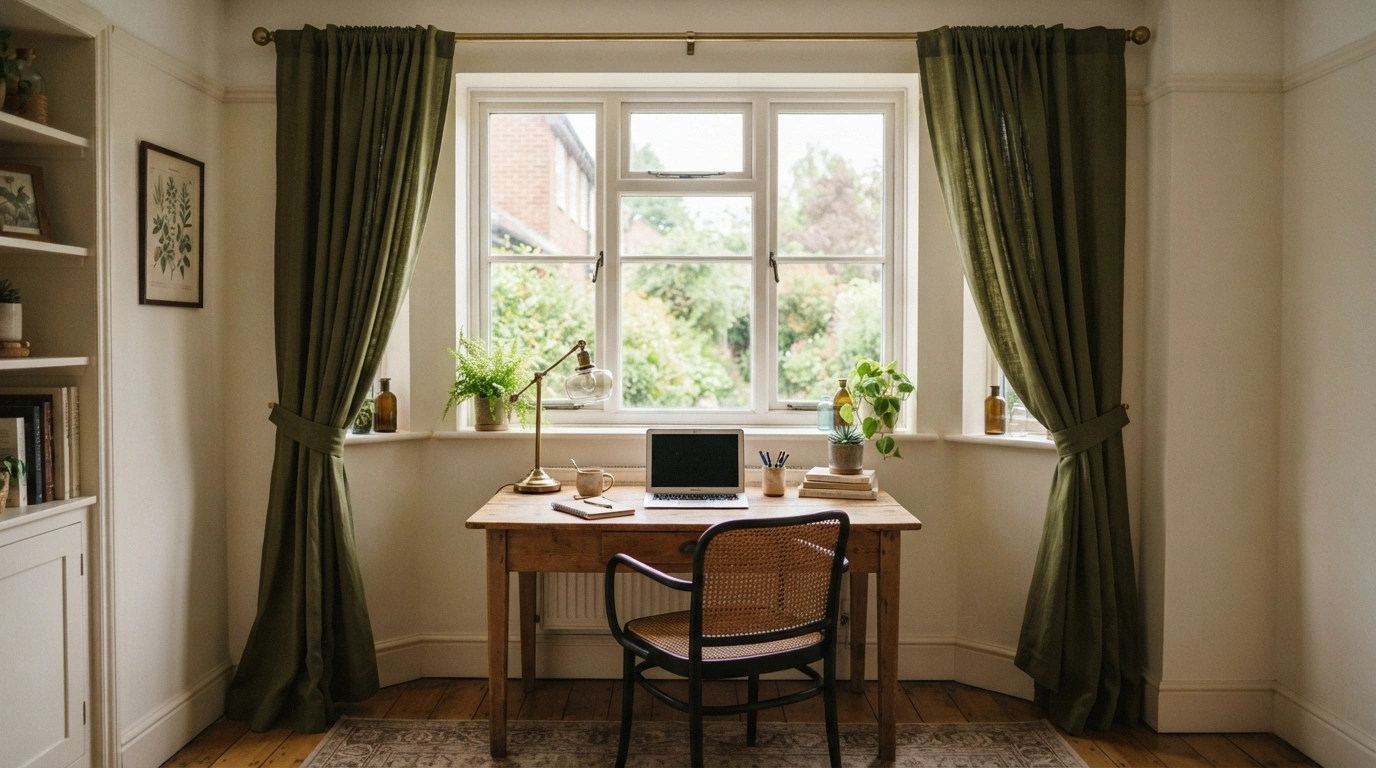
If your desk sits near a window, olive green curtain panels add a soft, natural color to the space without needing to paint an entire wall. Choose a linen or cotton blend fabric in a muted olive tone, hanging the rod slightly wider than the window frame so the curtains appear fuller when open. This works especially well in home offices with a wood desk positioned directly under or near the window, since the green fabric echoes the same natural, grounded feeling as the furniture below it. During work hours, keep the curtains open to let in as much natural light as possible, closing them partially in the afternoon if glare becomes an issue on a screen.
13. Bamboo Desk Organizer
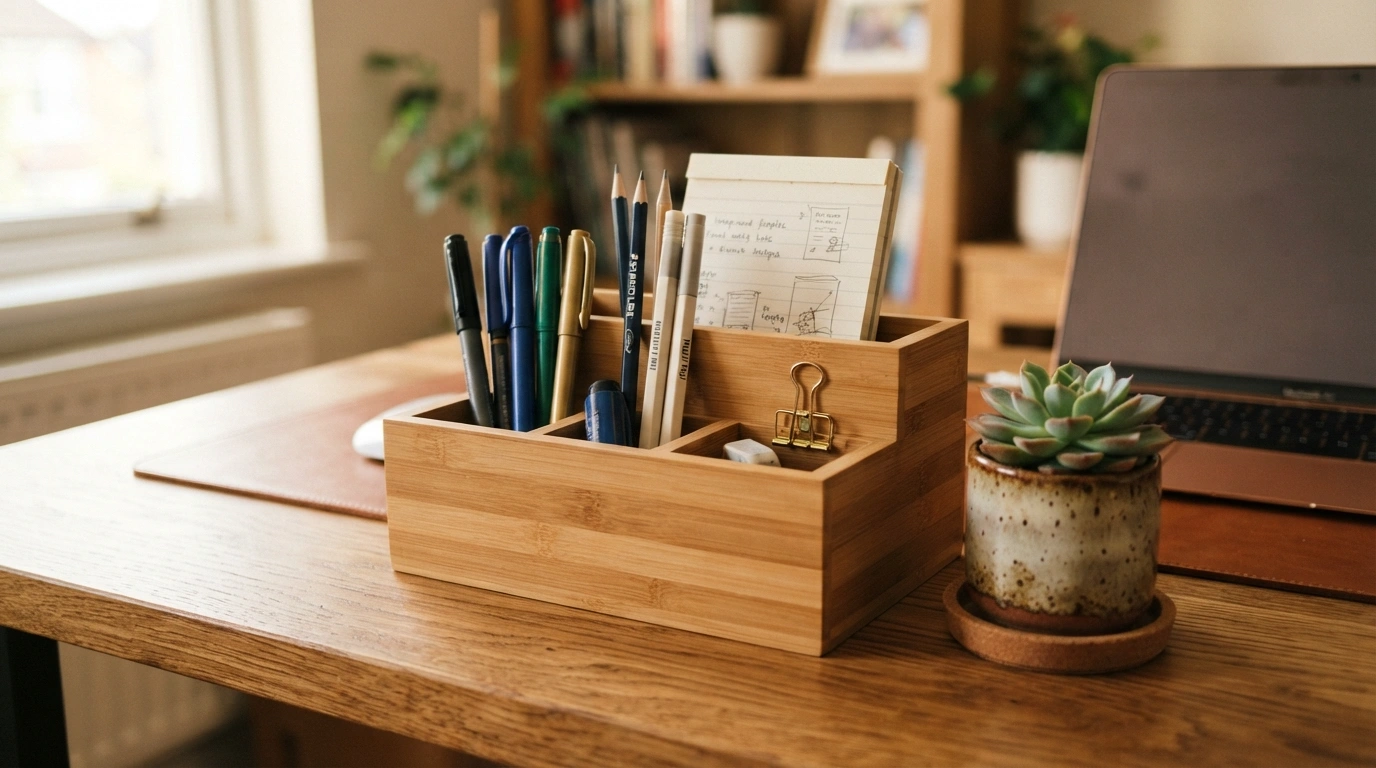
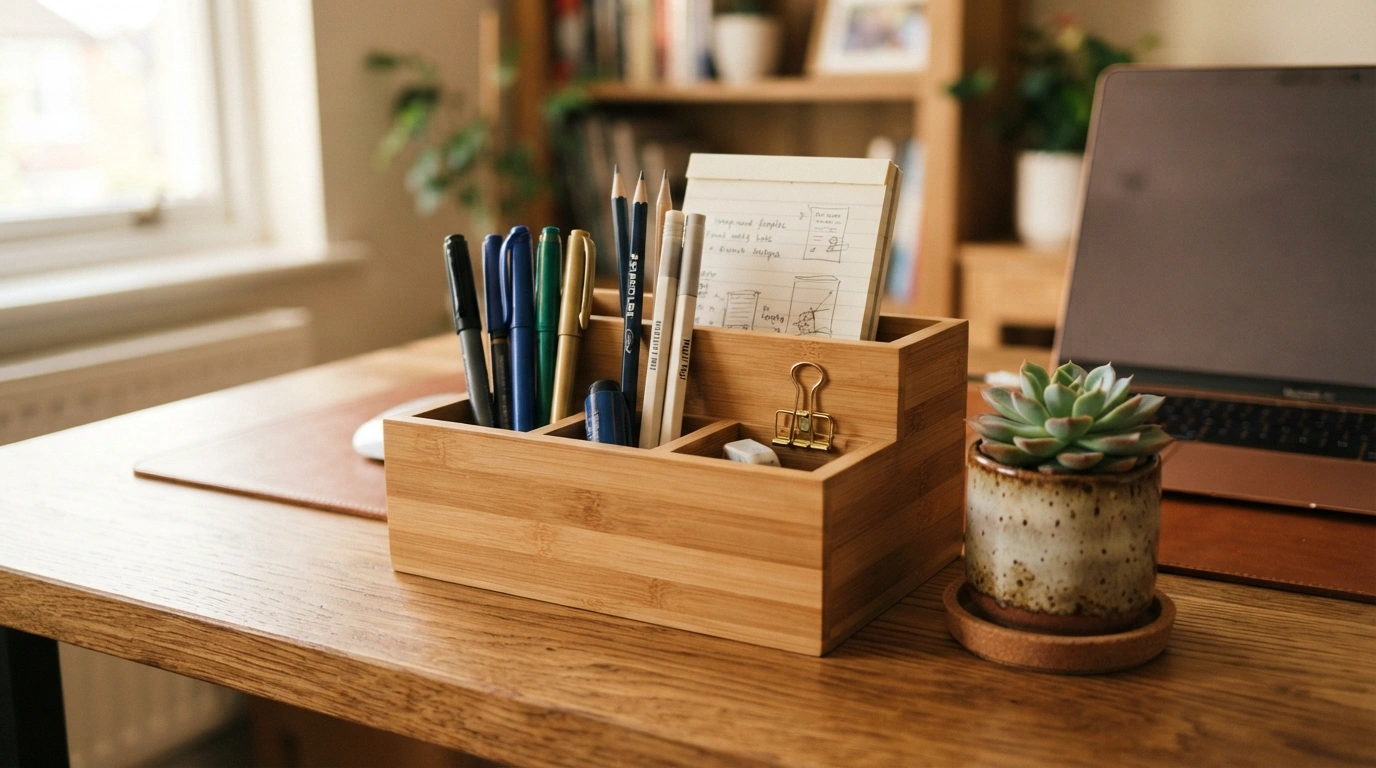
A bamboo desk organizer, holding pens, notepads, and small supplies, adds a natural material accent directly on the work surface itself. Choose a simple, low profile design so it does not take up too much space on a smaller desk, positioning it within easy reach of your dominant hand. Bamboo’s light, warm tone pairs well with almost any wood desk finish, whether lighter oak or a deeper walnut, since the two materials share a similar natural quality. This small addition keeps everyday supplies organized while still contributing to the overall green and wood theme running through the rest of the office. Pair it with a small potted succulent nearby for an extra touch of green in a very compact footprint.
14. Wood Slat Wall
A wood slat accent wall behind the desk adds texture and warmth through vertical wood paneling, giving the office a more finished, intentional backdrop. Choose a light or medium wood tone slat panel, installing it only behind the desk area rather than across the entire room, which keeps the feature focused rather than overwhelming. This style pairs particularly well with a green plant or two placed along the base of the wall, since the vertical lines of the wood and the organic shape of the plant leaves create a nice visual contrast. Slat walls also add a small amount of texture and depth to video calls, giving the background a more considered, high end look compared to a plain painted wall.
15. Hanging Ivy Shelf
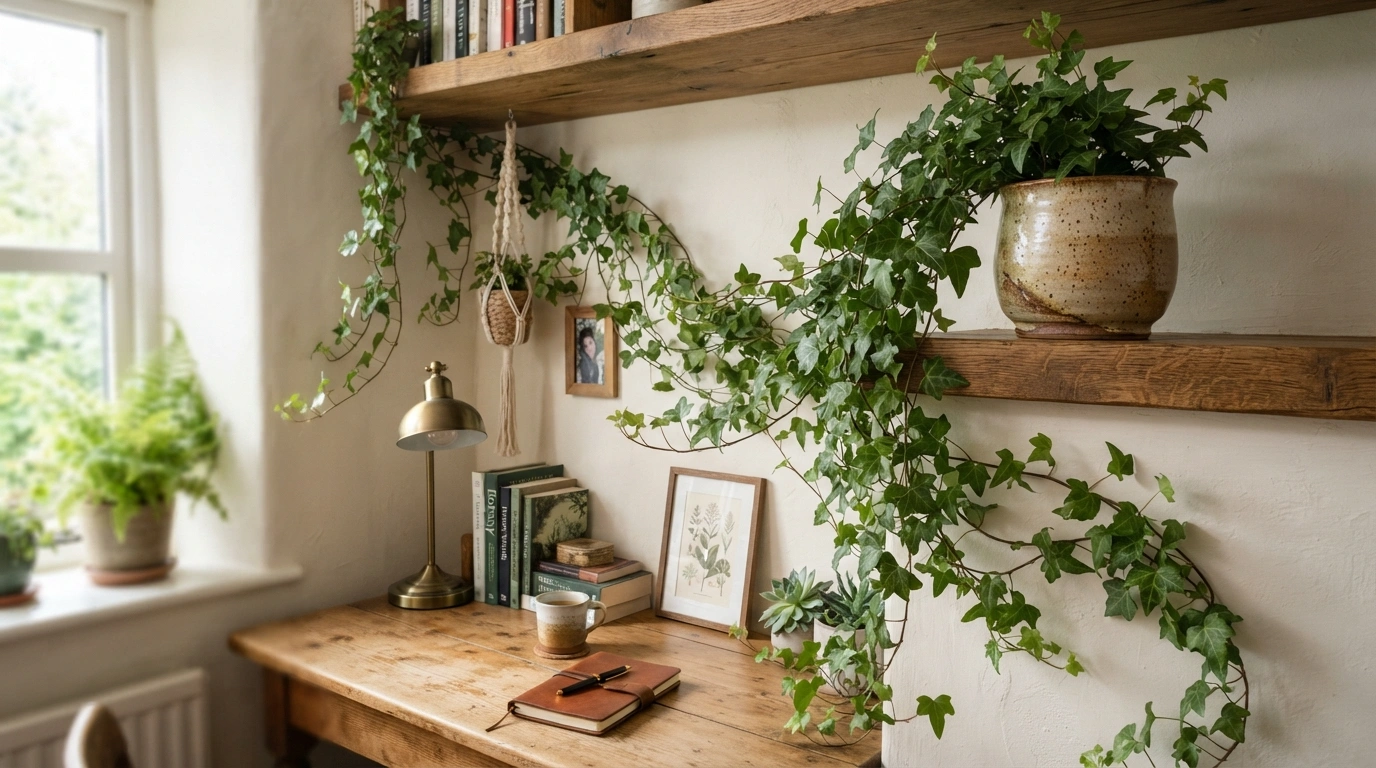
A trailing ivy plant placed on a high shelf lets its vines spill down along the wall, softening the hard edges of a wood desk and shelving setup below. Choose a simple ceramic pot and position the shelf where the ivy can catch bright, indirect light without direct sun exposure, which can scorch the leaves. As the vines grow, gently guide a few strands along the shelf edge or let them hang freely for a more relaxed, natural look. This idea works particularly well above a wood desk, since the green vines draw the eye along the wall and soften what might otherwise be a very straight lined, geometric setup. Trim the vines occasionally to keep the growth full rather than sparse and leggy.
16. Green Ceramic Lamp
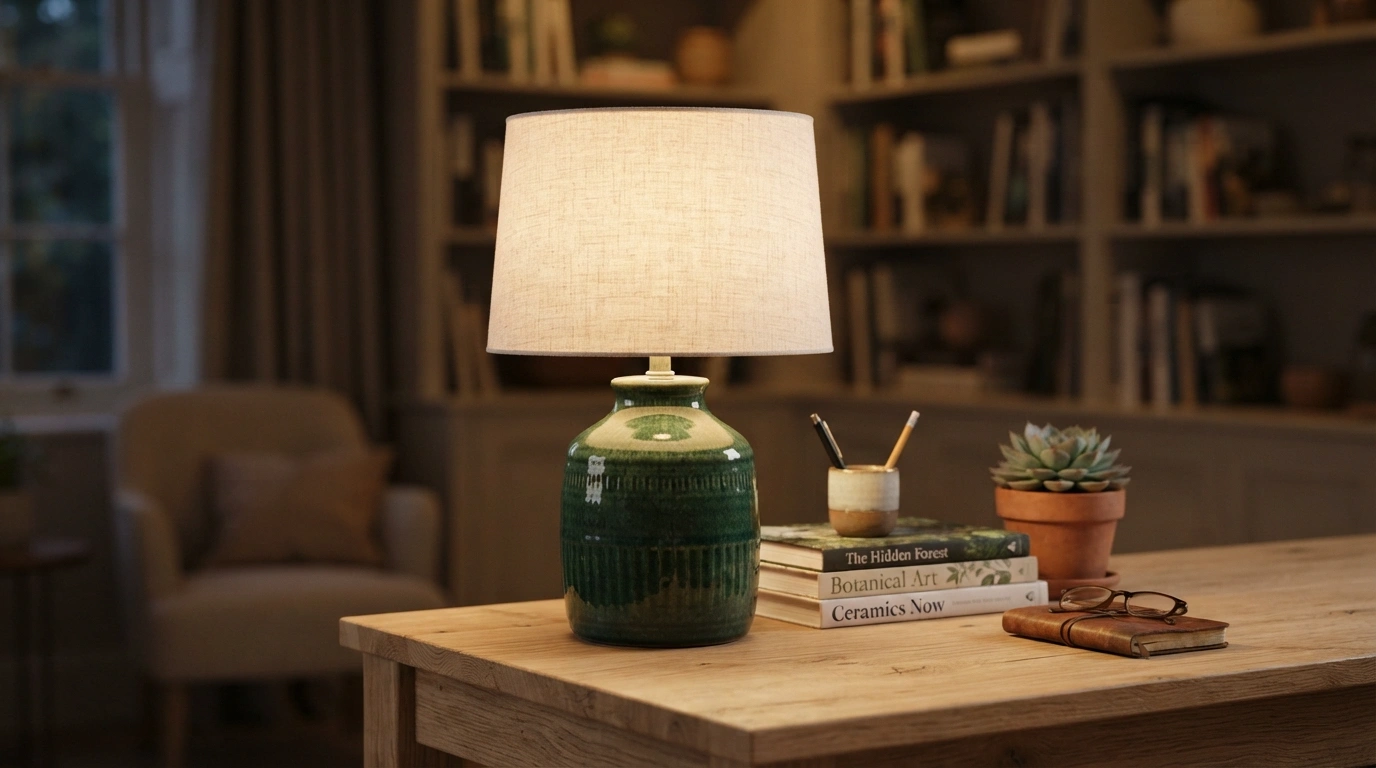
A table lamp with a ceramic base in a deep green glaze adds color and warmth to a desk without needing a plant or curtain to introduce the tone. Choose a lamp with a simple linen or fabric shade in a neutral color, letting the green base stand out as the main visual detail. Position it on the corner of the desk opposite your writing hand, so it lights your work surface without casting a shadow across your notes or keyboard. This piece works particularly well on a lighter wood desk, since the contrast between the pale wood and the deep green ceramic creates a clear, attractive focal point. A lamp like this also adds a warm glow in the evening, extending the cozy, grounded feeling of the desk well past daylight hours.
17. Teak Desk Surface
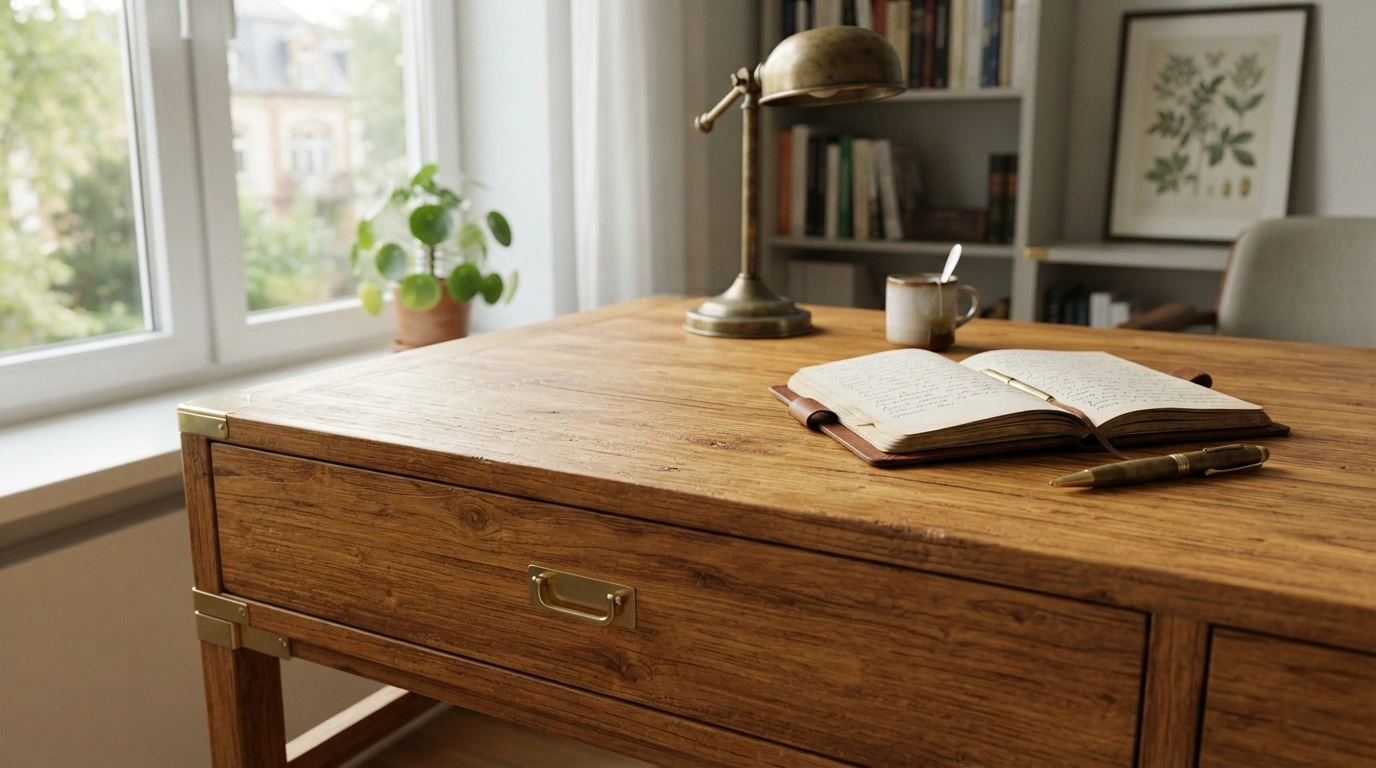
A teak wood desk surface brings a slightly richer, more golden tone than oak or walnut, along with a naturally smooth, tight grain that photographs beautifully in bright light. Position the desk near a window where possible, letting natural daylight highlight the warm tone of the wood throughout the day. Teak pairs especially well with brass hardware and a green accent, whether that is a small potted plant or a sage colored desk accessory nearby. Keep the surrounding decor simple, since the wood tone itself carries much of the visual interest in the room. Over time, teak tends to hold its color well compared to some other wood types, making it a durable choice for a desk that gets daily use.
18. ZZ Plant Display
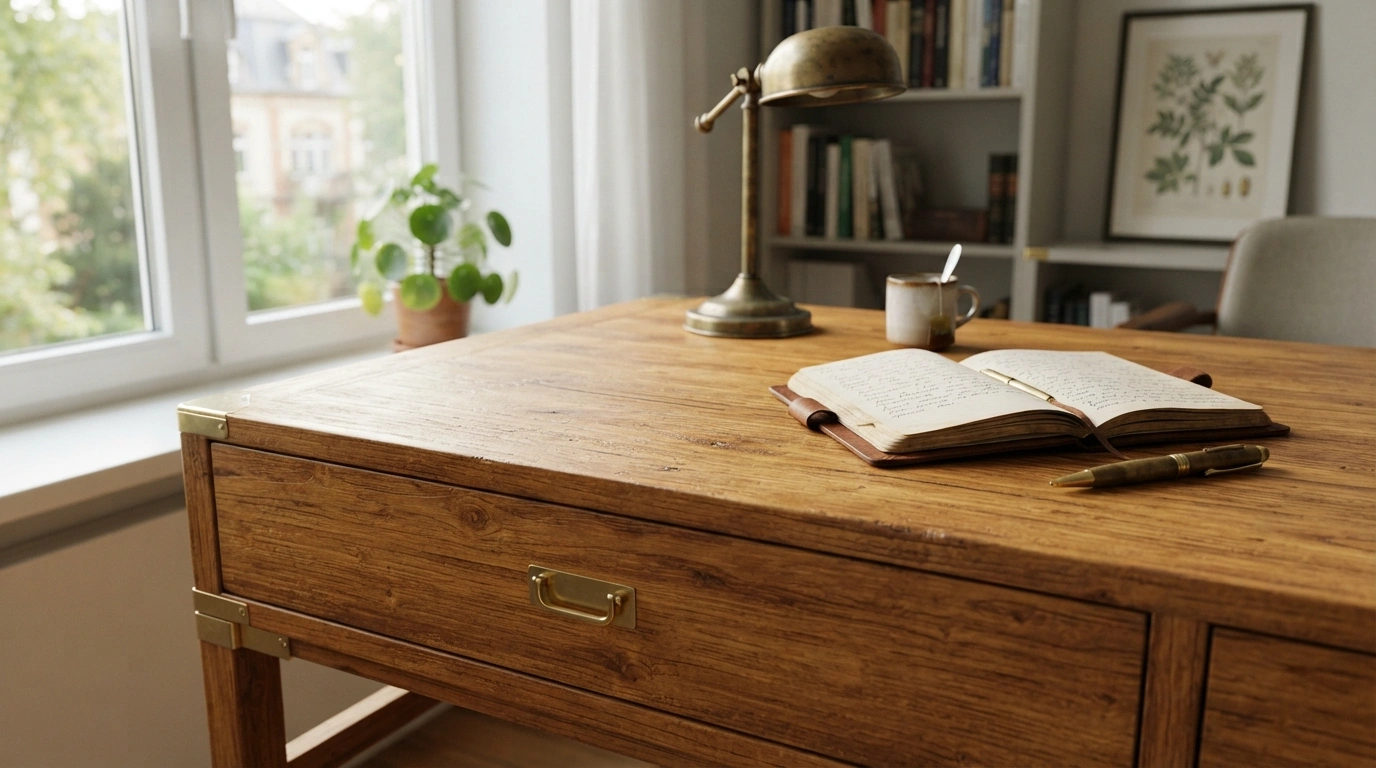
A ZZ plant, with its glossy, dark green leaves, adds a slightly more polished, structured look compared to trailing or leafy plants on this list. Place it in a simple ceramic pot on the floor beside the desk or on a low shelf nearby, positioning it where it can be seen clearly from the main seating area. ZZ plants tolerate low light and irregular watering better than most other options, making them a practical, nearly foolproof choice for a busy home office. The glossy leaves catch light in a way that adds a subtle shine to the corner of the room, contrasting nicely against the matte finish of most wood desks. This plant works especially well in modern, minimal offices where a more structured green shape suits the overall aesthetic better than a wilder, trailing plant.
19. Wood Frame Gallery
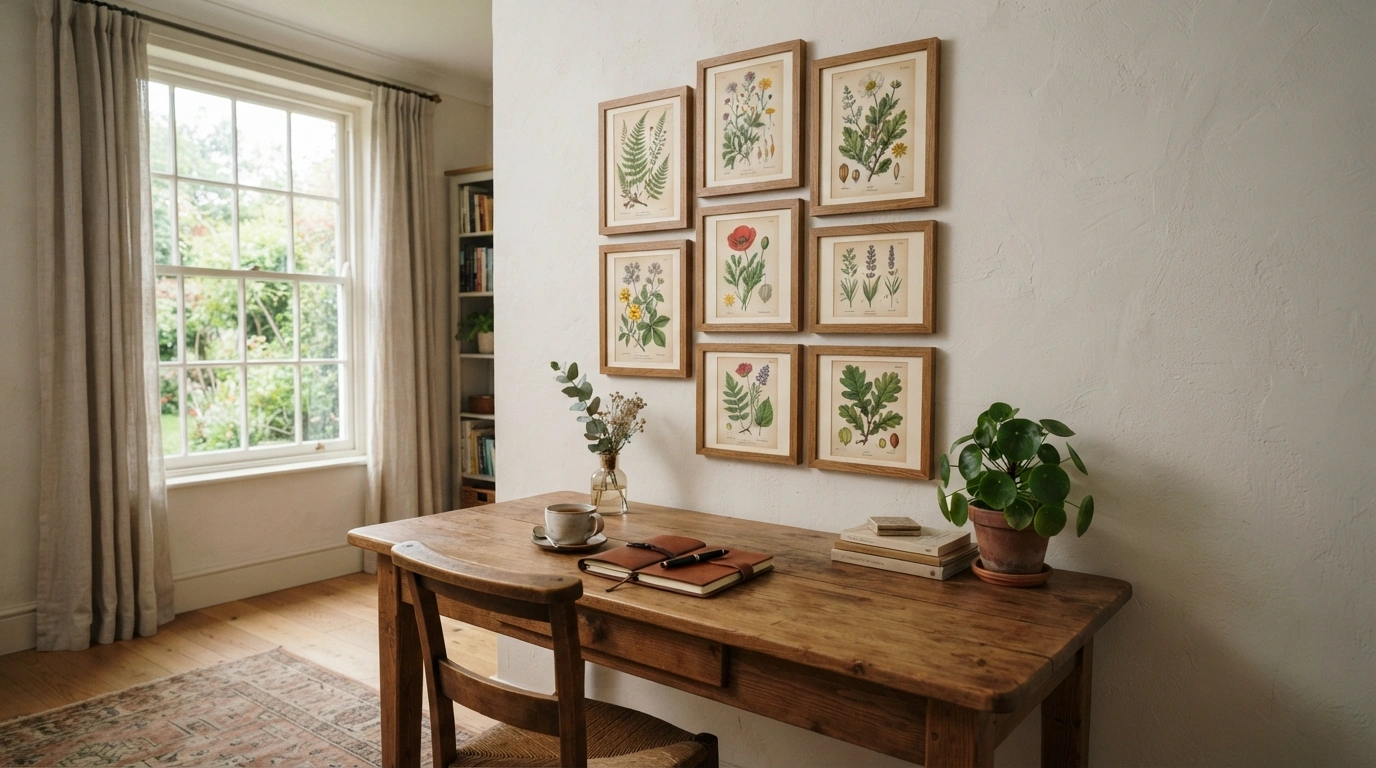
A small gallery wall using simple wood framed art and photos above the desk ties the wood tone of the furniture directly into the wall decor above it. Choose frames in a similar wood finish to your desk, mixing in one or two pieces of botanical art featuring green leaves or plants to echo the rest of the room’s theme. Keep the arrangement fairly tight and close together, rather than spread widely across the wall, so it reads as one cohesive grouping when viewed from the desk chair. This detail is a simple way to reinforce the green and wood theme through the artwork itself, rather than relying only on furniture and real plants to carry the color scheme.
20. Sage Storage Baskets
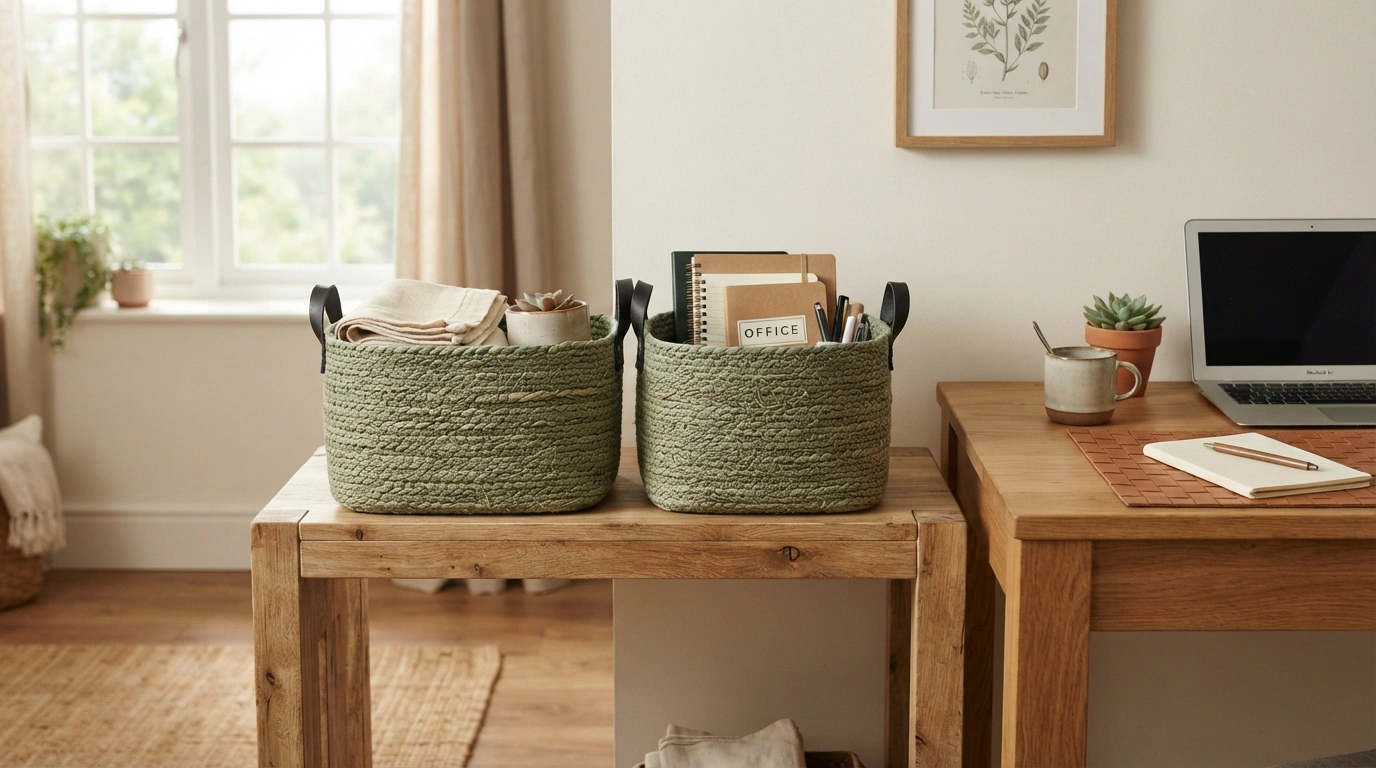
Woven storage baskets in a soft sage tone, or natural baskets styled near sage accents, add both function and color to the shelves or floor around a home office desk. Use them to store files, cords, or extra office supplies, choosing a size that fits comfortably on an open shelf or tucked under the desk itself. The combination of woven texture and soft green tone works particularly well against a wood desk, since both materials share a natural, grounded quality. Group two or three baskets of slightly different sizes together for a more layered, intentional look rather than lining up identical ones in a row. This is a practical storage solution that still contributes meaningfully to the overall green and wood color story of the room.
21. Wood Pendant Light
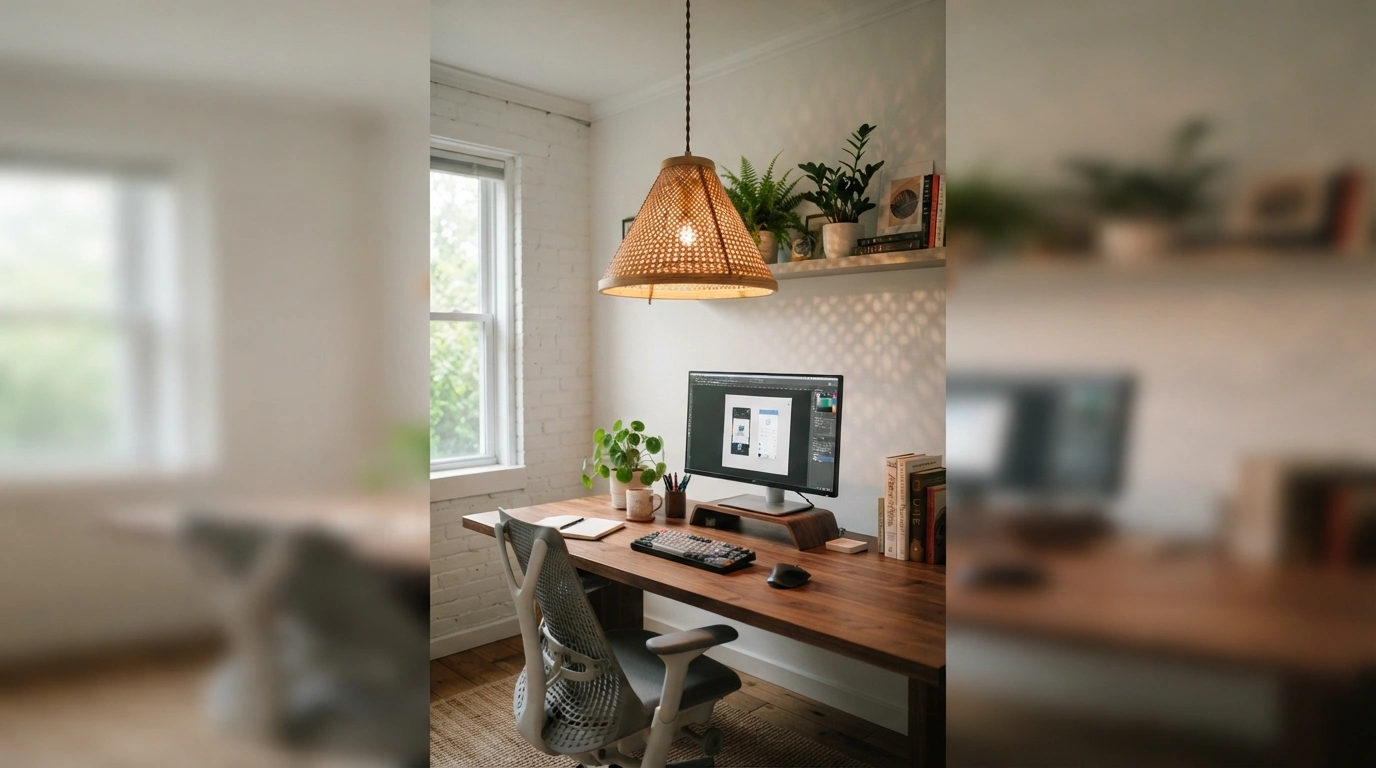
A wood and rattan pendant light hung above the desk adds warmth to the ceiling and casts a soft, dappled glow across the work surface below. Choose a fixture sized appropriately for your ceiling height, positioning it directly above the desk rather than centered in the room, so the light actually falls where you need it most. This style pairs beautifully with a wood desk and a nearby green plant, since the natural materials in the fixture echo the rest of the room’s palette. Combined with a warm white bulb, the pendant creates a cozy, grounded lighting effect that a plain overhead fixture cannot match. This is a particularly good upgrade for home offices with otherwise plain, builder grade lighting fixtures.
22. Herb Garden Windowsill
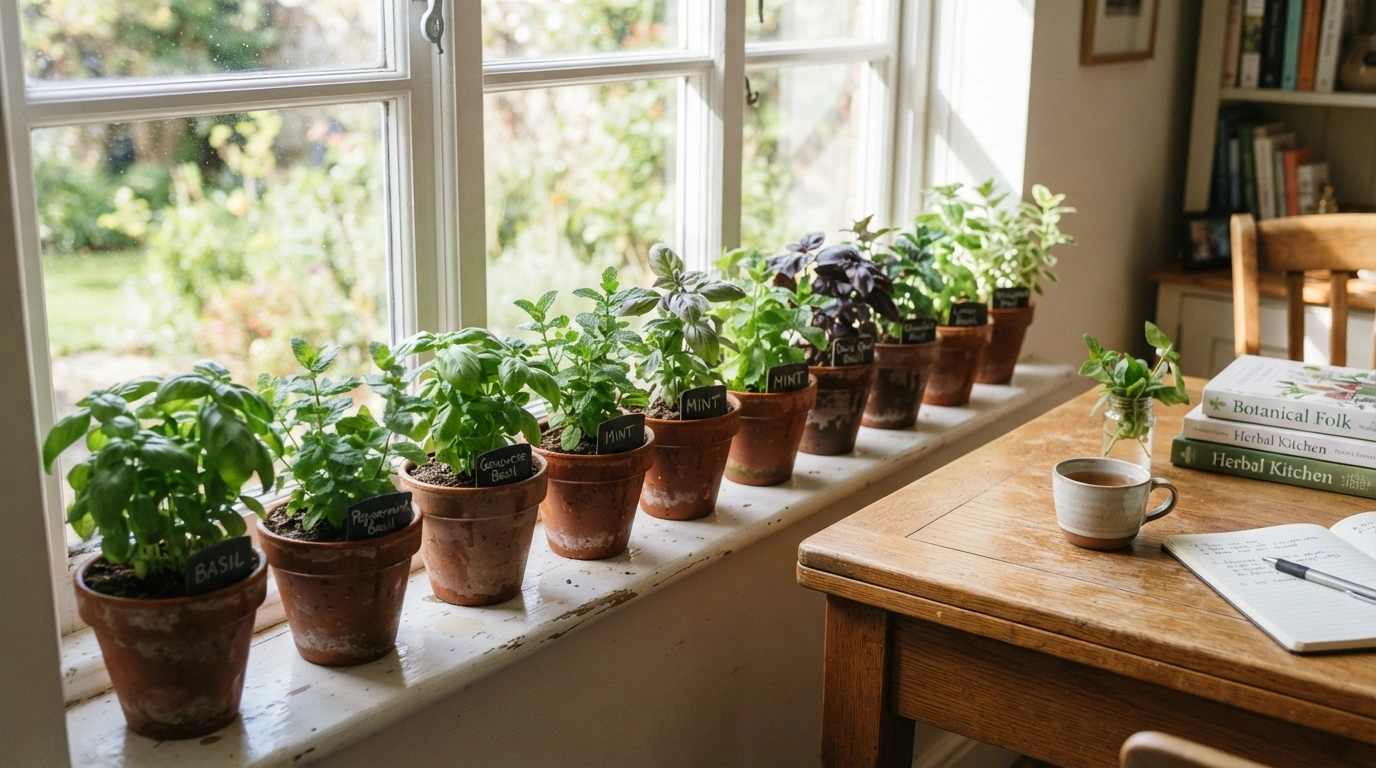
If your desk sits near a kitchen or a window with good light, a small herb garden on the sill adds a fresh, living green element right within view of your workspace. Choose simple terracotta or ceramic pots for basil, mint, or thyme, lining them up along the windowsill where they can get consistent sunlight throughout the day. This idea works especially well for anyone who wants greenery without committing to a larger houseplant, since herbs stay compact and can be trimmed regularly. The mix of green leaves against a wood windowsill or nearby wood desk creates a fresh, natural focal point that also happens to be useful for cooking. Water them on a simple weekly schedule to keep the display looking full and healthy.
23. Green Book Stack Styling
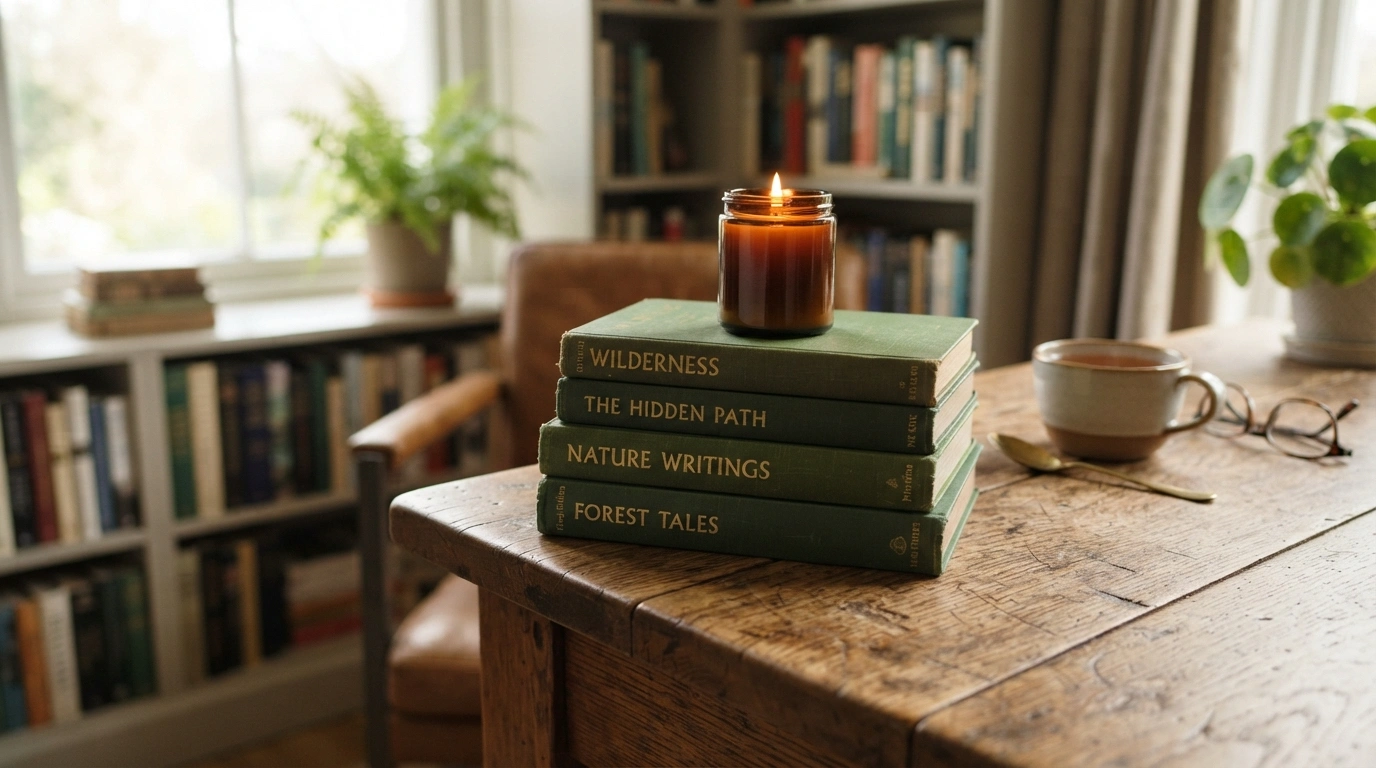
A small stack of books with green or botanical themed covers, placed on a corner of the desk or a nearby shelf, adds color and personality without needing a plant or paint at all. Choose three or four books in varying heights, stacking them slightly offset rather than in a perfectly straight pile, and top the stack with a small object like a candle or a smooth stone. This detail works especially well on a wood desk with limited space for a full plant setup, since it introduces green tones through the book spines themselves. Rotate the books occasionally based on what you are currently reading, keeping the styling both functional and visually connected to the rest of the green and wood theme running through the office.
Frequently Asked Questions
Why do green and wood work well together in a home office?
Wood already carries natural warmth, and green, whether from paint or plants, complements that warmth instead of competing with it. The pairing tends to feel calm and grounded, which suits a workspace meant for focus.
What wood tone pairs best with a green accent wall?
Lighter tones like oak work well with brighter sage greens, while a deeper walnut or teak pairs nicely with a more muted olive or forest green. The contrast between warm wood and cooler green usually looks balanced either way.
What plants work best for a home office with low light?
Snake plants, ZZ plants, and pothos all tolerate lower light conditions and irregular watering, making them practical choices for offices without much natural sunlight. These options also require very little day to day maintenance.
Do I need a green wall to get this look, or can plants be enough?
Plants alone can absolutely carry the green half of this theme if painting is not an option. A few well placed plants near a wood desk create a similar effect to a painted accent wall, just through living greenery instead.
How many plants should a small home office have?
There is no strict number, but even one or two well placed plants, like a trailing pothos and a snake plant, are usually enough to add a meaningful green presence without overwhelming a small desk area.
Final Thoughts
Green and wood is a pairing that rarely goes wrong in a home office, whether it comes together through a painted wall, a few plants, or simply the desk itself. Start with the piece that matters most to your daily setup, usually the desk or the chair, and layer in greenery and wood toned accessories from there. A workspace built around these two natural elements tends to feel calm and grounded, which makes it easier to actually want to sit down and get to work.

Leave a Reply