My first apartment had a living room the size of a large closet, and for years I thought color was the enemy of small spaces. I was wrong. The right shade of green did more for that room than any amount of white paint ever did. Sage green has this quiet, calming quality that never feels loud, even in a room where you can touch both walls if you stretch your arms out. It pairs with wood, brass, cream, and rattan without any effort, which makes it forgiving for anyone still figuring out their style. If you have been staring at a small living room wondering how to make it feel less like a leftover space and more like a room you actually want to sit in, these ideas are a good place to start.
1. Sage Accent Wall
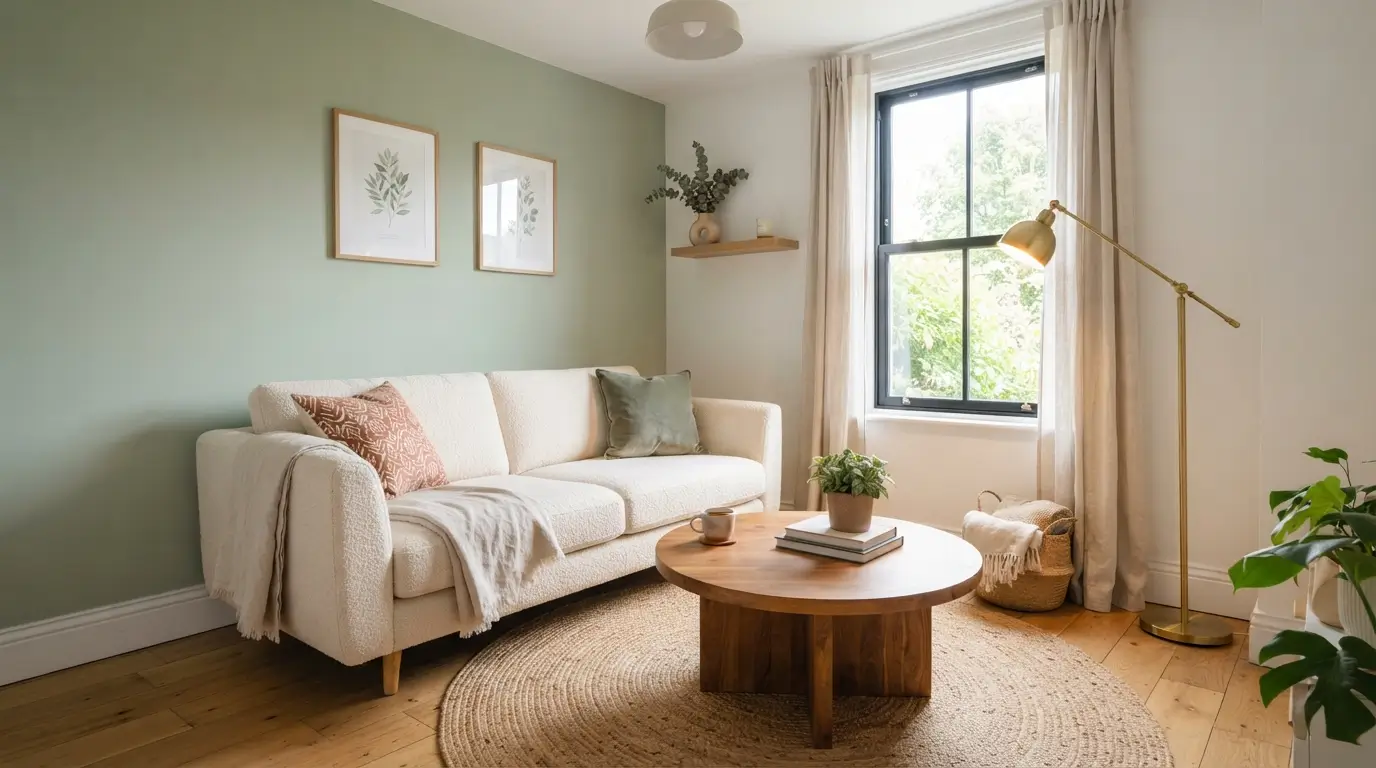
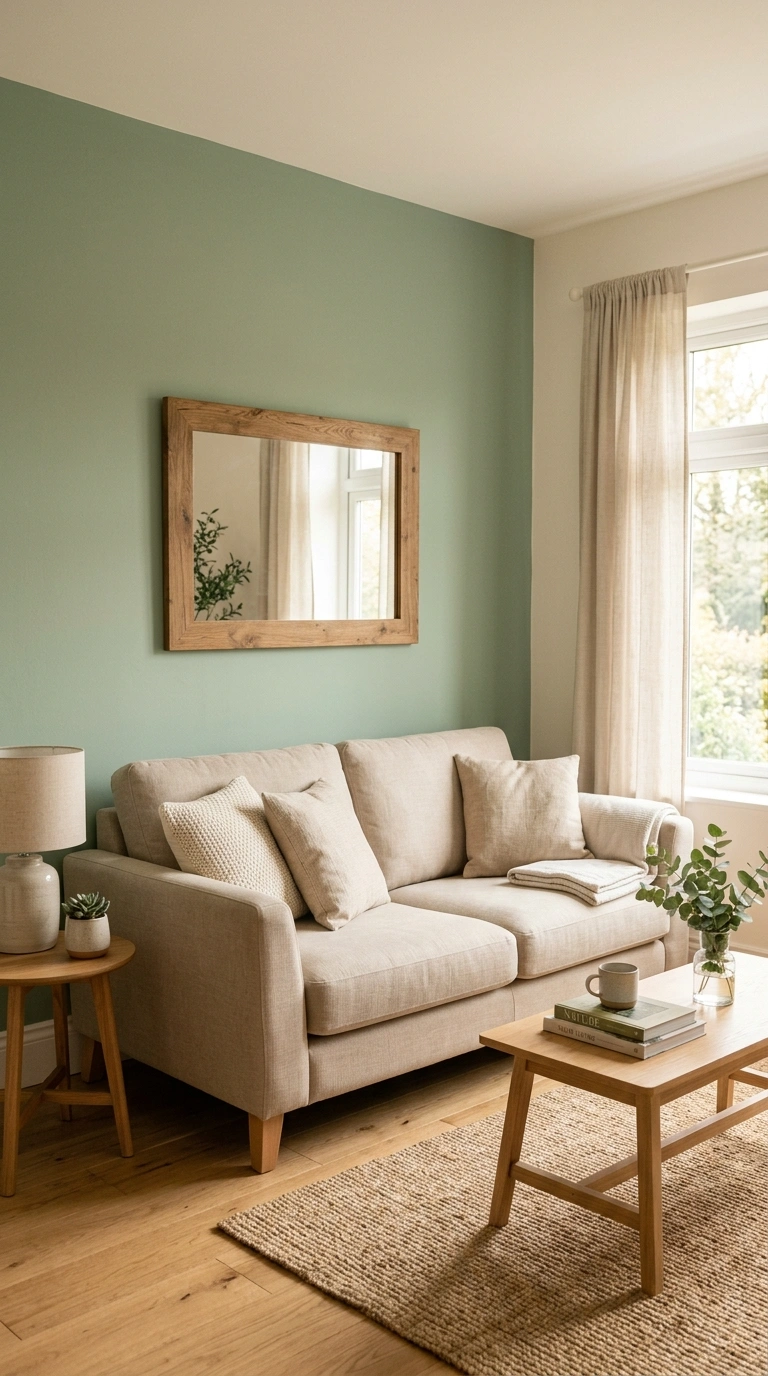
Painting one wall in a soft sage tone is one of the simplest ways to bring color into a small living room without overwhelming it. Choose the wall behind your sofa or the one you see first when you walk in, since that spot gets the most visual attention. A matte or eggshell finish works best because it softens the color and hides small wall imperfections. Keep the other three walls in a warm white or light cream so the room still feels open and bright. This idea works especially well in rooms with limited natural light, since sage green reads as calm rather than dark. Add simple wood picture frames or a mirror on the accent wall to bounce light back into the room. Furniture in neutral tones like beige, oatmeal, or soft gray will let the wall stay the star of the show without competing for attention.
2. Sage Velvet Sofa
A sage green velvet sofa turns a plain living room into one with real personality, and velvet has a way of making a small space feel a little more luxurious. Choose a compact two or three seat style with slim arms so it does not eat up floor space. Velvet also reflects light differently depending on the angle you view it from, which adds depth to a room that might otherwise feel flat. Pair the sofa with a jute or wool rug in a warm neutral tone to ground the space and keep it from feeling too formal. Brass or wood legs on the sofa add a bit of warmth that balances the coolness of the green. Toss a couple of cream or rust colored pillows on top for contrast, and keep the rest of the room simple so the sofa remains the focal point without making the space feel busy.
3. Layered Green Textiles
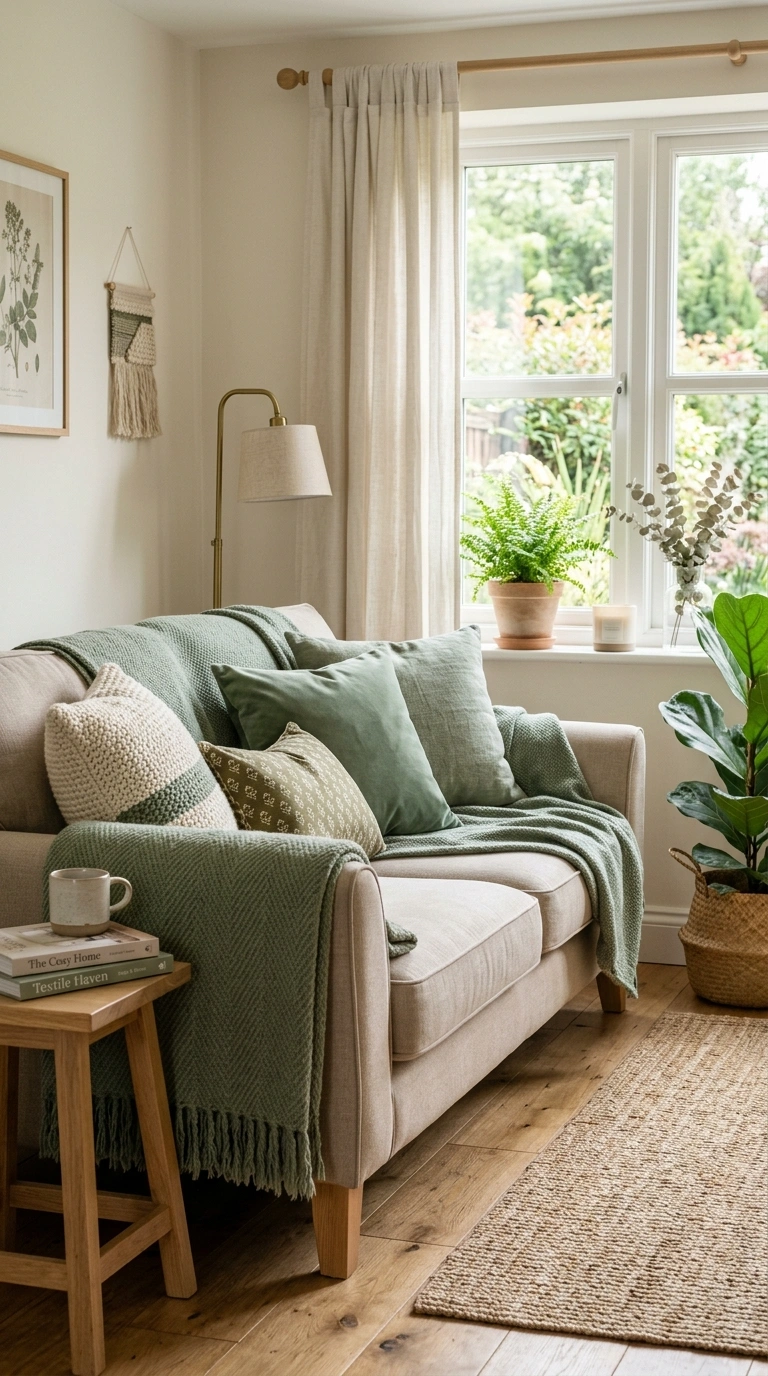
Instead of committing to a painted wall, you can bring sage green into a small living room through textiles like throw blankets, pillow covers, and curtains. This approach is great for renters or anyone who wants the flexibility to change things up later. Mix a few different shades and textures, like a chunky knit throw, a linen pillow cover, and a lightly patterned cushion, all within the same green family. Layering textures this way adds visual interest without adding clutter or color chaos. Keep your sofa and walls neutral so the textiles can do the heavy lifting. This idea works particularly well in studio apartments or rented spaces where painting is not an option. Fold the throw blanket over the arm of the sofa rather than draping it flat, since this small styling trick gives the room a lived-in, cozy look that photographs beautifully too.
4. Rattan and Sage Mix
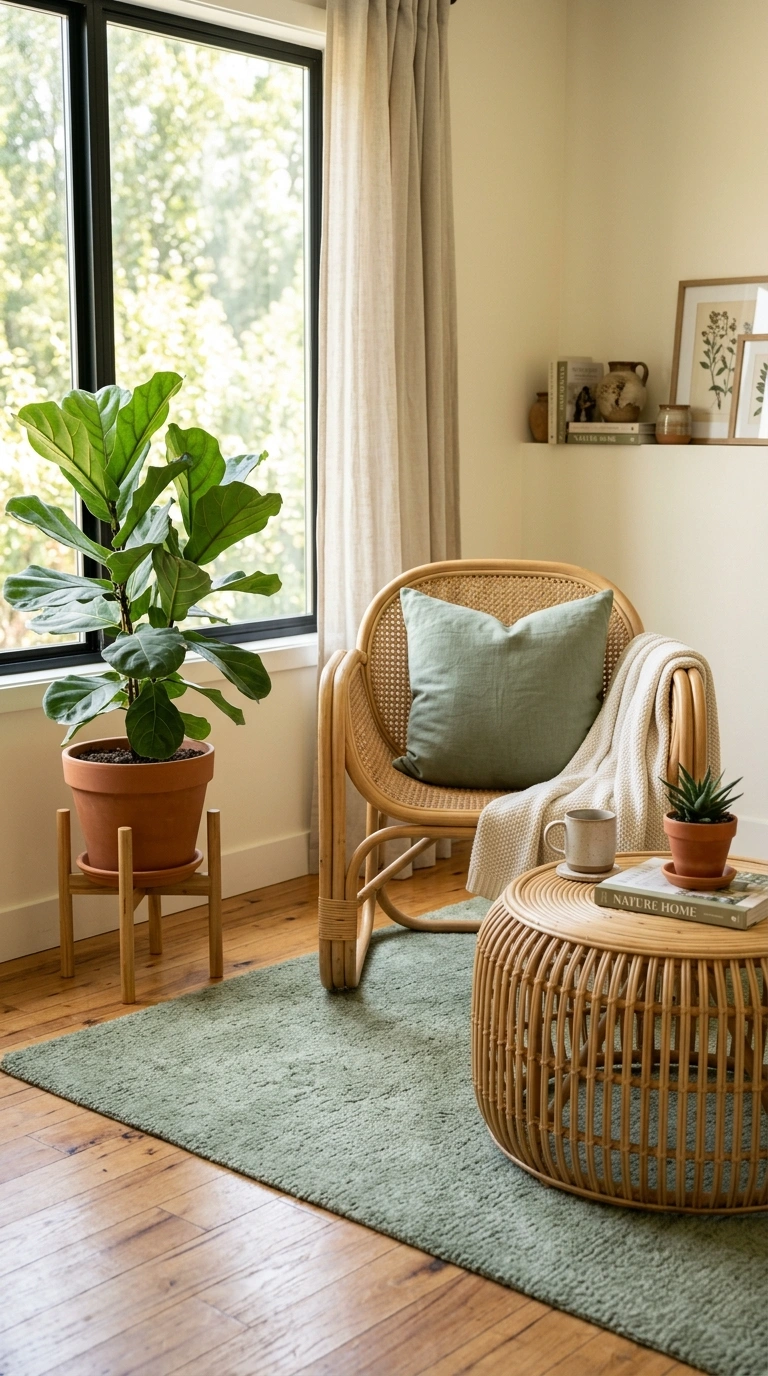
Rattan furniture and sage green were basically made for each other. The warm, golden tone of rattan softens the coolness of sage green and adds a relaxed, natural feel to a small living room. Try a rattan accent chair paired with a sage green throw pillow, or a rattan coffee table set against a sage colored rug. Rattan pendant lights are another easy way to bring in this texture without taking up any floor space at all, which matters a lot in a tiny room. Keep the rest of your furniture simple in shape so the rattan pieces stand out as the textural highlight. This combination works well in living rooms with wood floors, since the tones naturally connect. A few potted plants nearby will tie the whole look together and make the space feel like a small, calm retreat rather than a cramped corner.
5. Sage Built-In Shelves
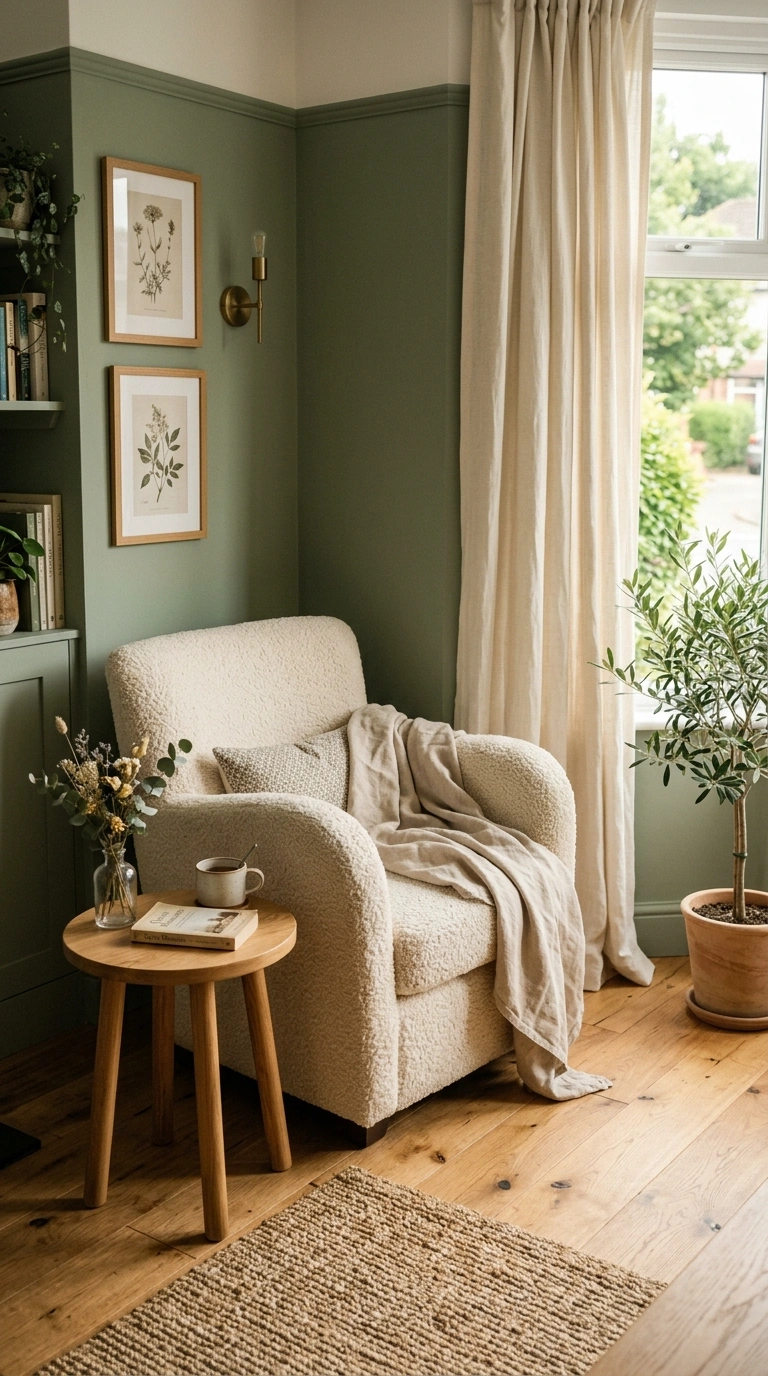
If your small living room has an awkward alcove or a blank wall next to a fireplace, built-in shelves painted in sage green can turn that dead space into a real design feature. Painting the shelving unit the same color as the wall behind it makes the whole thing feel intentional rather than bulky, which is especially important in tight rooms. Use the shelves to display books, a few ceramic vases, and framed photos rather than packing them full, since a cluttered shelf will make a small room feel smaller. Add a small reading lamp on one shelf for warm evening light. This idea also works if you cannot install real built-ins, since a slim green bookshelf pushed flush against the wall creates a similar effect. Keep the styling on each shelf loose and uneven in height so your eye has somewhere interesting to land.
6. Green Gallery Wall
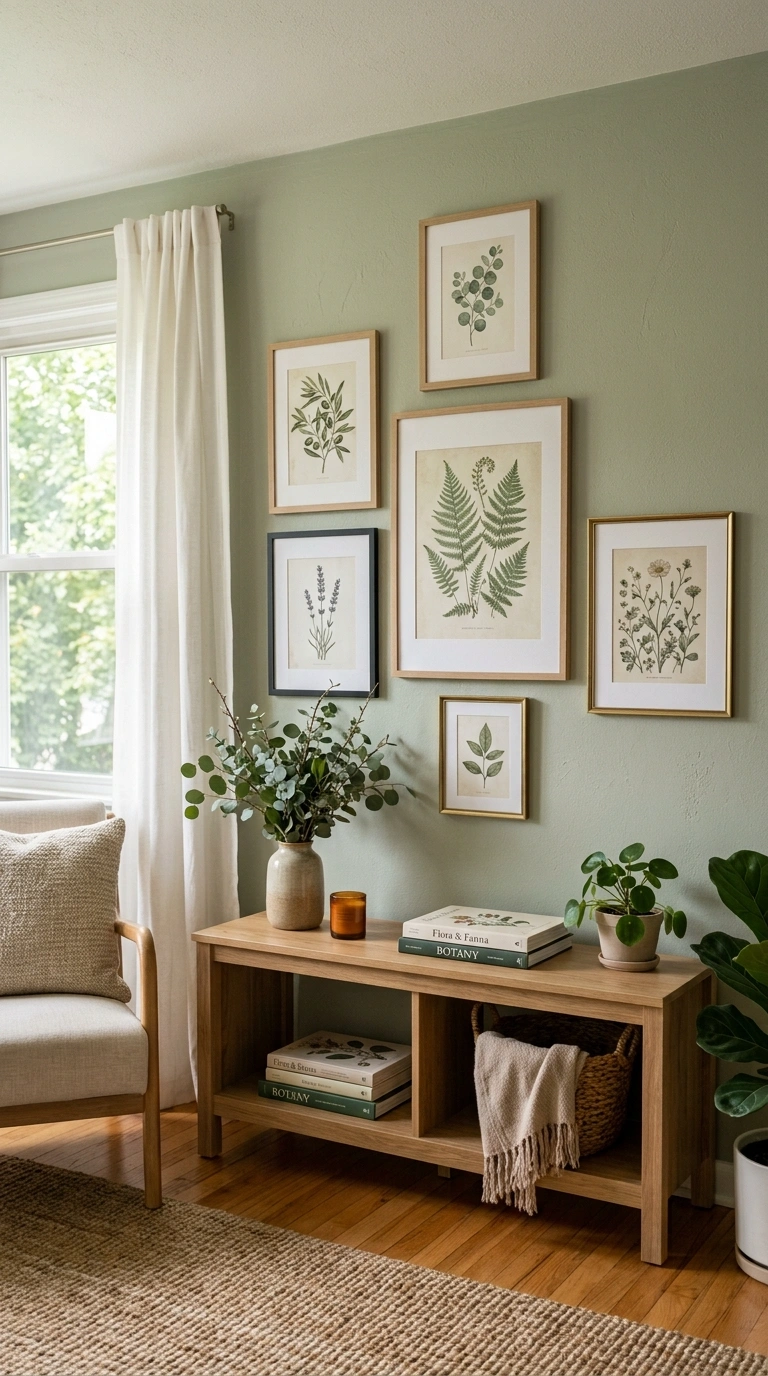
A gallery wall does not have to mean dozens of frames crammed together. In a small sage green living room, a gallery wall works best when it is simple, using five to seven frames in mixed sizes hung against a sage painted wall or a neutral wall with sage accents scattered through the art itself. Choose botanical prints, abstract shapes, or landscape photography in tones that echo the green in your room, like olive, moss, or eucalyptus. Mix in one or two frames with cream matting to break up the color and give your eyes a resting point. Keep the frames close together, with about two to three inches of space between each one, so the arrangement reads as one cohesive piece rather than scattered clutter. This idea works especially well above a low console table or sofa where the wall space is otherwise empty and unused.
7. Sage Curtains Panels
Curtains are an underrated way to bring sage green into a small living room, especially if you are not ready to commit to paint. Choose a lightweight linen or cotton fabric in a soft sage shade, and hang the curtain rod as close to the ceiling as possible, even if your window itself is shorter. This trick draws the eye upward and makes the ceiling feel taller, which matters a lot in compact rooms. Let the curtains fall just past the floor for a relaxed, slightly puddled look rather than a stiff, tailored one. Keep the rest of the window treatment simple, with no valances or heavy layering, since a small room needs breathing room more than extra fabric. Sheer sage curtains work well too if you want to keep natural light coming through while still adding a hint of color to the space.
8. Botanical Sage Corner

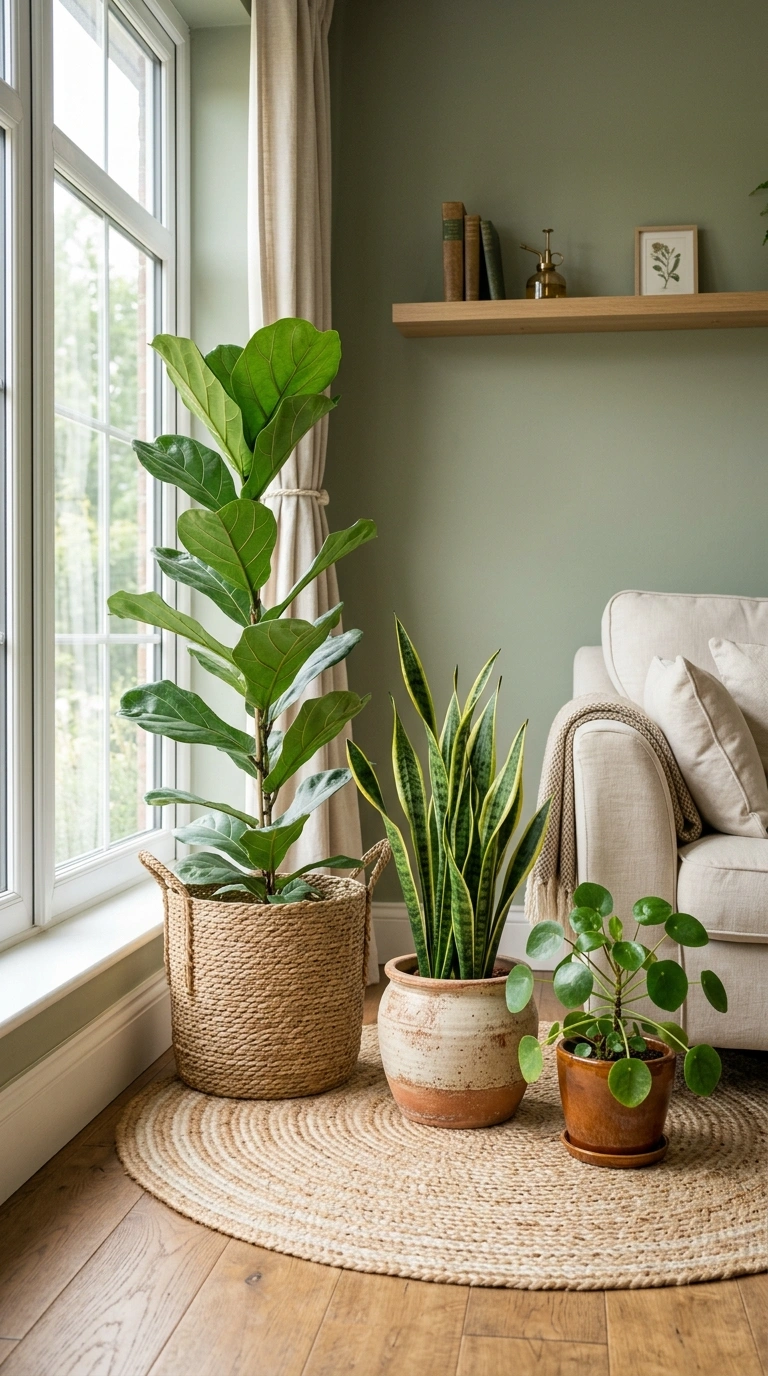
Every small living room has one awkward, underused corner, and filling it with plants is one of the easiest ways to bring sage green energy into the space without touching the walls at all. Group two or three plants of different heights together, like a tall fiddle leaf fig, a trailing pothos on a stand, and a smaller snake plant on the floor. Use woven or ceramic planters in cream or terracotta tones to keep the look warm rather than sterile. This corner works especially well near a window where the plants can get natural light, but low light varieties like pothos and snake plants will survive in dimmer corners too. A small woven rug underneath the grouping helps define the space and keeps soil or water spills contained. This idea turns wasted square footage into one of the prettiest spots in the room.
9. Sage Painted Trim

Painting your trim, baseboards, or window frames in sage green instead of your walls is a subtle way to add color that many people overlook. This works especially well in small living rooms with older architectural details like crown molding or paneled doors, since the green highlights those features instead of hiding them. Keep the wall color a warm white or soft cream so the trim really stands out against it. This approach feels more sophisticated than a full accent wall and tends to age well since trends change but architectural detailing stays classic. If your room does not have much existing trim, adding a simple picture rail painted in sage green partway up the wall creates a similar effect. This idea is also a great low commitment way to test whether you like sage green before painting a larger surface in the room.
10. Cream and Sage Combo
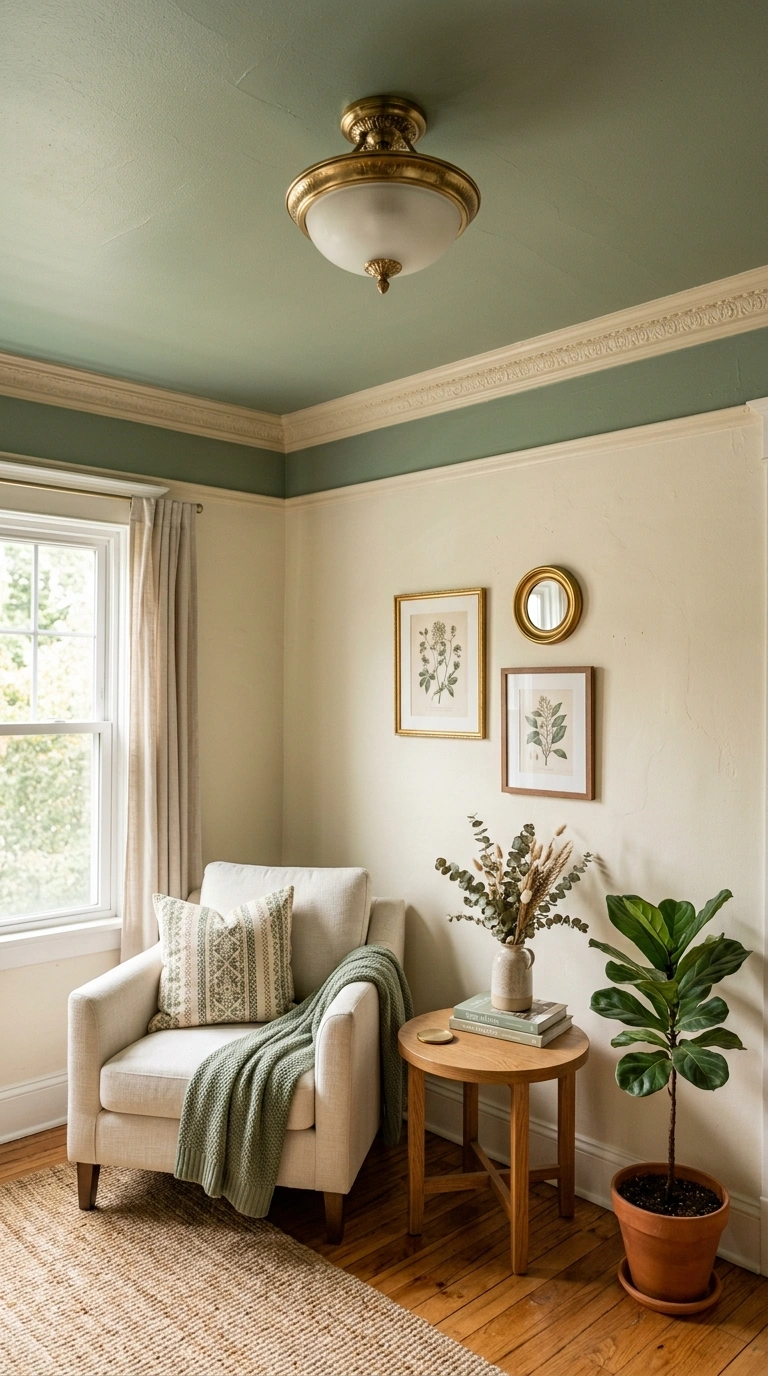
Pairing sage green with cream instead of stark white creates a softer, warmer look that feels especially cozy in small living rooms. Cream has a slight yellow undertone that keeps the space from feeling cold or clinical, which pure white can sometimes do. Try a cream boucle armchair against a sage green wall, or cream linen curtains paired with a sage sofa. This combination photographs beautifully because the low contrast between the two tones creates a calm, restful feeling rather than a busy one. Add texture through a cream chunky knit throw or a woven cream basket for storage, since texture matters more than pattern when your color palette is this quiet. Wood tones in medium brown or honey oak bridge the two colors nicely and keep the whole room feeling grounded rather than washed out.
11. Sage Window Seat

If your small living room has a window nook or a radiator cover you have never quite figured out how to use, turning it into a sage green window seat is worth trying. Build or buy a simple cushioned bench, upholster it in sage green fabric, and add two or three throw pillows in complementary tones like cream or mustard. This idea adds functional seating without taking up floor space the way a chair or extra sofa would, which is a big win in a tight room. Hang a simple curtain on either side of the window seat for a cozy, framed look. Store books or blankets underneath the bench if it has a lift top or shelving below. This spot tends to become the most photographed corner of the room because it feels intentional, cozy, and a little bit special compared to standard seating.
12. Terracotta Sage Accents
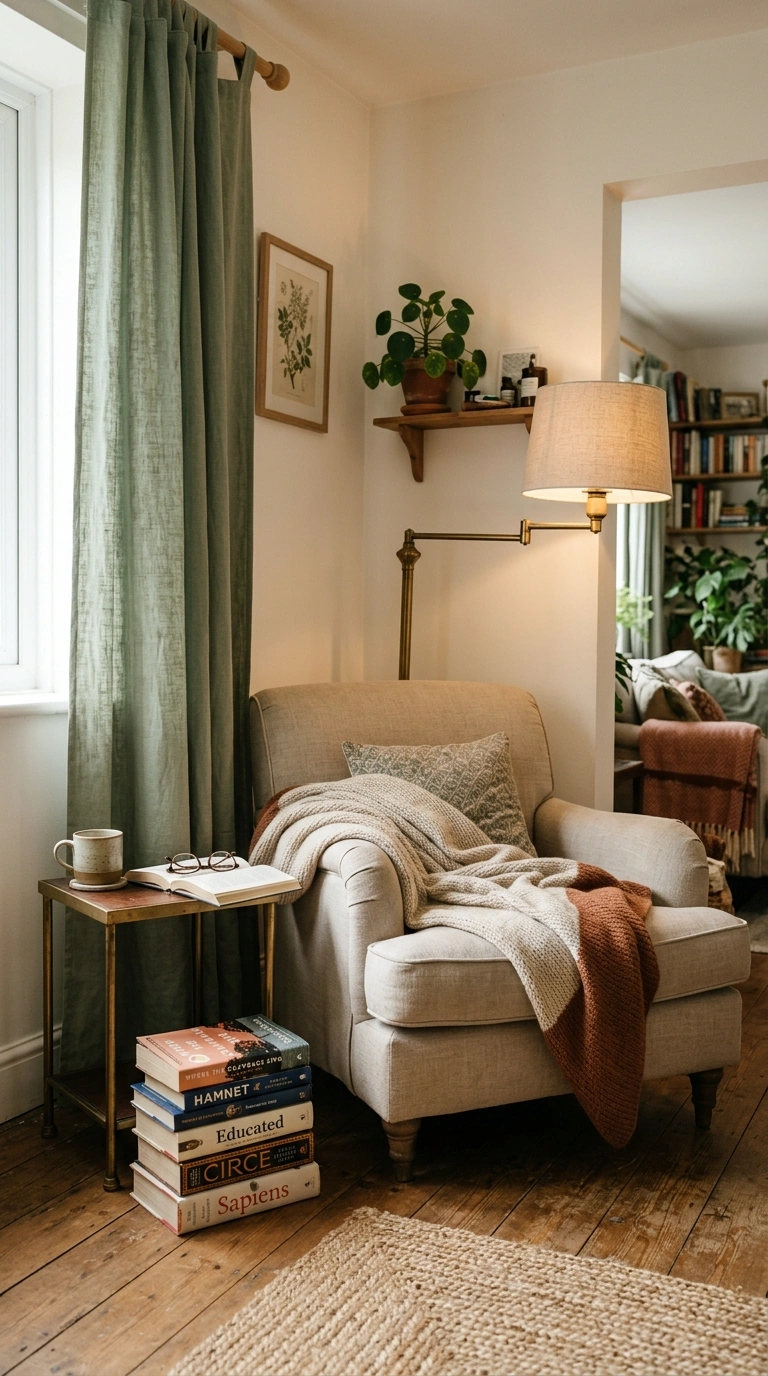
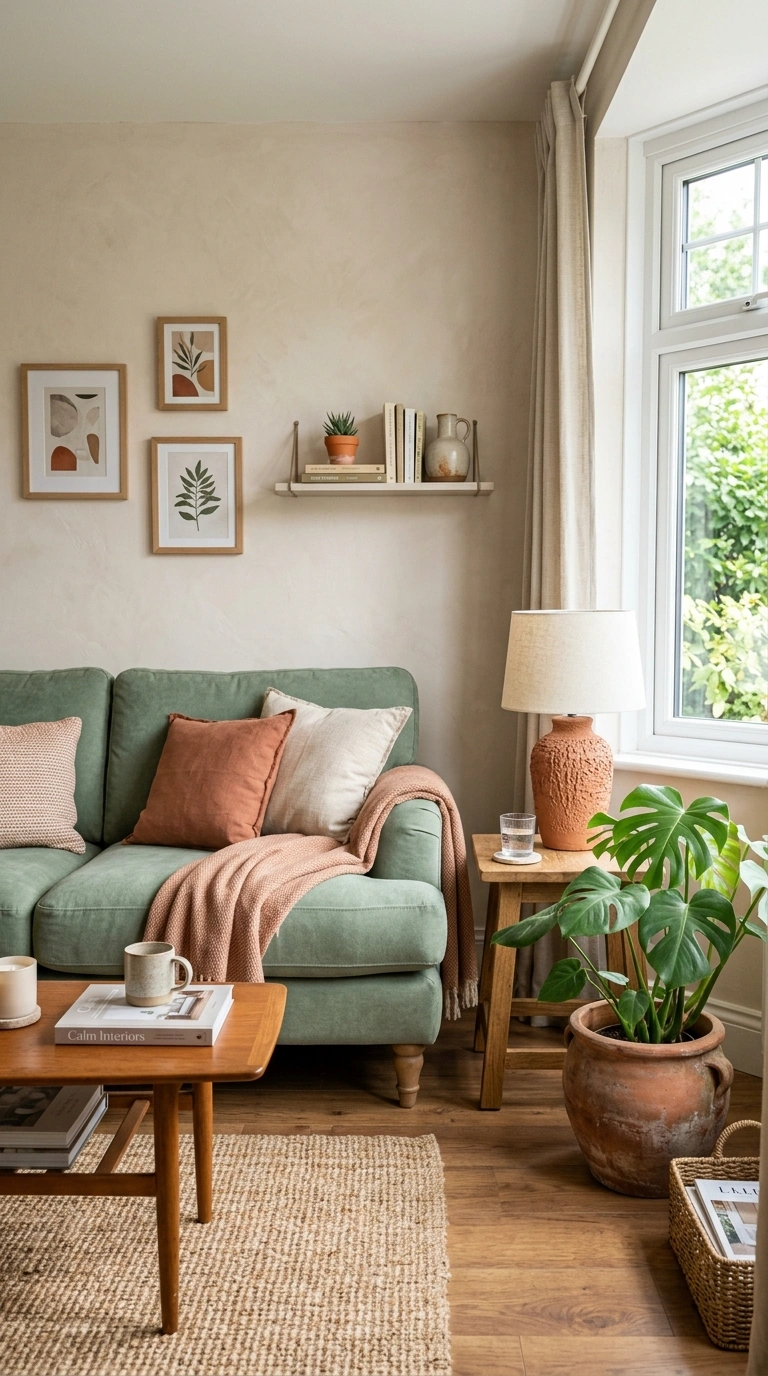
Terracotta and sage green share an earthy, grounded quality that works beautifully together in a small living room. Bring in terracotta through a planter, a small side table, or a woven basket, and let the sage green live in your larger pieces like the sofa or an accent wall. This pairing feels warm and sun-baked rather than cold, which is a nice contrast to how green is sometimes styled with cooler tones. A terracotta ceramic lamp base on a side table adds both color and function in one piece. Keep the ratio in mind, using sage as the dominant tone and terracotta as the accent, so the room does not feel like two competing color schemes fighting for attention. This combination works especially well in living rooms with lots of natural light, since both colors have a sun-washed, outdoorsy feeling to them.
13. Sage Storage Ottoman
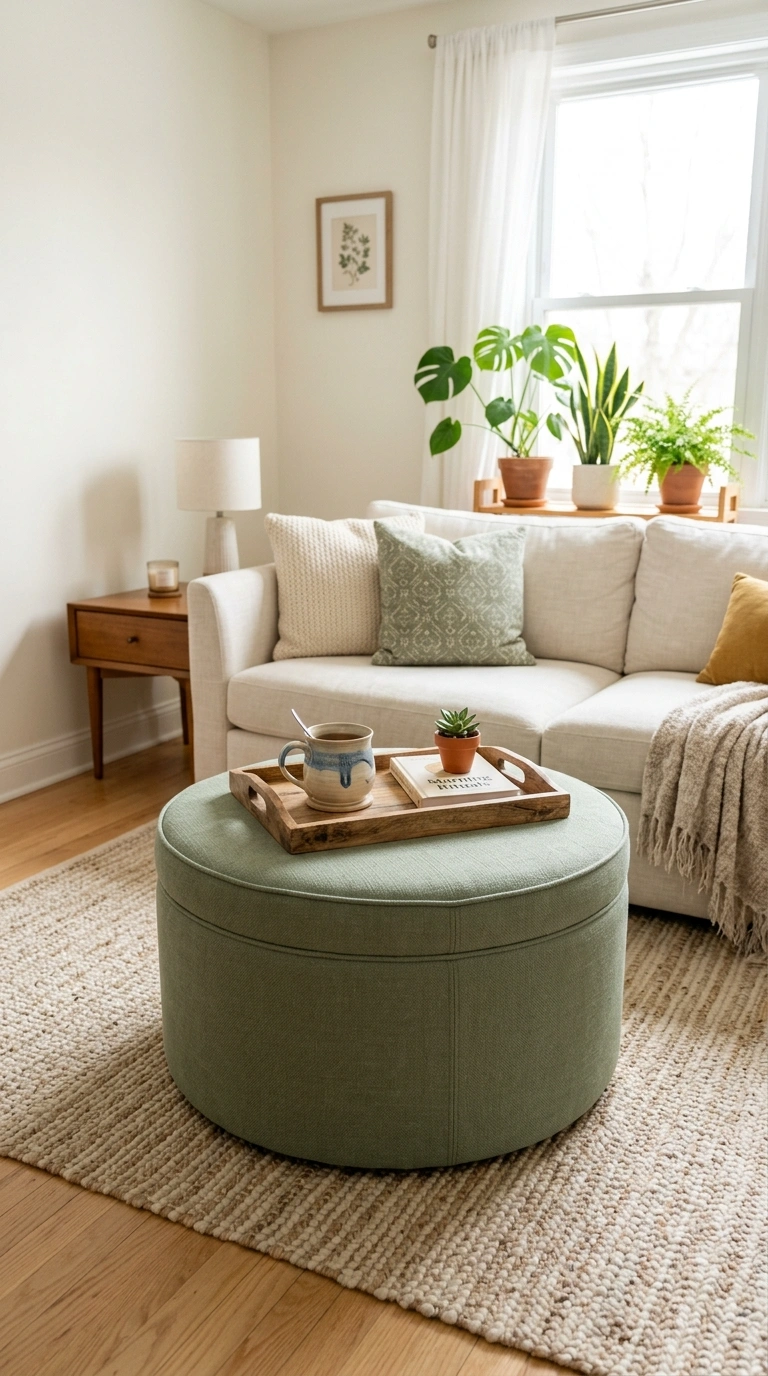
A sage green storage ottoman is one of the most practical pieces you can add to a small living room, since it works as a coffee table, extra seating, and hidden storage all in one. Choose a rounded or slightly oversized square shape upholstered in a durable fabric like boucle or linen blend, which will hold up better than velvet if you plan to use it as a footrest often. Store extra blankets, remote controls, or board games inside to keep surface clutter down, which instantly makes a small room feel more open. Top it with a wood tray when you need a flat surface for drinks or snacks. This piece is especially useful in living rooms where a traditional coffee table would feel too bulky, since the softer, rounded shape of an ottoman tends to make walking paths feel less cramped.
14. Wood and Sage Blend
Warm wood tones are one of the best partners for sage green in a small living room, since the combination feels balanced rather than cold or overly styled. Look for furniture with visible wood grain, like a walnut coffee table, oak shelving, or a pine media console, and let those pieces sit against sage green walls or textiles. This pairing works because wood adds warmth while sage adds calm, and together they create a room that feels collected over time rather than decorated all at once. Mixed wood tones are fine as long as they share similar undertones, so avoid pairing very orange toned wood with very gray toned wood in the same small space. A wood framed mirror on a sage wall reflects light and ties the two materials together visually. This combination tends to suit almost any home style, from modern to farmhouse to slightly traditional.
15. Sage Ceiling Detail
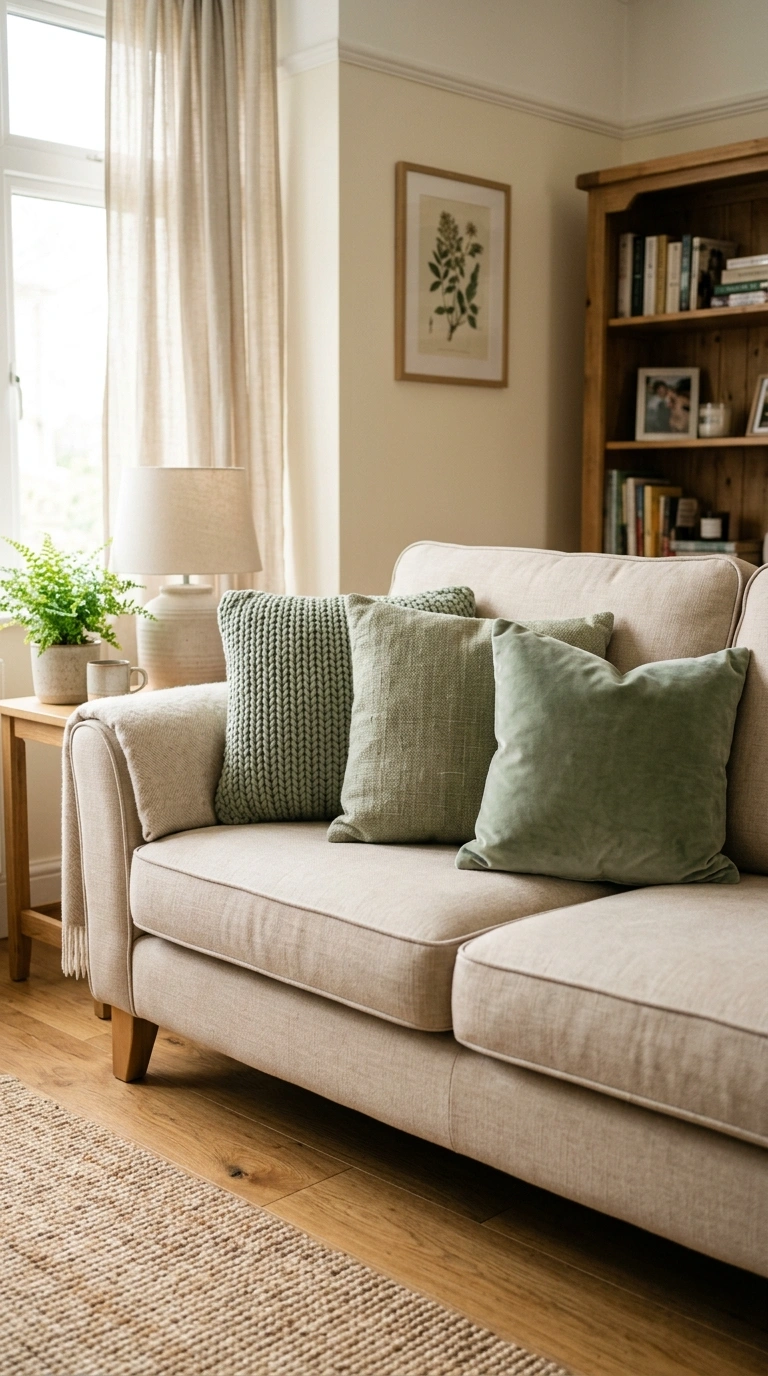
Painting the ceiling in a soft sage tone, sometimes called the fifth wall, is a bold but surprisingly effective idea for small living rooms with lower ceilings. Contrary to what you might expect, a colored ceiling can actually make a room feel more enveloping and cozy rather than smaller, especially when the color continues slightly down onto the crown molding or the top few inches of the wall. Keep the walls themselves in a lighter tone like cream or soft white so there is still contrast between the ceiling and the room below it. This idea works particularly well in living rooms without much natural architectural interest, since it draws the eye upward and adds a design moment that would otherwise be missing. A simple flush mount light fixture in brass or matte black looks especially good against a sage green ceiling.
16. Small Sage Nook
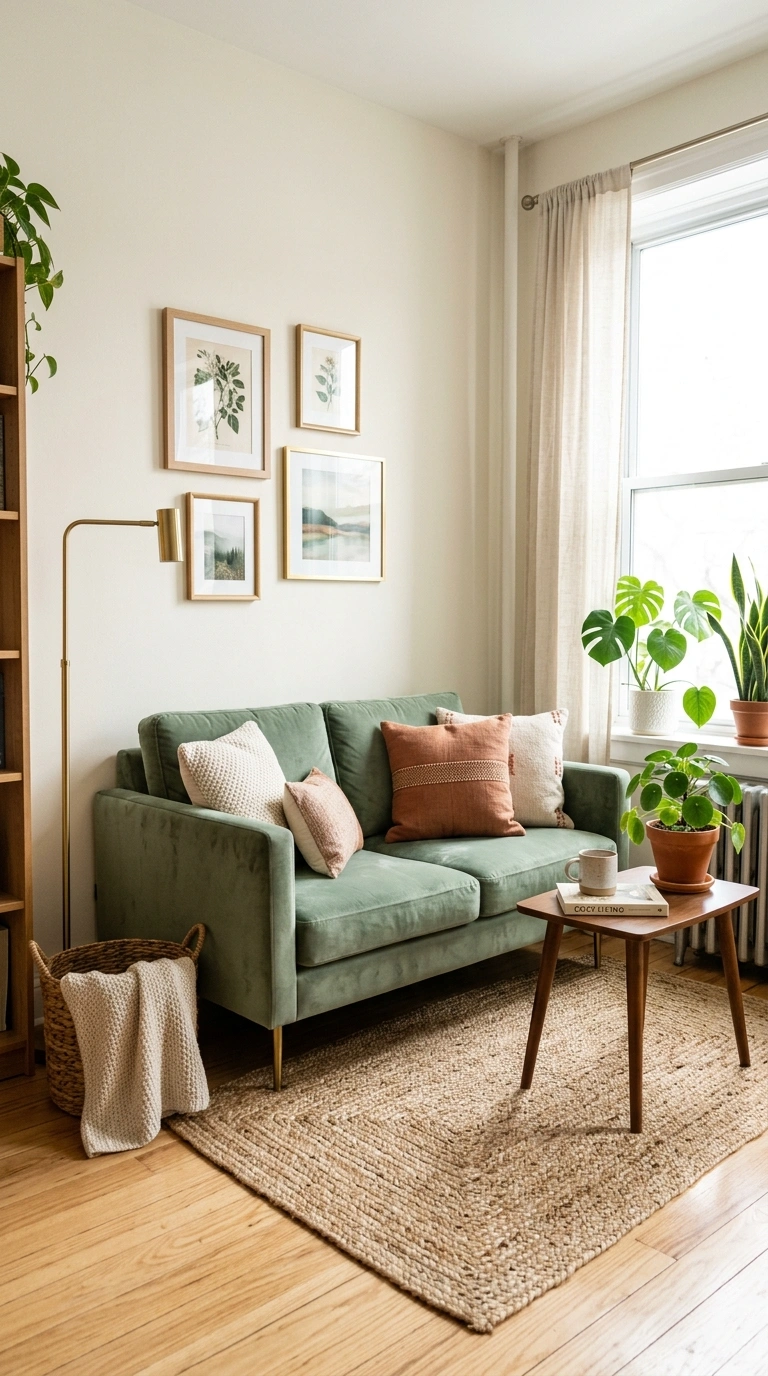
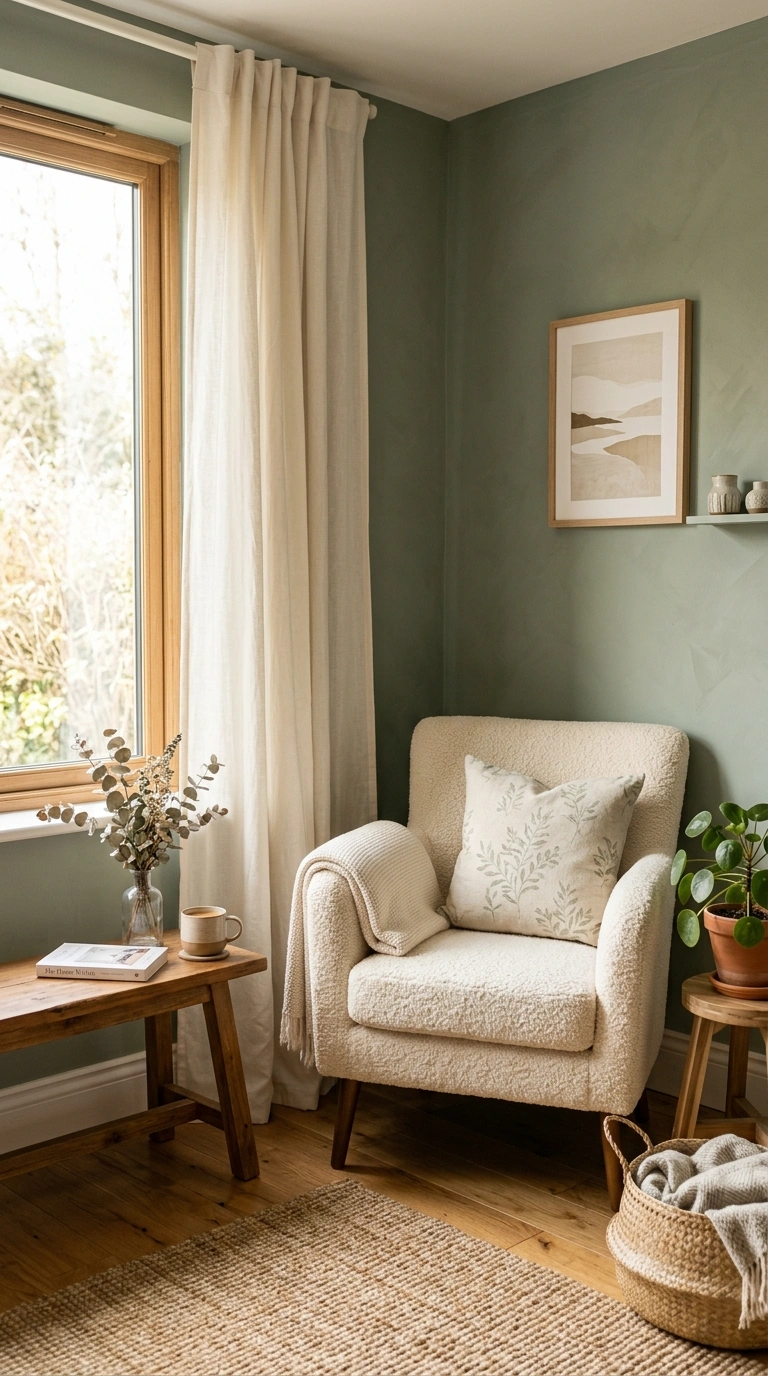
Not every small living room has room for a full seating area, and that is okay. Creating a tiny reading or coffee nook in one corner, painted in sage green with a single accent chair, a small side table, and a floor lamp, gives the room a defined purpose without demanding much square footage. Choose a chair with slim legs and a compact frame so it does not visually block the rest of the room. A small round side table holds a book or a cup of coffee without taking up much floor space. This nook works especially well tucked beside a window, where natural light makes the spot feel inviting throughout the day. Adding a single plant nearby softens the corner further. This idea proves that a small living room does not need a lot of furniture to feel complete, just one well styled corner.
17. Sage Throw Pillows
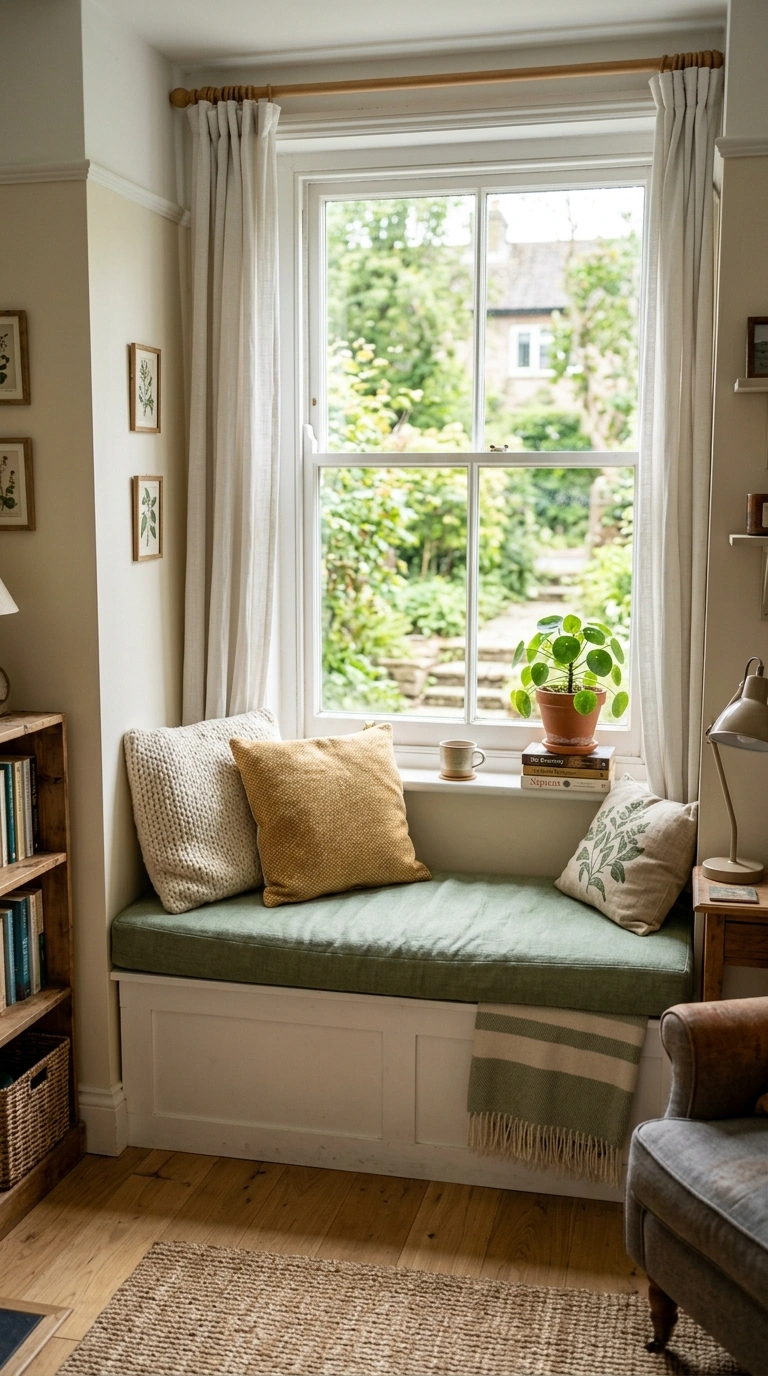
Sometimes the simplest idea is the most useful one, and swapping in a few sage green throw pillows is the easiest entry point into this color palette for anyone unsure about committing further. Choose two or three pillow covers in slightly different shades and textures within the sage family, like a solid linen cover, a subtle striped cotton one, and a textured knit. Place them on your existing sofa or accent chair without changing anything else in the room, and you will notice how much warmth and personality they add immediately. This idea is budget friendly and easy to update seasonally if your taste changes. Arrange the pillows in odd numbers, like three or five, for a more natural looking layout rather than a stiff, symmetrical one. This is a great starting point idea for renters testing out whether they like sage green before investing further.
18. Vintage Sage Rug
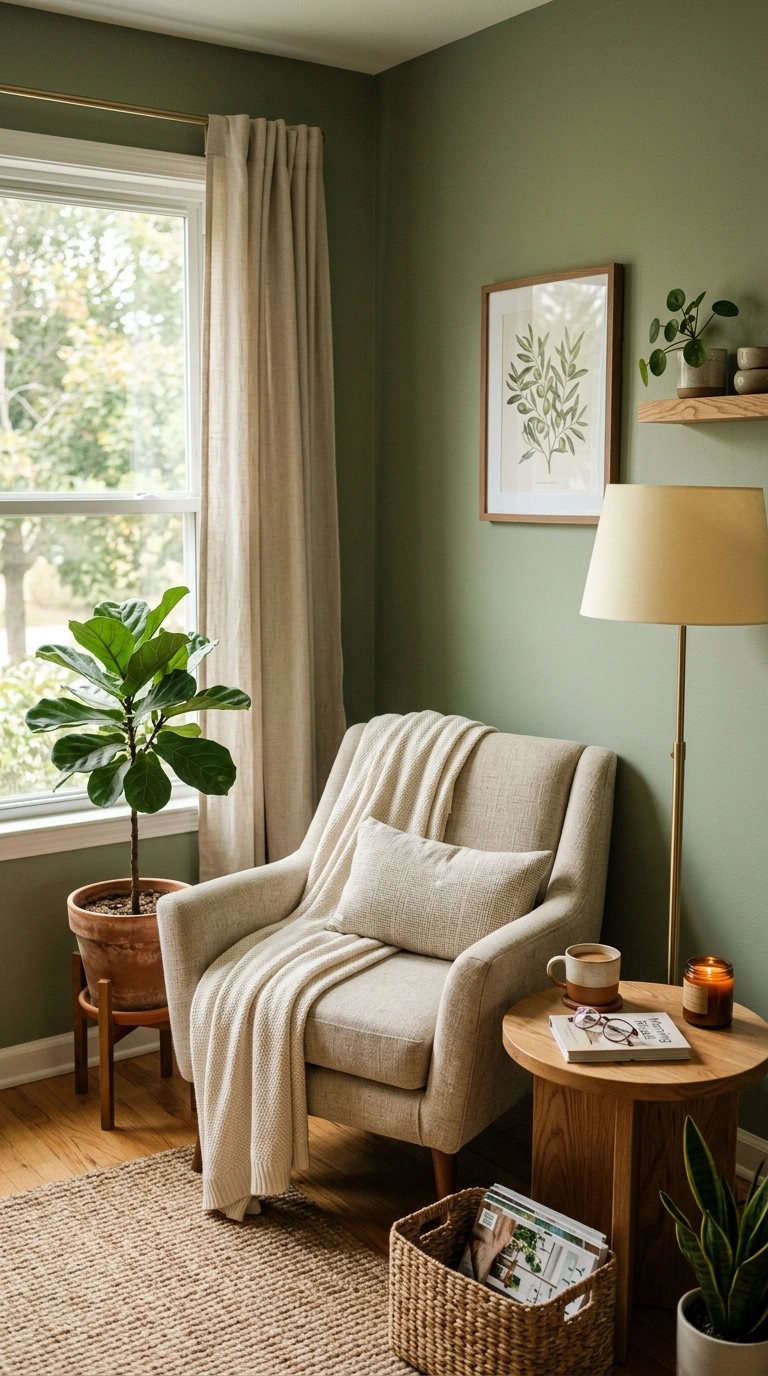
A vintage or vintage-style rug in muted sage and cream tones adds instant character to a small living room, especially one that otherwise feels a bit plain or new. Look for a rug with a low pile and a faded, distressed pattern, since these tend to work in smaller spaces without feeling too busy or heavy underfoot. Size the rug so that at least the front legs of your sofa and chairs sit on top of it, which helps anchor the furniture and make the room feel more pulled together. Vintage rugs also tend to hide stains and wear better than solid colored options, which is practical for a high traffic living room. Layer a smaller neutral rug underneath if you want extra texture and padding. This idea works in almost any small living room style, from modern to traditional to eclectic.
19. Sage Reading Corner
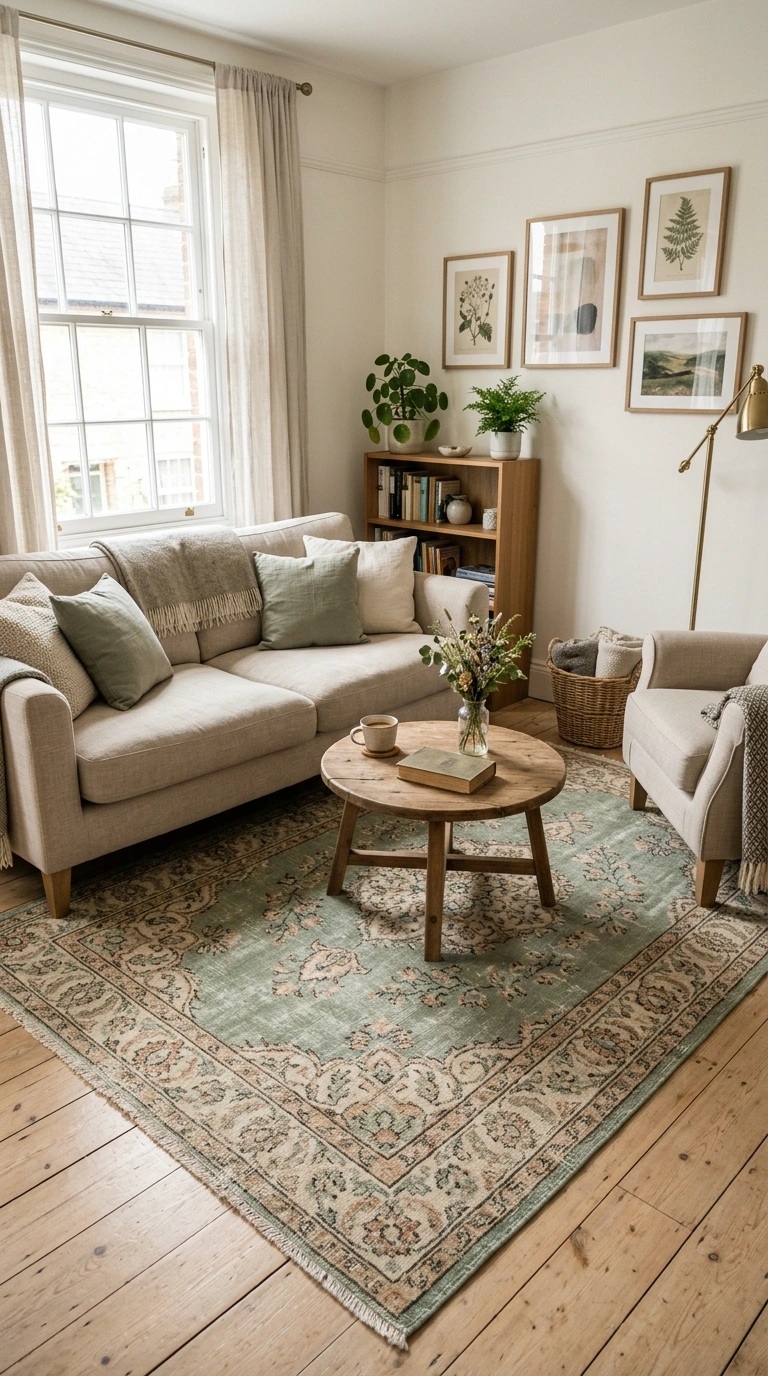
Turning an unused corner of your small living room into a dedicated reading spot painted in sage green gives the space a sense of purpose beyond just watching television. Add a single comfortable chair, a small stack of books on the floor or a tiny side table, and a floor lamp with warm toned lighting for evening reading. Painting just that corner, or hanging a sage green curtain to visually separate it from the rest of the room, creates a cozy pocket without needing an actual wall. A soft throw blanket draped over the chair adds comfort and color at the same time. This idea works especially well in living rooms that also serve as a home office or multipurpose space, since it gives you a clear spot to unwind that feels separate from work or screen time, even if it is only a few feet away.
Frequently Asked Questions
What is sage green and why does it work in small living rooms?
Sage green is a muted, grayish green that sits between gray and olive. It works well in small spaces because it is calm rather than bold, so it adds color without making the room feel busy or closed in.
Does sage green make a small room look darker?
Not if you choose the right shade. Lighter sage tones paired with plenty of natural light and cream accents keep a room feeling open. Darker sage shades are better used on one wall or in smaller doses like pillows or trim.
What colors pair well with sage green?
Cream, warm wood tones, terracotta, brass, and soft white all pair naturally with sage green. These combinations feel grounded and warm rather than cold or overly matched.
Can I use sage green in a room with little natural light?
Yes, though it helps to balance it with warm lighting and lighter accent colors like cream or beige. Avoid pairing sage with cool white light bulbs, since warm bulbs bring out the green’s cozier side.
Is sage green a passing trend or a lasting choice?
Sage green has stayed popular for years because it behaves more like a neutral than a trend color. It works with many styles, from modern to traditional, which is part of why it tends to hold up well over time.

Leave a Reply