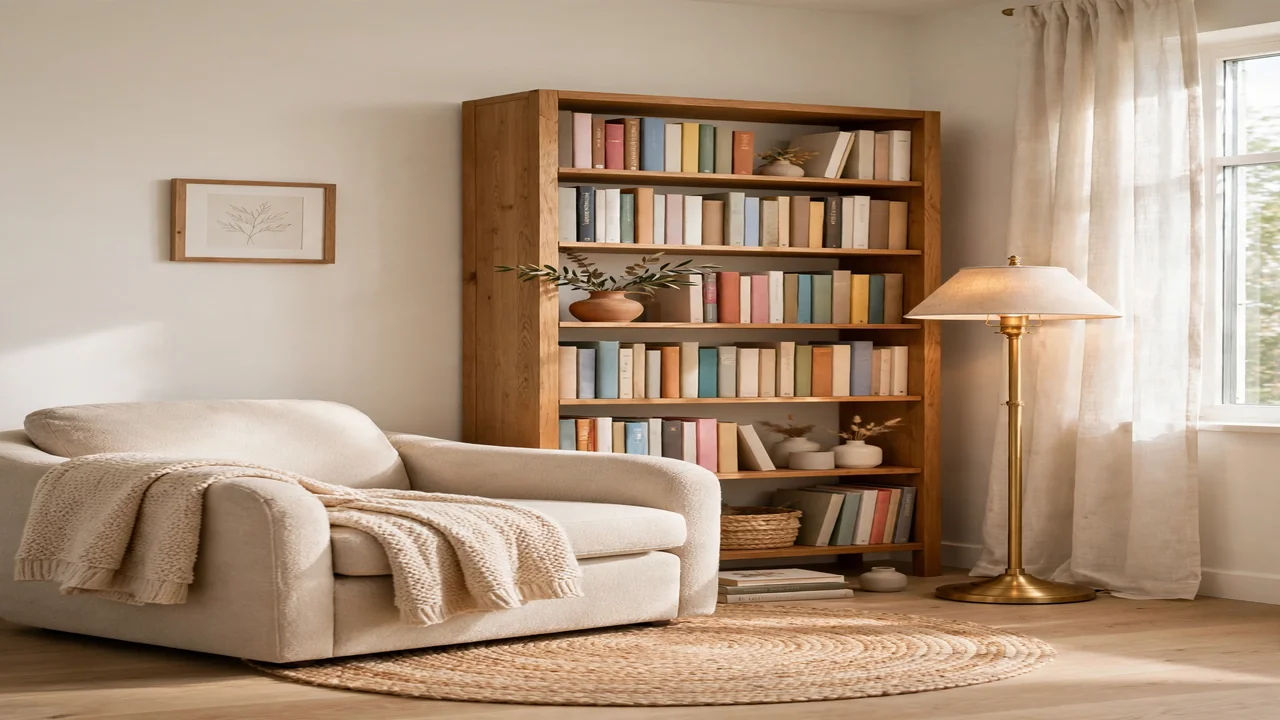
There is an hour in the evening, when the light goes soft and the house grows still, when a good book feels like the only thing that matters. I have spent many of those hours curled into the corner of my living room, a mug going cold on the floor beside me. That corner was never planned. It just became mine. But somewhere along the way I started to wonder what it would feel like to give that small ritual a real home, shelves close enough to reach and a chair that remembers the shape of me. You do not need a spare room or a grand wall of books. You need a corner, a shelf, and the willingness to treat your reading life as worth honoring. These seventeen ideas are for people who read in the margins of the day and want a quiet place to do it.
1. Corner Reading Chair
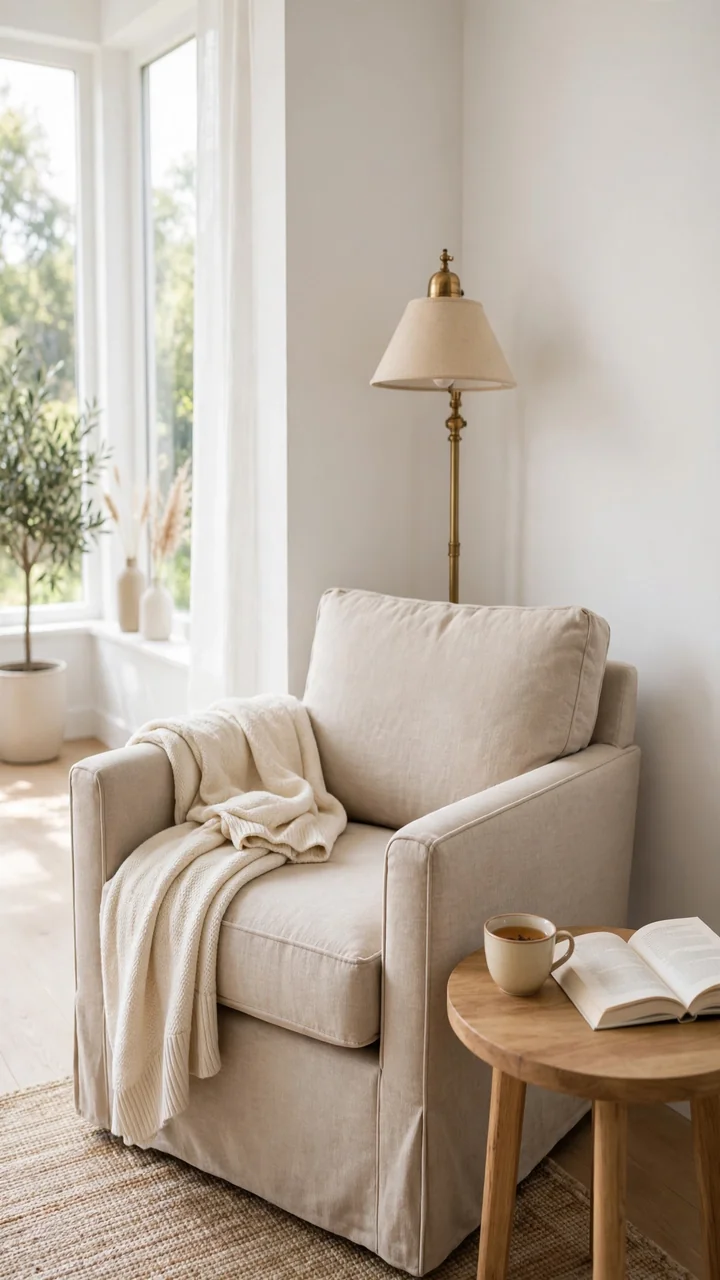
Every library begins with somewhere to sit, and in a small home that somewhere is usually a corner. A corner reading chair works because it asks for so little room and gives back so much. Pick a chair with a deep seat and arms you can lean on, something in a soft fabric like cotton or linen. A small armchair is plenty, you do not need a full recliner. Place it at an angle in the corner so it faces the room, and leave space behind it for a floor lamp or a plant. This one piece of furniture is the whole project at its simplest.
Build the comfort around it with a few touches. Drape a folded throw on one arm and add a firm cushion for your back if the seat is deep. Keep a small side table or wooden stool beside it for your tea and your current book. A basket on the floor can hold the next two books in your pile, which keeps the corner tidy and the habit going. Try sitting there tonight with a chair you own before buying anything. If the light and the quiet feel right, you have found your spot.
2. Floor to Ceiling Shelves
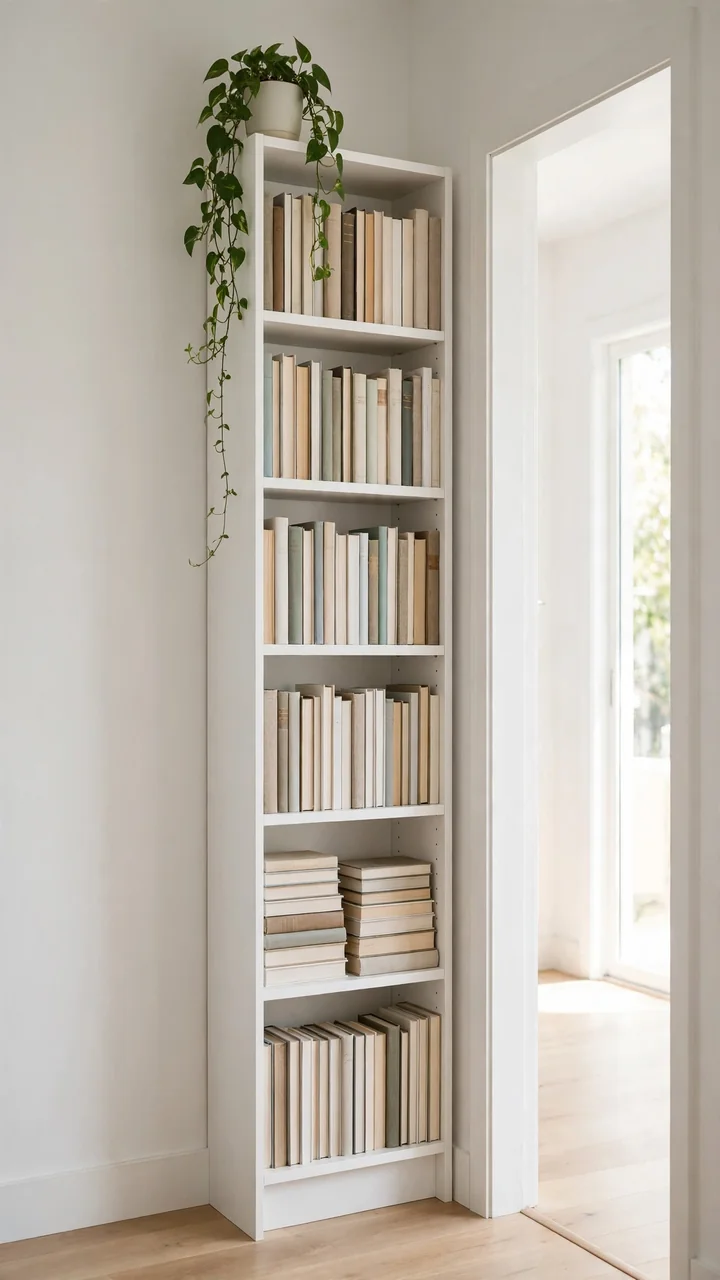
When floor space is short, the only direction left is up. A tall, narrow bookcase can hold several hundred books in a footprint no bigger than a doormat. Look for one about two feet wide, which fits beside a door, at the end of a hallway, or in the strip of wall between two windows. Anchor it to the wall with the brackets in the box, because a tall shelf full of books is heavy. Keep daily reads on the middle shelves and move reference books and rarely opened editions to the top.
Style the top shelf so it feels finished rather than forgotten. A small framed print or a trailing plant softens the highest shelf. Keep a folding step stool tucked behind the bookcase for the books you cannot reach. Face your reading chair toward the shelf, add a lamp nearby, and the narrow wall that once held nothing becomes the most loved spot in the house.
3. Window Seat Library
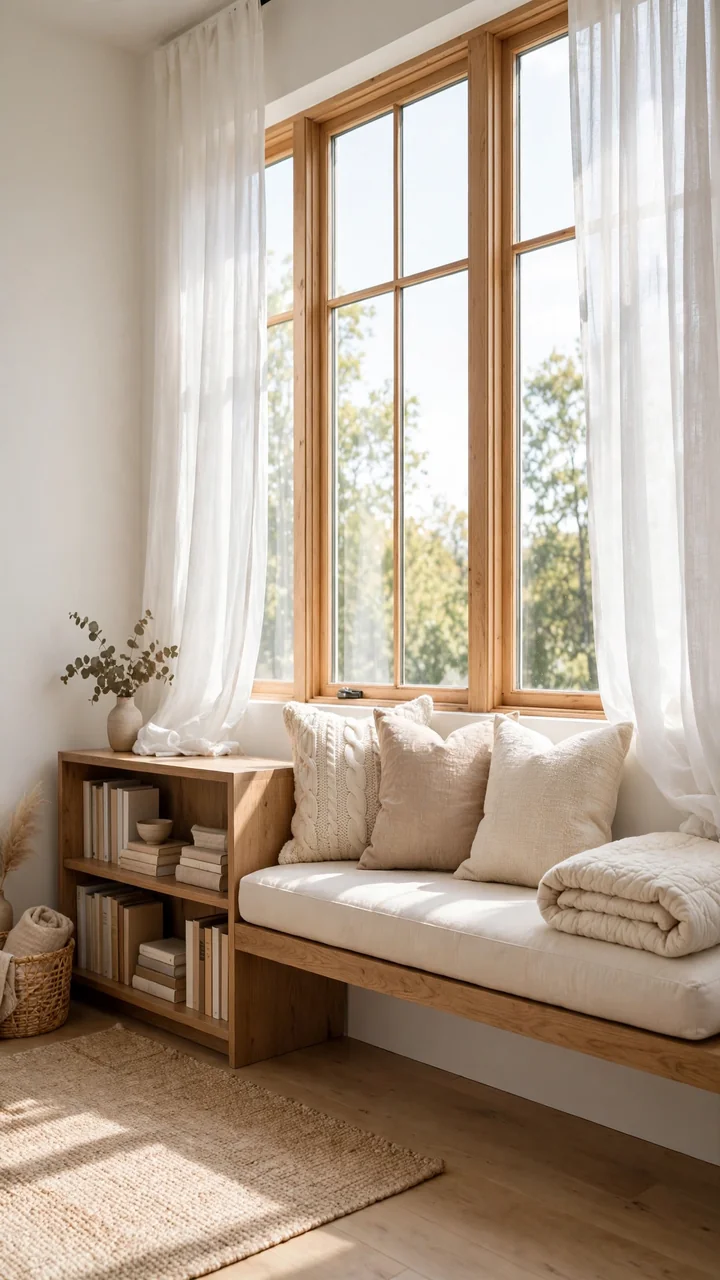
A window is the kindest light a reader can ask for, and a seat built beneath one turns that light into a daily habit. If you have a low, wide windowsill or an empty stretch of wall under a window, place a sturdy bench or a storage ottoman there and top it with a thick cushion. The seat should be deep enough to curl sideways with your back against the wall, so measure before you buy. Dress it with two or three pillows in soft, washable covers, because this spot will get used hard. A folded quilt at one end makes it inviting even on gray mornings.
The books live within arm's reach. Put a low bookcase or a stack of sturdy crates on one or both sides of the bench, and keep your current reads on top where you can grab them without getting up. Sheer curtains soften bright sun so pages do not glare, and they still let the daylight through. This is a wonderful project for a bedroom or a landing that has a window nobody uses. Sit there with your morning coffee once, and you will understand why readers have loved window seats for centuries.
4. Floating Book Shelves
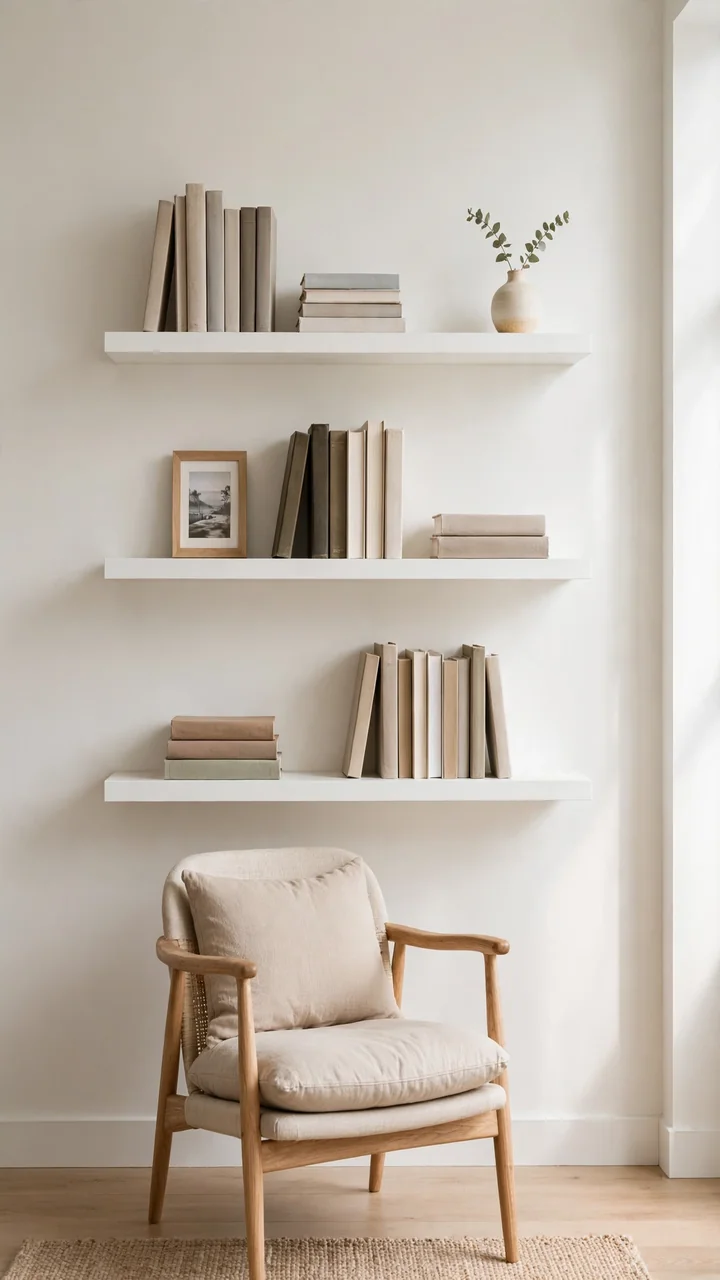
Floating shelves give you a library that seems to hover on the wall, and they are perfect for renters or anyone short on floor space. Mount two or three sturdy shelves on a bare wall, spacing them about a foot apart, and use good wall anchors so they hold the weight. Books are heavy, so check the weight rating before you load them up. Arrange the books with some standing upright and some stacked sideways, which looks natural and keeps the shelf from feeling stiff. Leave a little breathing room on each shelf rather than packing it edge to edge.
The beauty of floating shelves is how easily they fit around your life. They work above a desk, beside a bed, or in a hallway that would otherwise go unused. Paint them the same color as the wall and they nearly disappear, letting the books become the decoration. Or choose warm wood shelves against a white wall for a gentle contrast. Add one object per shelf, a framed photo or a tiny vase, but keep it minimal. The books are the point. In an afternoon you can turn a blank wall into a small library that feels intentional and calm.
5. Under Stair Library
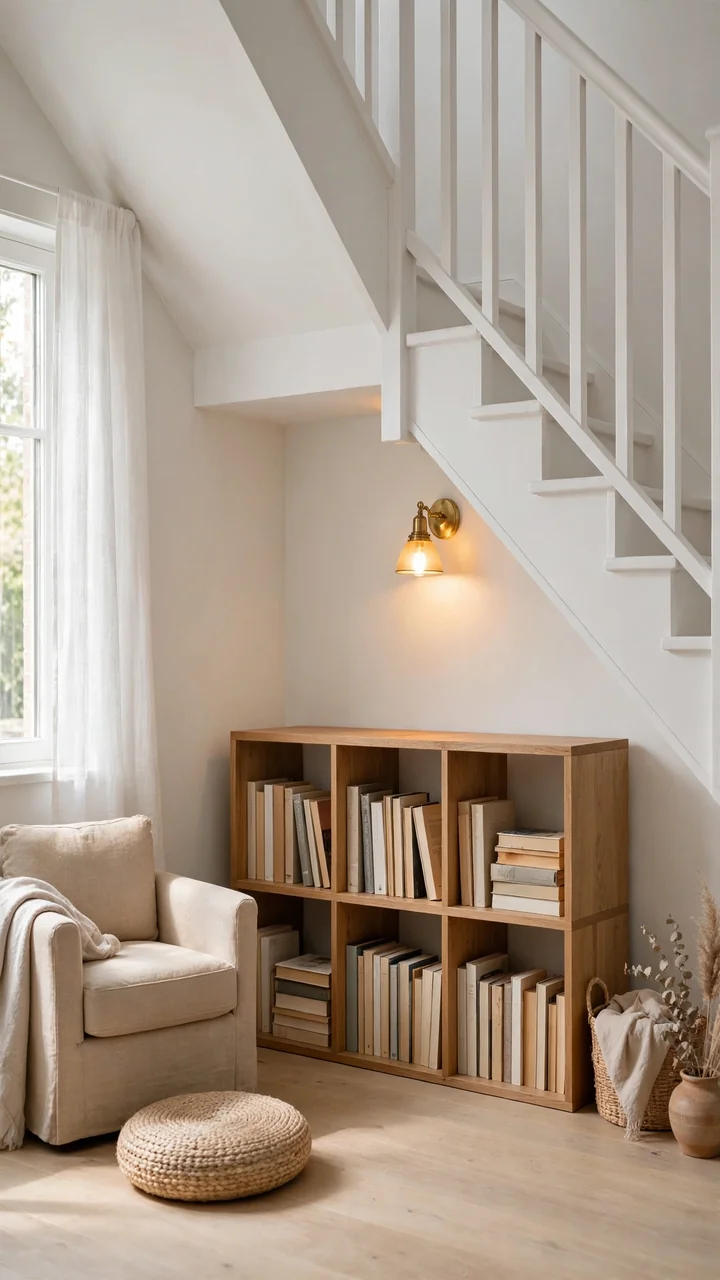
The space under a staircase is one of the most wasted spots in a house, and it is often exactly the right size for a tiny library. Measure the height at the tallest point and the depth of the steps, then look for low bookcases or cube storage that slides underneath. Even two or three feet of height holds plenty of paperbacks. Paint the back wall a warm white or a soft color so the dark space feels brighter, and add a small plug-in picture light or a battery puck light on the underside of the stairs so the shelves are easy to browse.
Place a small chair or a floor cushion just outside the stairs, facing the shelves, and you have a reading corner that feels tucked away from the rest of the house. This works beautifully for children's books too, since little readers love a space that feels made for them. Keep the lowest shelf for the books you reach for most, and use the deeper, darker back corners for storage boxes. What was once dead space becomes a quiet corner with a purpose, and guests always ask about it.
6. Ladder Book Shelf
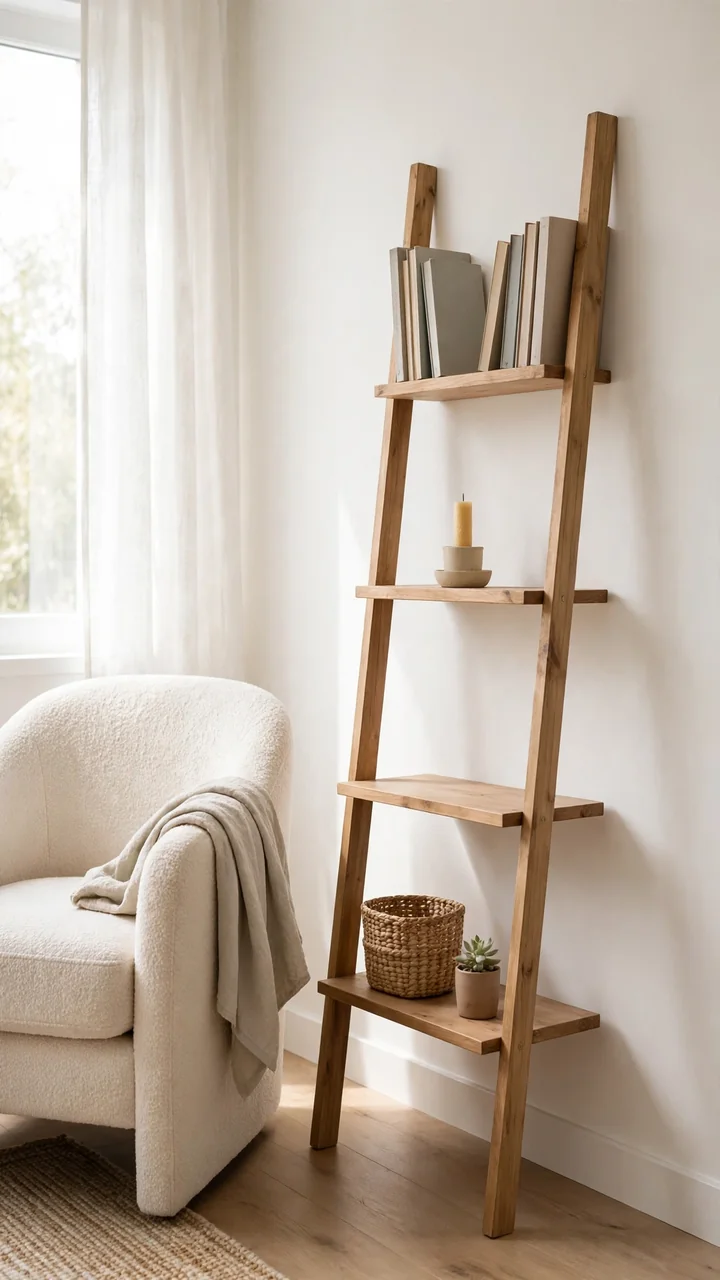
A leaning ladder shelf is one of the easiest ways to add book storage without committing to a big piece of furniture. It leans against the wall, so it needs no mounting, and the shelves get deeper toward the bottom, which is perfect for larger books and baskets. Place one in a corner of the bedroom or beside your reading chair. The top rungs hold small paperbacks, and the bottom shelves can hold a basket for magazines or a small plant. Because it is narrow, it fits in gaps where a bookcase never could.
Style it lightly so it does not look crowded. Leave some shelves half empty, and mix books with one or two small objects, like a candle or a framed photo. The open back keeps the wall visible, which makes the room feel larger than a solid bookcase would. If you move often, this is the ideal library piece, because it is light and easy to carry. One afternoon, one ladder shelf, and you have a small library that looks like it was always meant to be there.
7. Small Round Rug
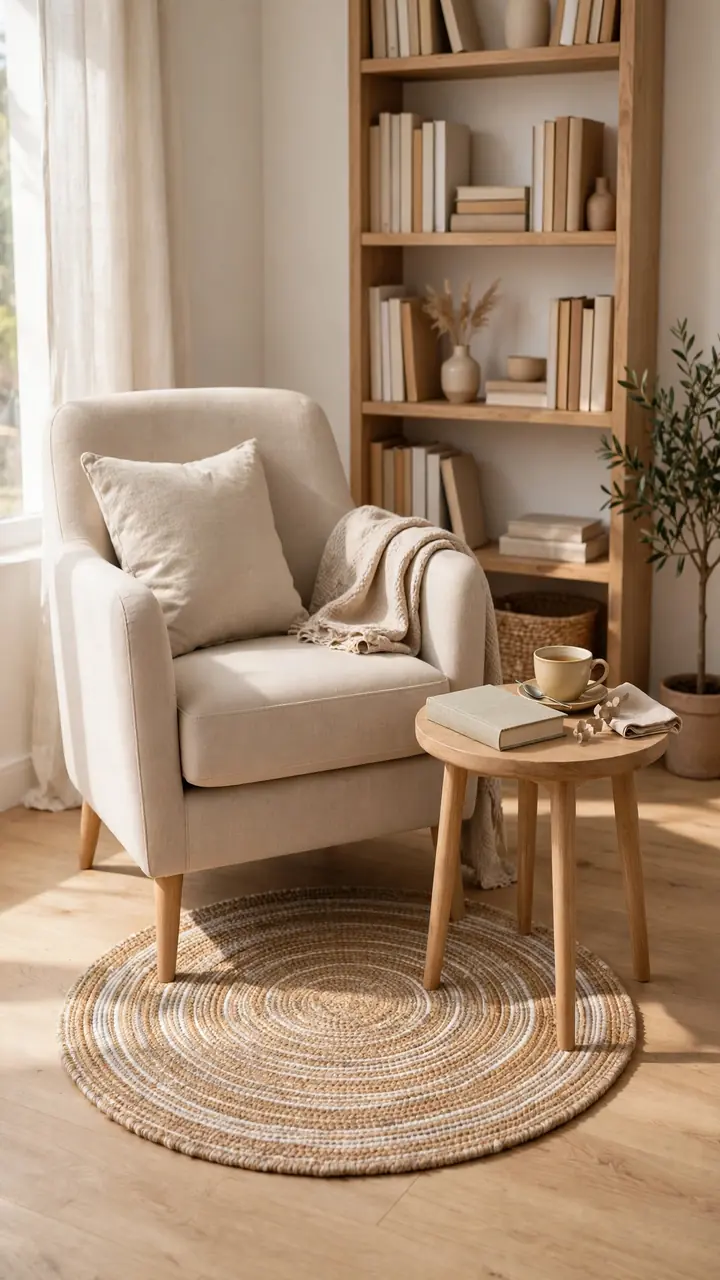
A rug is the fastest way to tell a corner of the room that it has a new job. A small round rug under your reading chair defines the nook without walls or furniture, and the circle shape softens all the straight lines of shelves and walls. Choose one about four to five feet across, big enough for the chair and your feet, in a flat weave or low pile that is easy to clean. Warm neutrals, soft patterns, or gentle stripes all work, and they hide the dust that books attract.
Layering matters more than price. If you already have a large rug in the room, a smaller round rug on top still marks the reading spot clearly. Place the front legs of the chair on the rug so it feels anchored, and let the back legs rest on the floor. This one addition makes the corner feel finished and separate, like a room within a room. It also warms cold floors in winter, which matters when you sit still for an hour with a book. A quiet circle under your feet changes how the whole corner feels.
8. Warm Reading Lamp
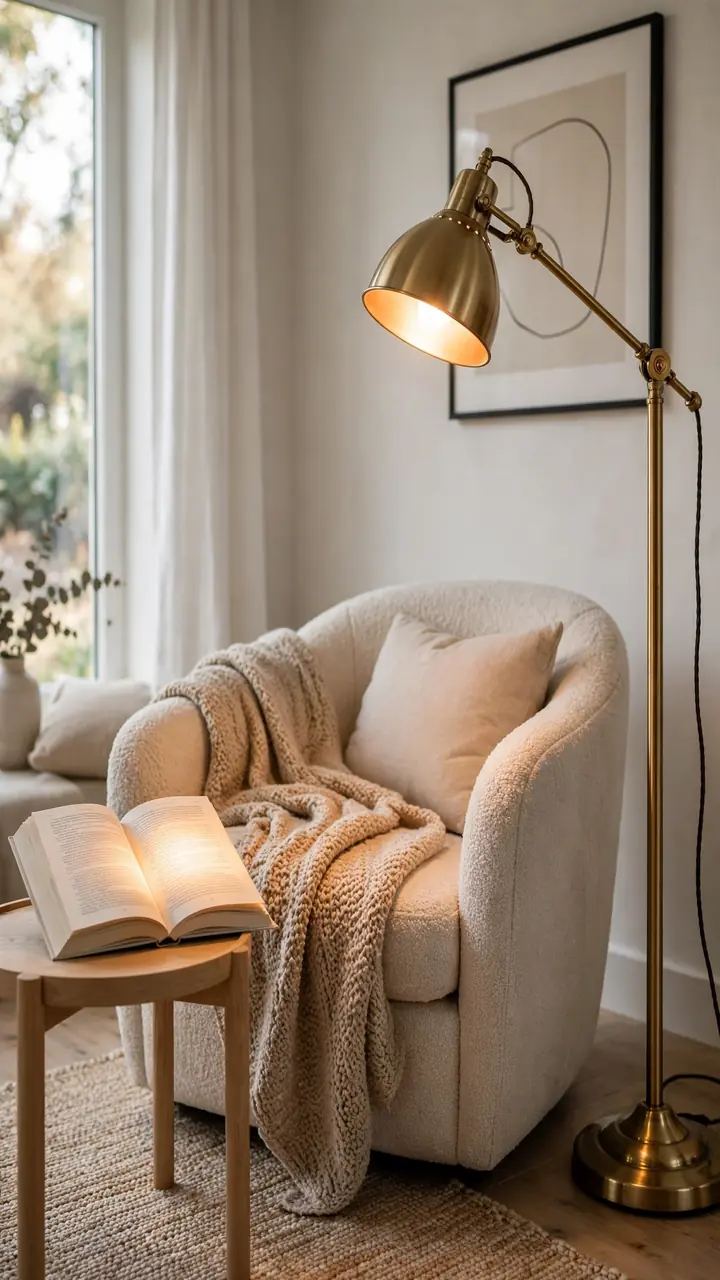
Good light is what separates a corner with a chair from a true reading nook. A warm reading lamp placed beside or behind your chair gives you light exactly where the pages are, without lighting up the whole room. Choose a lamp with a warm bulb, around 2700 kelvin, which feels like candlelight and is gentle on tired eyes. A floor lamp with an adjustable arm is ideal, because you can aim the light at your book and move it as you shift position. A small table lamp on a side table works just as well in a tighter space.
Keep the lamp close, within arm's reach, so you can switch it on without getting up. This matters more than you think on cold evenings when you are settled under a blanket. If your nook is near an outlet, a simple plug-in lamp is fine. If not, a rechargeable LED lamp gives you freedom to read anywhere. The warm pool of light also makes the corner feel separate from the rest of the room after dark, like a small stage set just for you and your book. Light the pages well, and the reading takes care of itself.
9. Built In Wall Nook
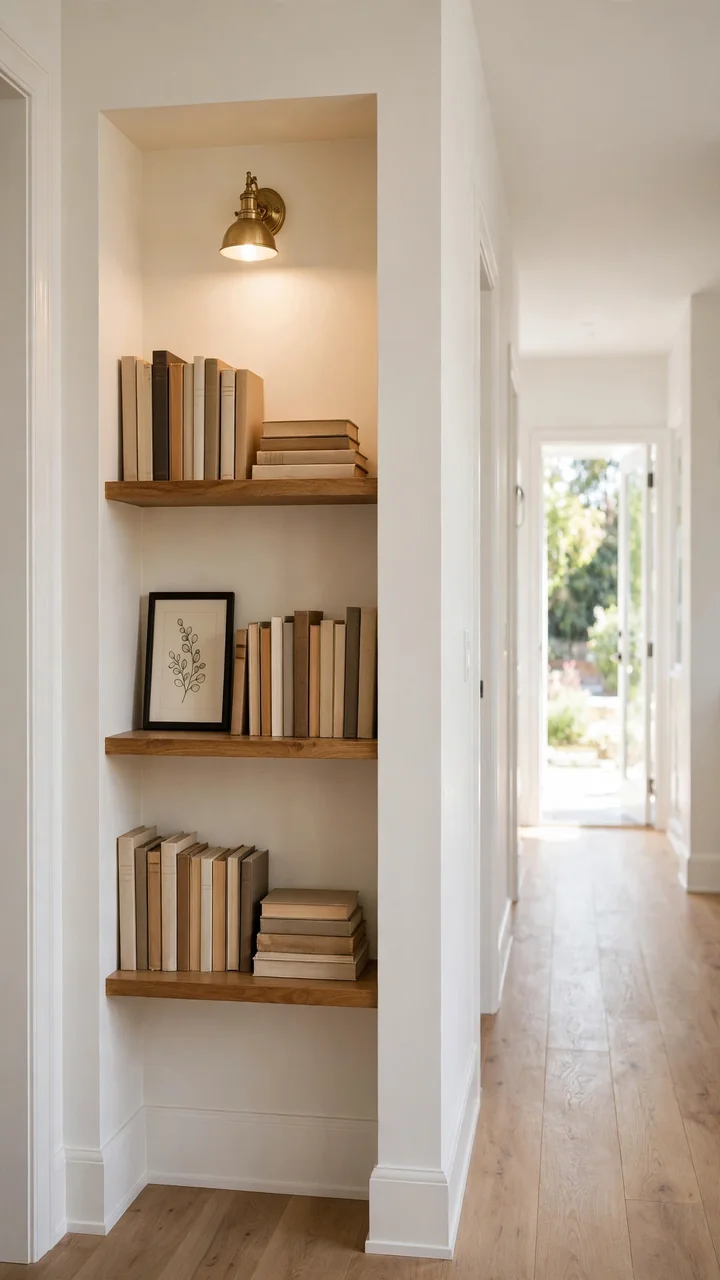
Some homes have small recesses in the wall, beside a chimney breast or between two doorways, that seem made for books. A built in wall nook uses this dead space beautifully. Measure the recess and have simple wooden shelves cut to fit, or use ready made shelves trimmed to size. Paint the inside of the nook a soft contrasting color, like warm cream against white walls, so the books stand out. Because the shelves sit inside the wall, they take up no floor space at all, which makes this ideal for narrow hallways and small bedrooms.
Treat the nook like a tiny room of its own. Add a small light at the top, either a wired picture light or a battery powered strip, so the books are easy to see. Arrange books by size or color, whichever pleases you, and leave one shelf for a small object that makes you smile. If your home has no natural recess, you can fake the look by building a shallow frame of trim around a section of floating shelves. Either way, the result feels custom and permanent, like the house was designed around your reading life.
10. Rolling Book Cart
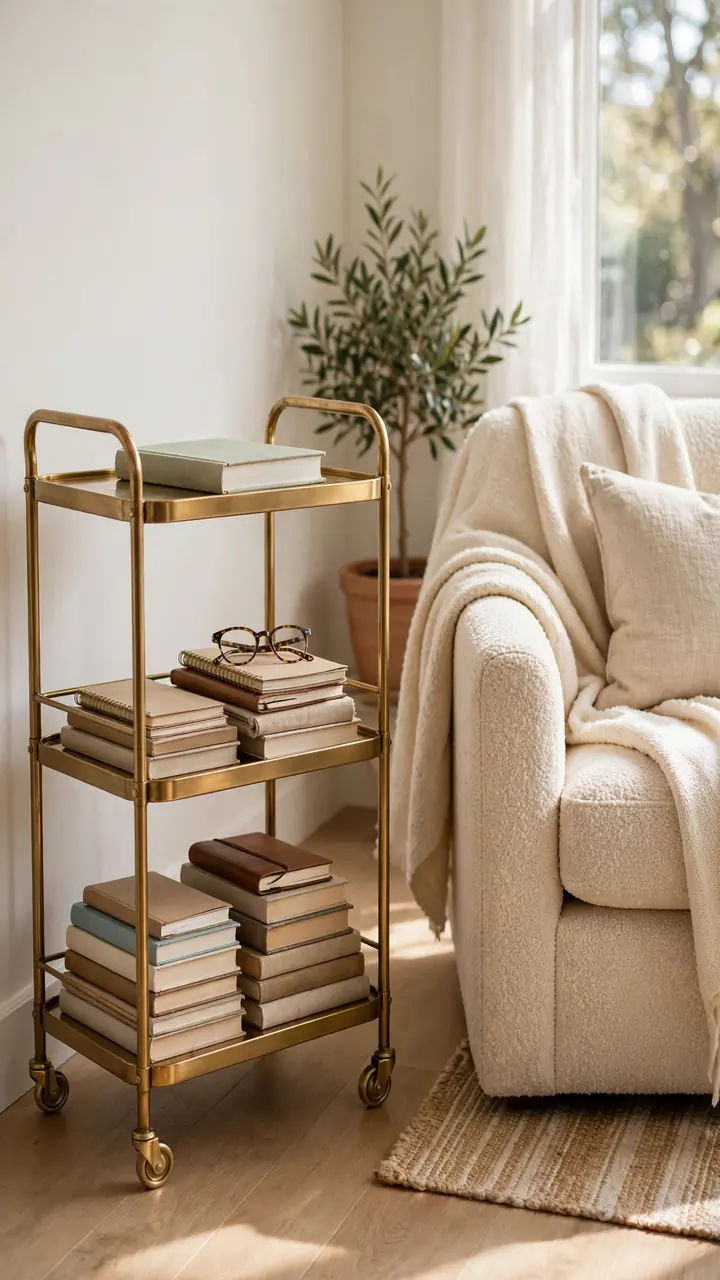
A rolling book cart is a library on wheels, and it is perfect for people who read in different spots. A three tier metal cart, the kind sold for kitchens and offices, holds a surprising number of books. Keep your current read on the top shelf, the next few books on the middle shelf, and notebooks, reading glasses, and a small lamp or candle on the bottom. The wheels mean you can roll it beside your chair in the evening and tuck it into a closet or hallway during the day.
This is also a lovely solution for renters, because it needs no holes in the wall and no heavy furniture. Choose a cart in a finish you like, brass, black, or white, and it will look intentional rather than temporary. Line the shelves with a strip of non slip liner so books do not slide when you move it. If you share your home, each person can have their own cart, which ends the quiet battle over shelf space. A library that follows you from room to room keeps the reading habit alive wherever you land.
11. Two Person Nook
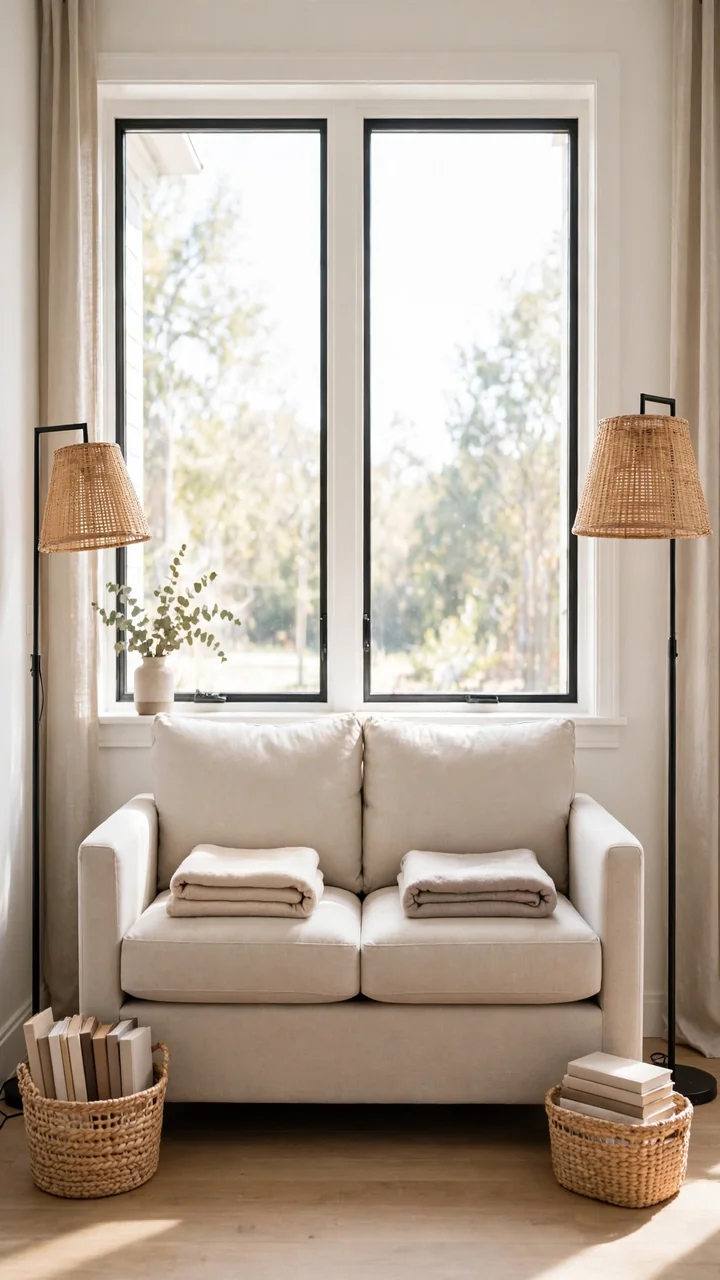
Reading does not always have to be solitary. A two person nook gives couples, friends, or a parent and child a place to read side by side. A small loveseat or a wide bench with two sets of cushions fits against a short wall or under a window. Each person gets their own throw blanket and their own light, a floor lamp on each side or a shared lamp with two adjustable heads. The shared part is the quiet, the closeness of reading together without needing to talk.
Set it up so each side feels personal. A small basket or a wall pocket on each side holds that person's current book, glasses, and bookmarks. Agree on a simple rule, like phones stay in another room, and the nook becomes a small daily ritual for the two of you. This works wonderfully in a family room where the television usually dominates. The loveseat says that reading is something this household does together. Even twenty minutes side by side, each lost in a different book, can become the calmest part of the day.
12. Fireplace Side Shelves
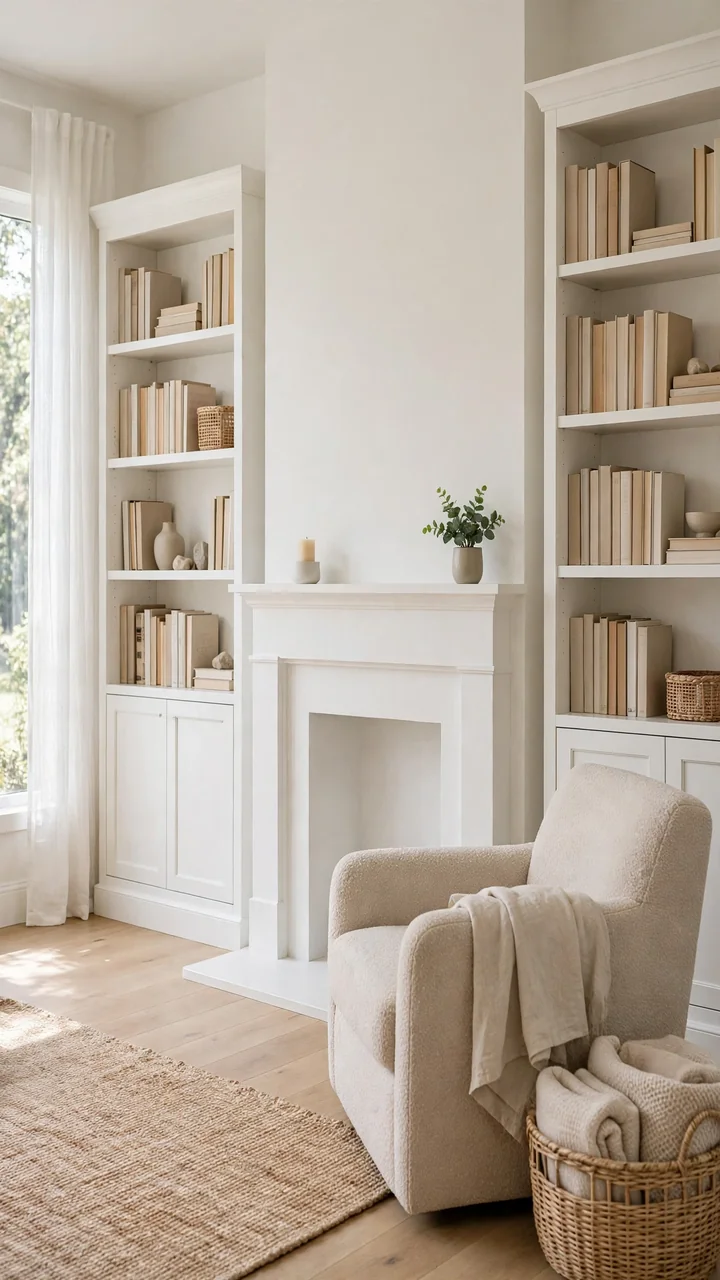
If your living room has a fireplace, the walls on either side are often empty, and they are the perfect home for books. Two matching bookcases flanking the fireplace create a classic library look in a space you already use every evening. Choose bookcases the same height as the mantel or slightly taller, and keep them simple so the fireplace stays the star. Fill the shelves with books, and leave the mantel itself for a candle, a small plant, or a framed print that reflects the season.
This arrangement has a practical magic. On cold nights you read beside real warmth, and the firelight makes the book spines glow. Keep a basket of throws near one bookcase and your reading chair angled toward the fire, and the whole wall becomes a reading room. If you do not have a working fireplace, the same idea works beside an electric fireplace or even a large piece of art. Symmetry does the heavy lifting here. Two shelves, one fire, and an evening that asks for nothing more.
13. Closet Turned Library
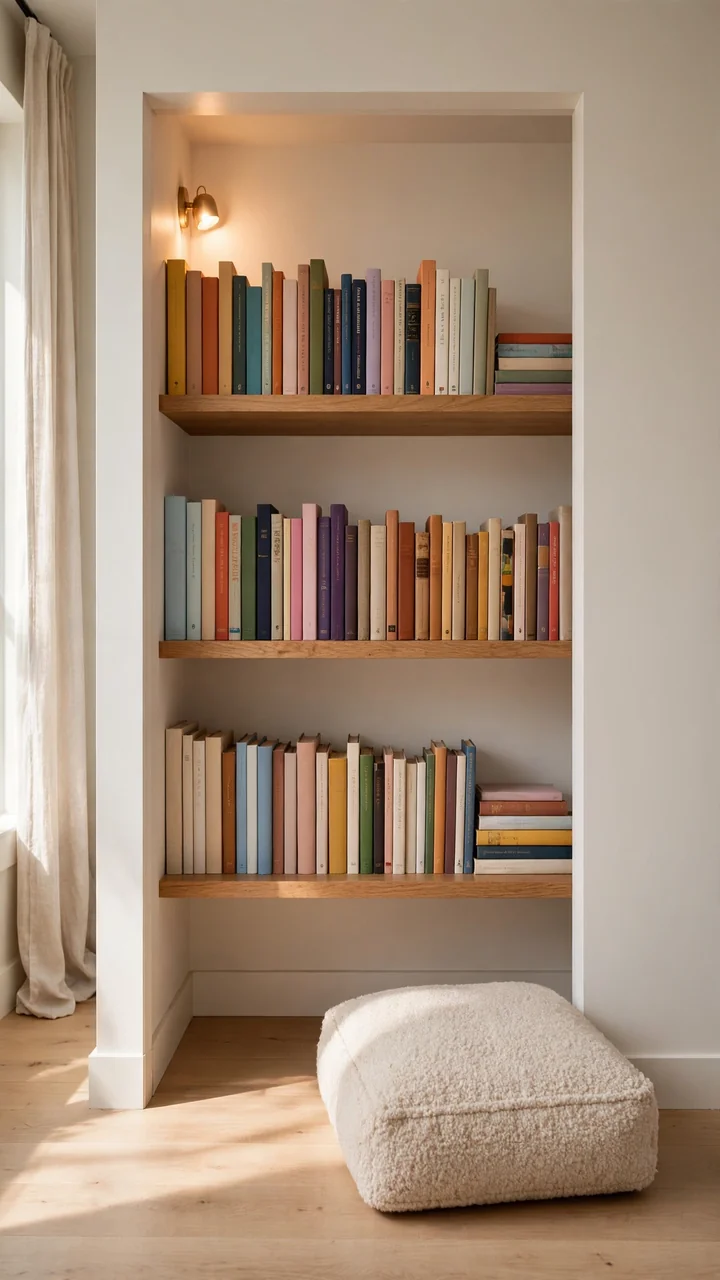
That small closet you never quite use, the one holding boxes you never open, could become the coziest library in the house. Remove the doors or take them off their hinges, and you have an instant alcove. Paint the inside a warm color, add two or three shelves across the width, and place a small chair or a thick floor cushion just outside. A closet is naturally enclosed, which makes it feel private and quiet, like a secret room. Add a plug-in wall light or a small lamp on the top shelf so the space glows.
This works especially well for children, who adore small enclosed spaces, but adults love it too. Keep the books you are most excited about here, so the little library feels like a treasure chest rather than overflow storage. A curtain on a tension rod can close it off when you want, which also hides any mess. Measure carefully before buying shelves, since closets are rarely standard sizes. In one weekend, the most ignored corner of your home becomes the one everyone fights over.
14. Daybed Reading Corner
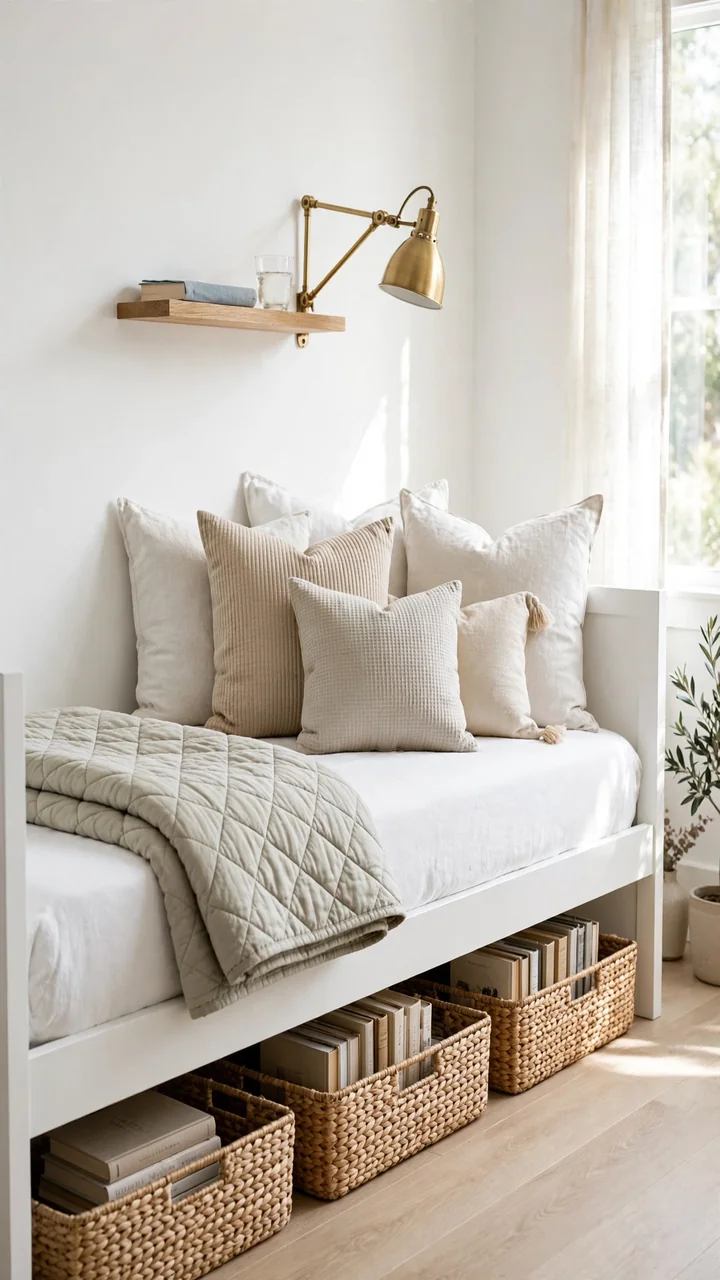
A daybed is the hardest working piece of furniture a reader can own. By day it is a sofa for sitting upright with a book, and by night it becomes a bed for falling asleep mid-chapter, which every reader has done. Place it against a wall in a spare corner of the bedroom or living room. Dress it with a flat mattress or a thick futon pad, then layer pillows along the back wall so you can sit upright comfortably. A quilt folded at the foot makes it inviting and adds warmth for long sessions.
The space beneath the daybed is a gift for book storage. Slide flat baskets or low boxes underneath to hold the books you have finished or the ones waiting their turn. Mount a small shelf or a wall pocket above the daybed for your current read, a glass of water, and reading glasses. Add a wall mounted reading light with a swing arm so you can aim it at the pages. A daybed corner serves guests too, which makes it easy to justify. It is a guest bed that happens to be the best seat in the house.
15. Gallery Book Wall
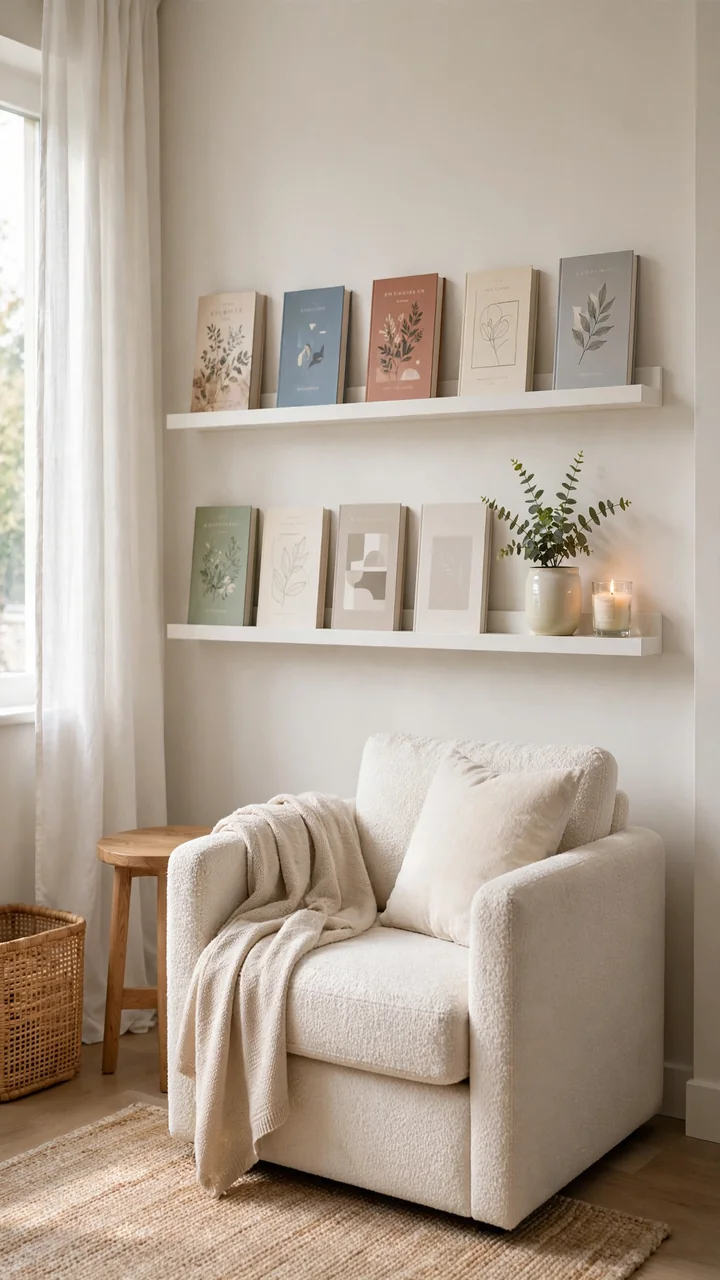
Books and art belong together, and a gallery wall that mixes both feels personal in a way that shelves alone never do. Choose one wall in your reading corner and hang a mix of framed prints, small paintings, and photographs alongside shallow picture ledges that hold books face out. The ledges, only a few inches deep, display book covers like art, and you can rotate the display whenever you finish a book. Keep the frames simple and in similar tones so the wall feels calm rather than busy.
Start with the largest piece in the center and build outward, leaving two to three inches between frames. Mix in one or two small shelves for a plant or a candle. The books on the ledges should be ones with beautiful covers, the kind you would frame if you could. This wall becomes a portrait of your reading life, changing as your tastes change. It is also a wonderful conversation starter when friends visit. Stand back often as you hang things, because a gallery wall is best judged from the chair where you will sit and read.
16. Ottoman Book Storage
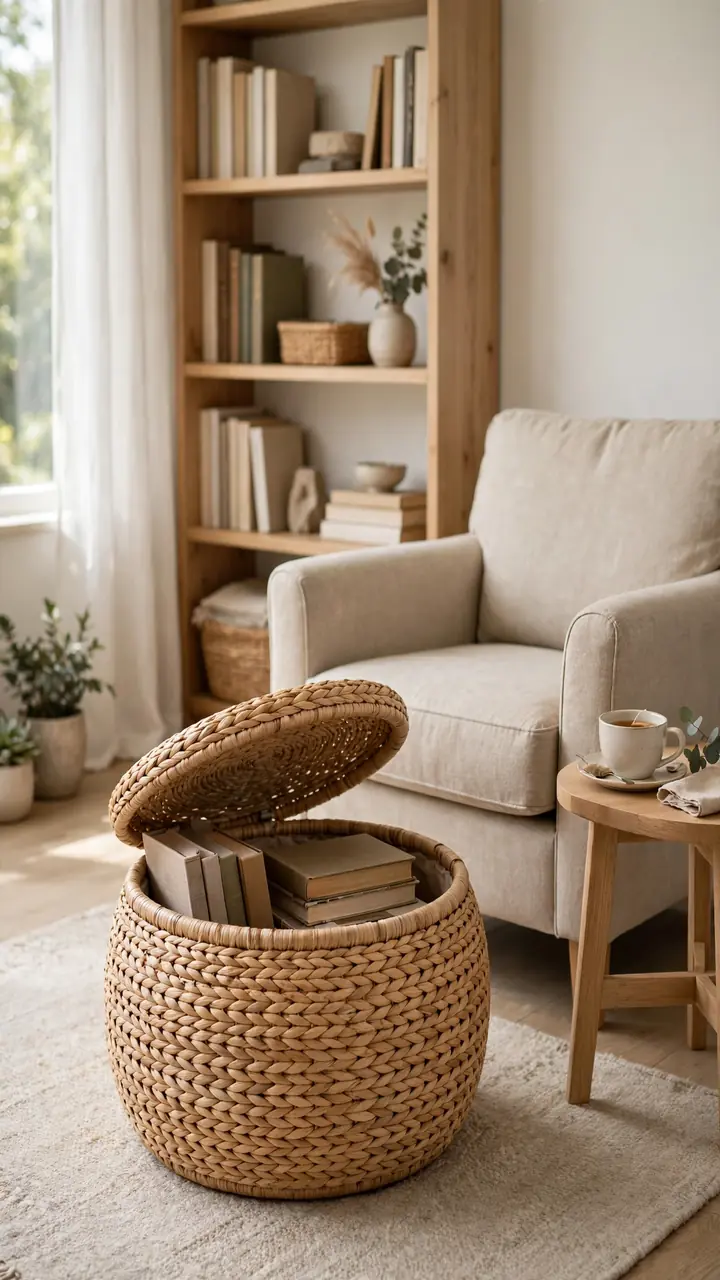
A storage ottoman is quiet genius for a small library. It gives you a footrest, an extra seat for a guest, and a hidden compartment for books, all in one piece. Place it in front of your reading chair and it becomes the perfect spot to rest your feet during long chapters. Lift the lid and you have room for the books you have finished, seasonal reads, or the heavy art books that do not fit on shelves. Choose one with a firm, flat top so it can double as a side table for your tea.
Look for an ottoman with dividers or add small boxes inside so the books stay upright and easy to find. A leather or woven ottoman adds texture to the corner, while a fabric one in a soft color blends in. If your nook is very small, a round ottoman tucks neatly beside the chair instead of in front. This is the kind of piece that solves three problems at once, and nobody guesses it is storage. Close the lid, and the corner looks tidy even when your reading life is gloriously messy inside.
17. Plants Among Books
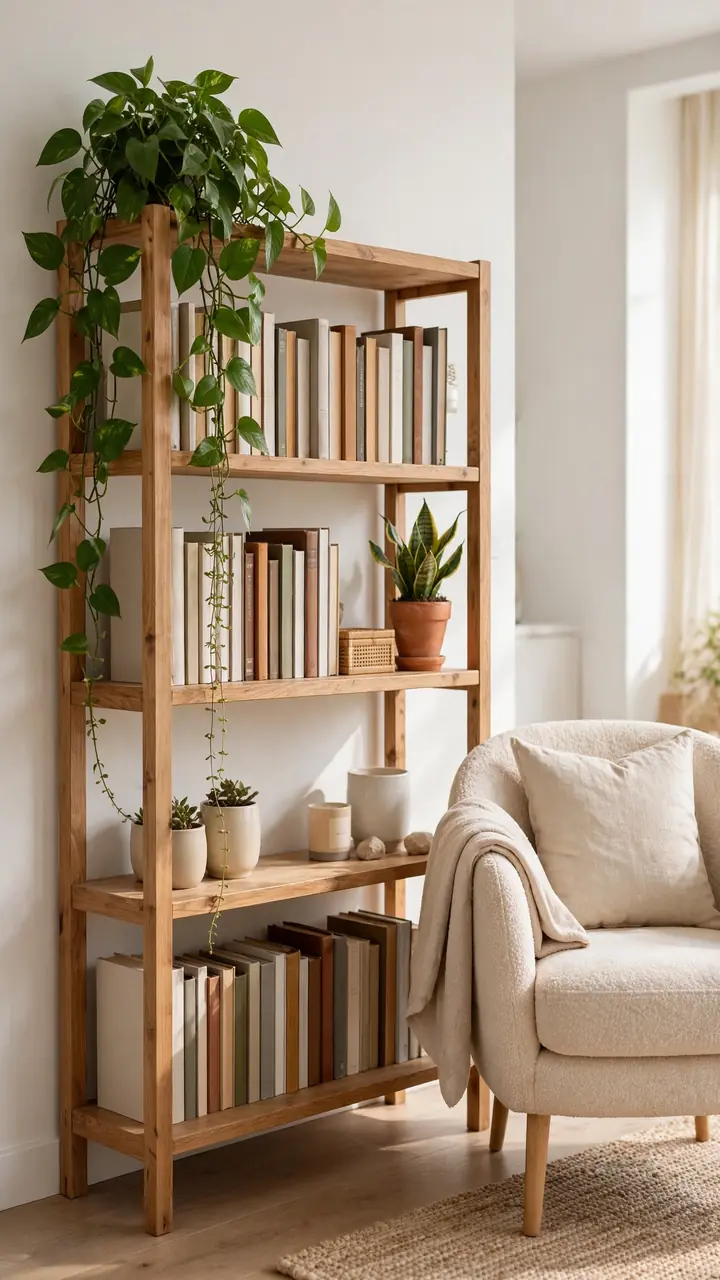
Books and plants are natural companions. Both ask for patience, both reward attention, and together they make a shelf feel alive. Place a trailing pothos on the top shelf so its leaves spill over the books, or set a small snake plant on a shelf end where it gets indirect light. Plants soften the hard lines of book spines and add a living green that makes the whole corner feel fresh. They also give your eyes somewhere gentle to rest when you look up from a difficult passage.
Choose plants that forgive neglect, because readers get absorbed and forget to water. Pothos, snake plants, and ZZ plants all thrive on little care. Use simple pots in ceramic or terracotta that match your room, and place a small tray under each pot to protect the shelf. Keep plants away from books you treasure, since soil and water can damage pages. One or two plants are enough for a small nook. More than that and the library starts to feel like a greenhouse. A little green among the pages reminds you that stories, like plants, need tending.
Frequently Asked Questions
How do I build a home library in a small apartment?
Start with one corner and one shelf rather than trying to fill a whole room. A tall narrow bookcase, a leaning ladder shelf, or even a rolling cart can hold a real collection in very little space. Add a comfortable chair and a warm lamp, and you have a library. Renters should favor pieces that need no wall mounting, like ladder shelves and carts, or use proper anchors for anything tall. The secret is treating the small space with intention. When the corner has a clear purpose, it feels like a library no matter how modest it is.
How many books do I need for a home library?
There is no number that makes a library real. Some of the best reading nooks hold only twenty or thirty books, the ones being read right now and the favorites that get reread. A home library is defined by the habit, not the count. Start with the books you love and add slowly. A shelf that grows over time feels more personal than one filled in a single shopping trip. If space is tight, keep a small donate box nearby and pass along books you will not read again.
What is the best chair for a reading nook?
The best chair is one you can sit in for an hour without fidgeting. Look for a deep seat, supportive arms, and fabric that feels good against skin. Test it the way you will use it, curled up sideways with your feet tucked under you. A chair that is slightly too big is better than one that is slightly too small. If you share the nook, a loveseat lets two people read together. Whatever you choose, sit in it in the store for at least ten minutes before deciding.
How can I light a reading nook without overhead lights?
A floor lamp with an adjustable arm placed beside your chair is the simplest answer. It puts warm light directly on the pages without lighting the whole room. A small table lamp on a side table works in tighter corners. Choose warm bulbs around 2700 kelvin for light that feels like evening. Battery powered picture lights and rechargeable LED lamps are good options when no outlet is nearby. Layer two small lights rather than one bright one for a softer, calmer glow.
How do I keep a small library from looking cluttered?
Leave breathing room on every shelf instead of packing books edge to edge. Store the books you have finished in a basket, a storage ottoman, or under a daybed so only current reads stay visible. Keep decorations to one small object per shelf. Dust the shelves regularly, since books collect it quickly. A small library looks calm when every item has a reason to be there, so pass along books you will not reread and let the shelf hold only what you love.
A Quiet Place to Return To
A home library does not need to be large to matter. It needs a chair that welcomes you, shelves within reach, and light that flatters the pages. Start with one corner and let it grow slowly, book by book. The quiet hours you spend there will repay every small effort many times over.


Leave a Reply