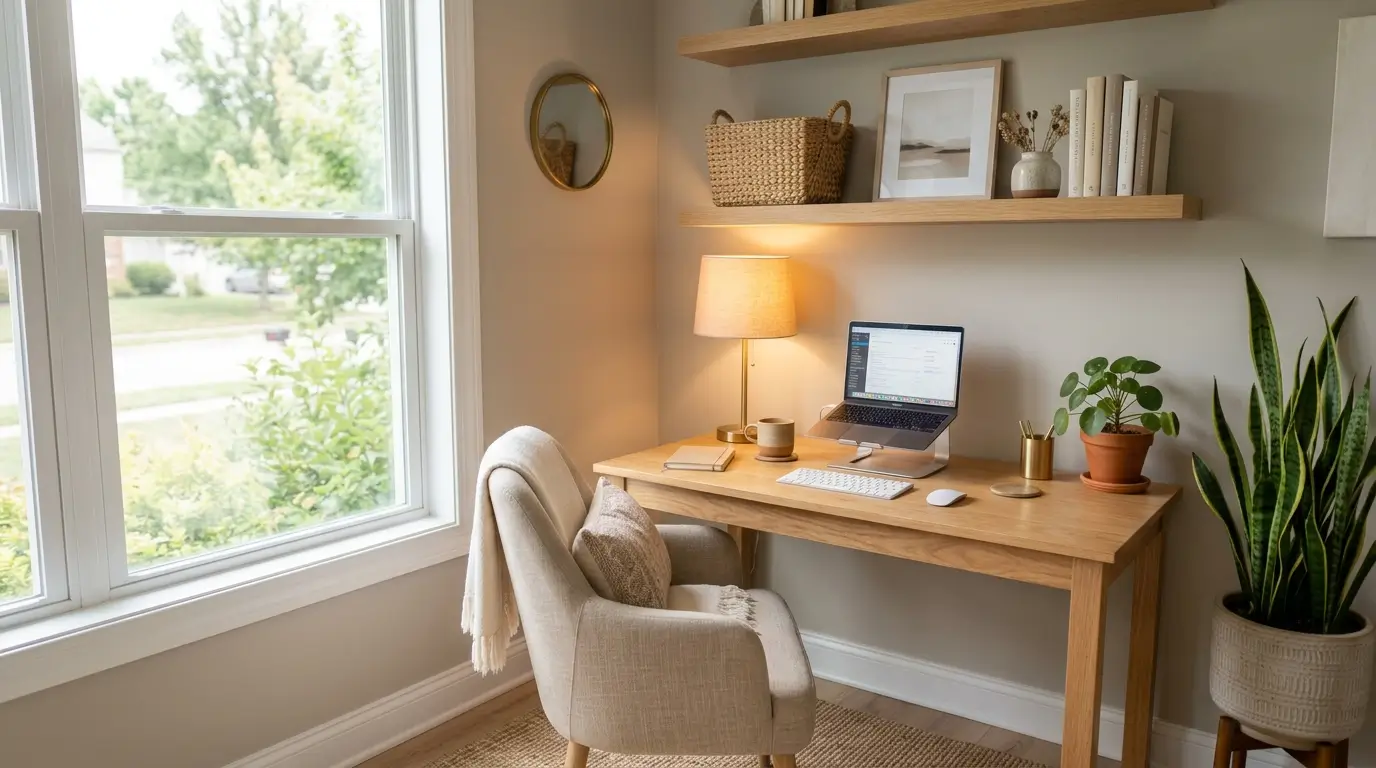
My desk used to be a folding table shoved against a wall with a laptop and a tangle of cords sitting on top. I got the work done, but I never actually wanted to sit there longer than I had to. A small workspace does not need a spare room or a big budget to feel good to use every day. Sometimes it just needs a warmer lamp, a plant that catches the light, or a chair that actually feels comfortable to sit in for a few hours. This list covers thirteen ideas built specifically for small home office setups, whether that means a full corner of a bedroom, a nook under the stairs, or a single desk pushed against a living room wall. Every idea here is something you can actually see and set up, not just a vague productivity tip. Pick a few that fit your space and start there.
1. Warm Wood Desk
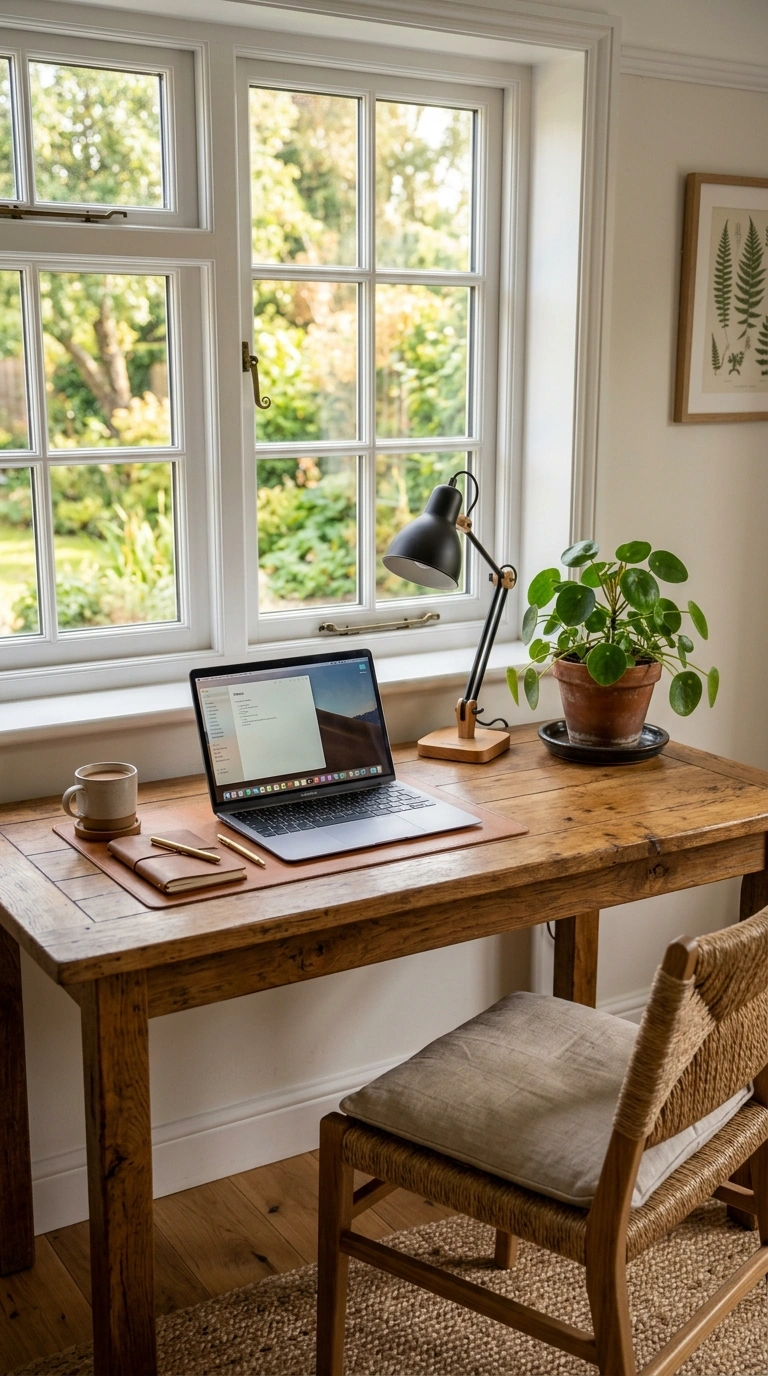
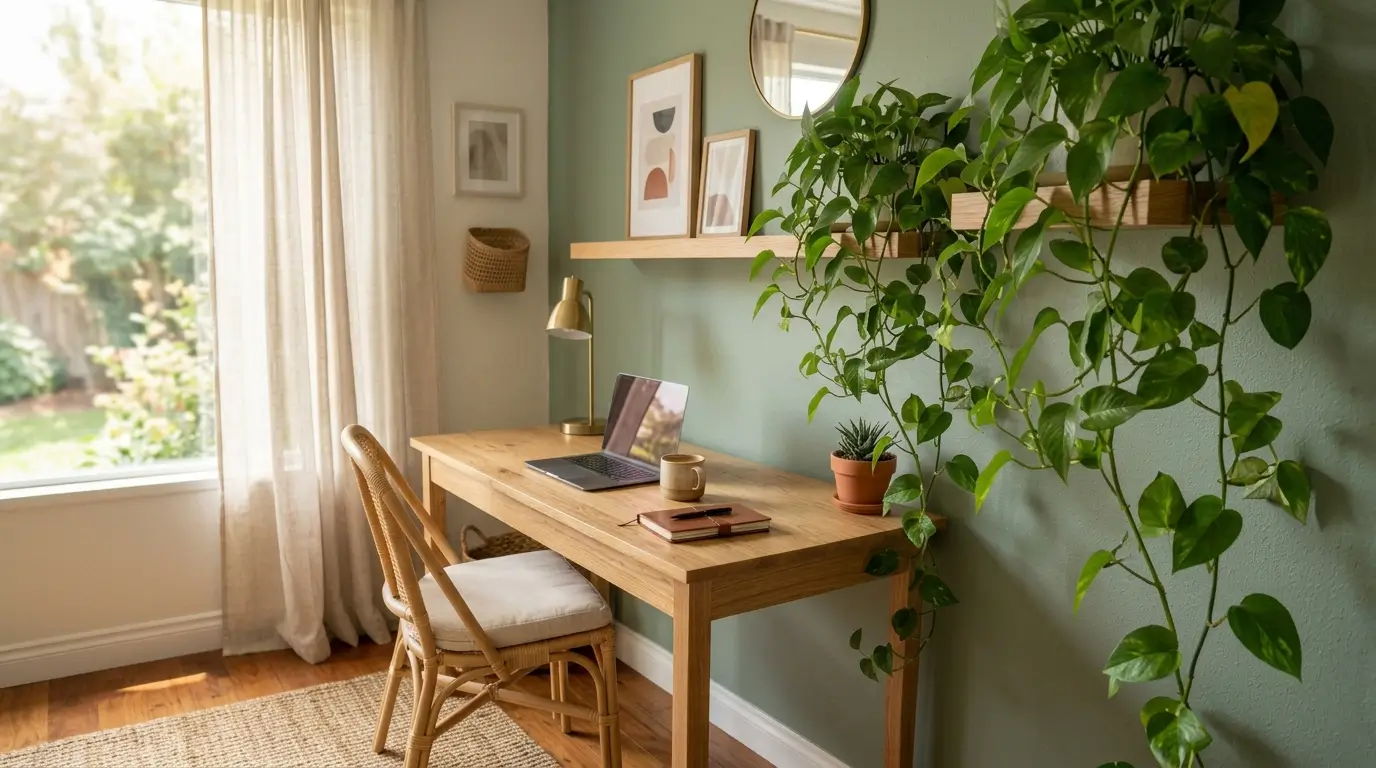
A solid wood desk, even a small one, brings a level of warmth to a workspace that a plain laminate or metal desk usually cannot match. Choose a desk in a light oak or warm walnut tone depending on the rest of your room’s color scheme, and place it against a wall or under a window where natural light can hit the surface throughout the day. The visible wood grain adds texture and a sense of quality, even in a very compact desk footprint. Keep the surface itself fairly clear, with just a laptop, a small lamp, and one or two personal items, so the natural beauty of the wood stays visible rather than getting buried under clutter. A wood desk also tends to pair easily with almost any chair style, whether that is a woven rattan seat or a simple upholstered one, making it a flexible starting point for the rest of the setup.
2. Layered Desk Lighting

Relying on one overhead light for a workspace often leaves the desk itself looking flat and poorly lit for actual tasks like reading or writing. Add a warm toned desk lamp directly on the surface, positioned to the side of your dominant hand so it does not cast a shadow across your work. If the desk sits near a window, position it so natural daylight comes from the side rather than directly behind your screen, which helps reduce glare during work hours. In the evening, turn off the overhead light and rely on the desk lamp alone for a softer, cozier working atmosphere. This layered approach makes the workspace feel warmer and more intentional, rather than lit like an office breakroom, and it photographs beautifully with the warm glow pooling across the desk surface.
3. Woven Storage Baskets
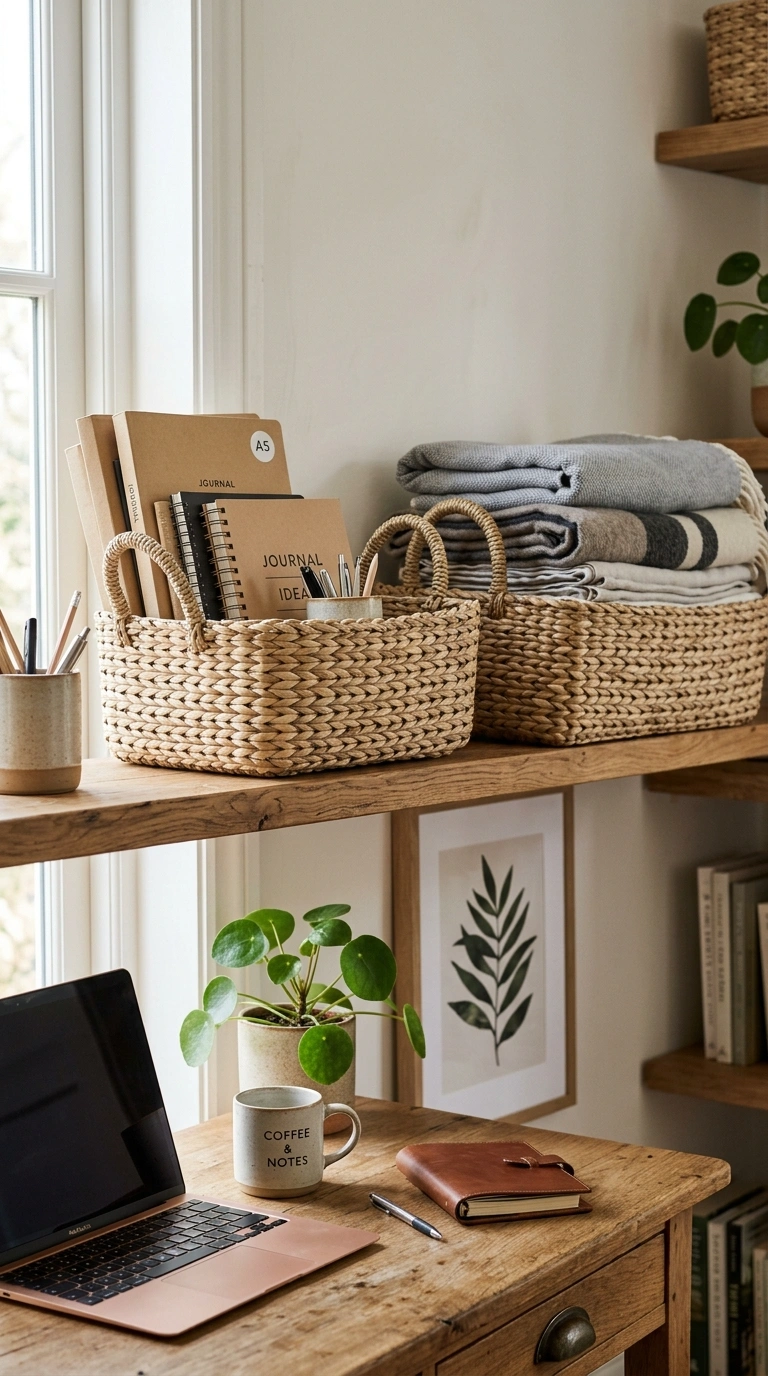
A couple of small woven baskets placed on a shelf or under the desk give you a spot to tuck away cords, notebooks, or office supplies without needing a filing cabinet. Choose baskets in a natural seagrass or rattan material so they add texture to the workspace rather than looking like plain plastic storage bins. Label them loosely by category in your head, like one for cables and one for stationery, so tidying up at the end of the day takes only a minute. This is especially useful in small home offices where a closed cabinet is not an option, since the baskets keep clutter out of sight while still remaining easy to reach. Placed on an open shelf above the desk, they also add a warm, natural element to the wall behind your workspace.
4. Cork Board Wall
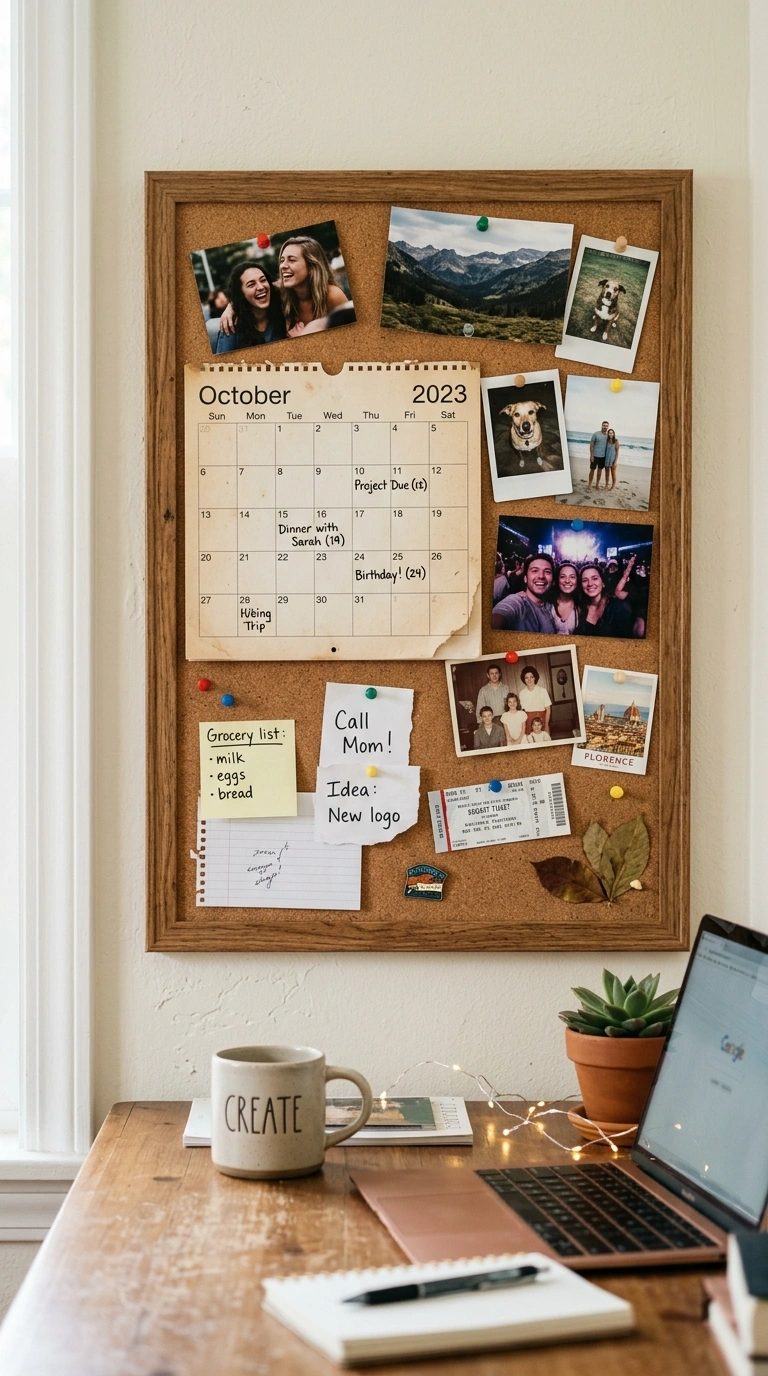
A cork board mounted above the desk gives you a spot to pin notes, photos, and reminders without covering the wall in tape marks or sticky notes. Choose a board with a simple wood frame that matches your desk tone, and hang it at eye level directly above where you sit. Pin a small mix of useful items, like a calendar page or a to do list, along with one or two personal photos or postcards, so the board feels functional rather than purely decorative. Keep the arrangement fairly loose and layered rather than perfectly aligned, which gives the wall a lived in, personal feeling. This is one of the easiest ways to add both function and warmth to an otherwise plain wall behind a small desk setup.
5. Cozy Desk Chair
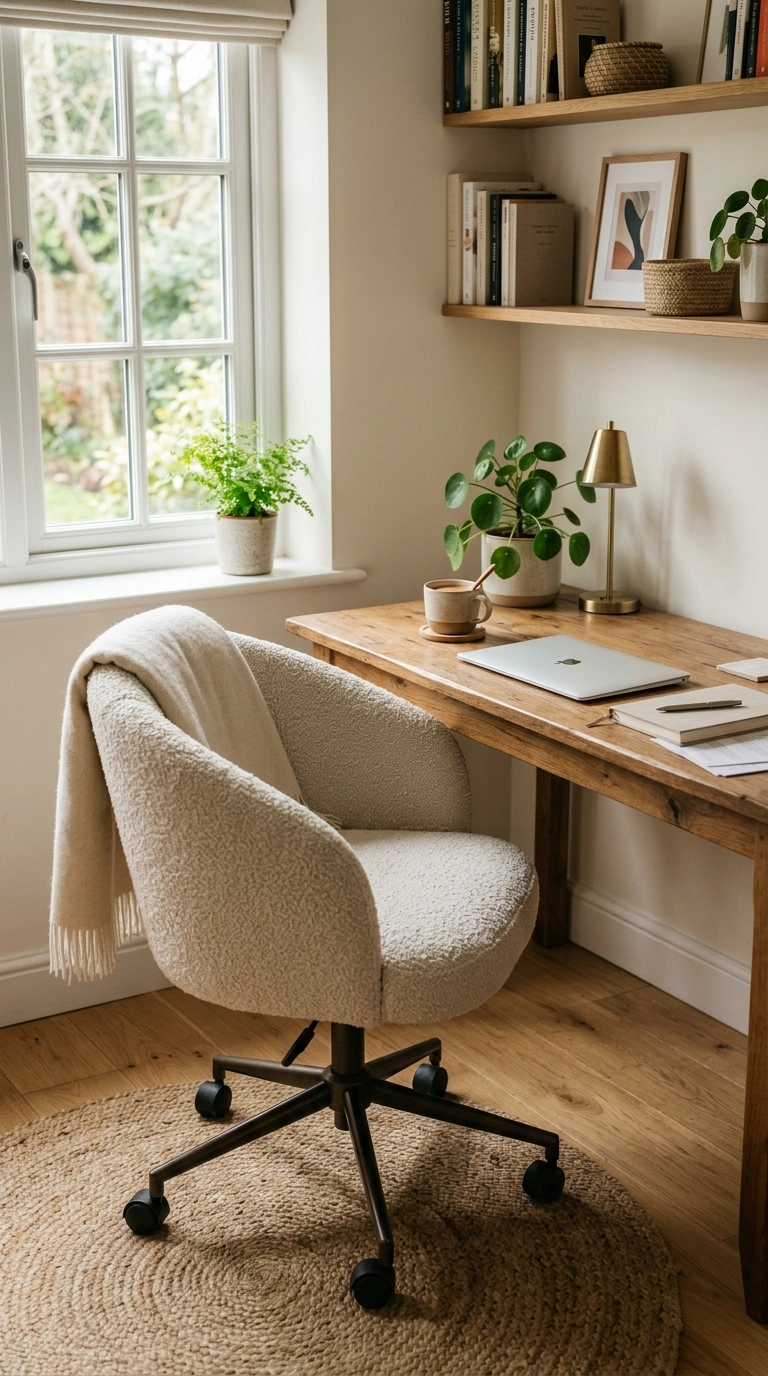
The chair you sit in every day deserves as much thought as the desk itself, especially in a small home office where the chair is often visible from across the room. Choose a chair with a soft upholstered seat in a warm fabric like bouclé or corduroy instead of a purely functional office chair with hard plastic or mesh. If back support for long work sessions matters, look for upholstered options with ergonomic support built into the design rather than assuming comfort and style cannot coexist. A chair like this also works double duty as a reading spot when the desk is not in use, since its softer look invites you to sit even outside of work hours. This single swap often does more to make a small office feel cozy than any other single item on this list.
6. Potted Desk Plant
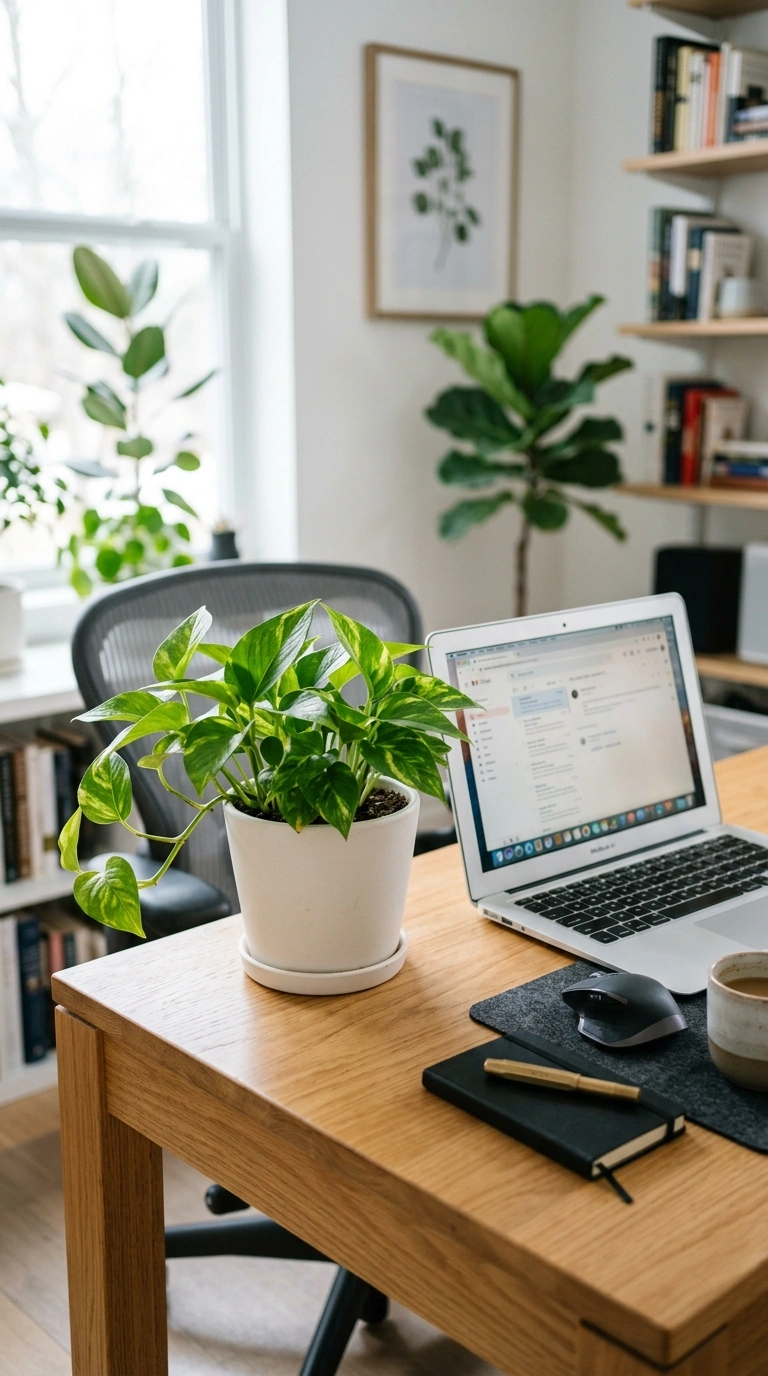
A single potted plant on the corner of a desk brings life and a small dose of color into an otherwise neutral workspace. Choose a low maintenance option like a pothos, a small snake plant, or a succulent, depending on how much natural light actually reaches your desk throughout the day. Place it in a simple ceramic or woven pot that matches your existing decor, positioning it in the corner farthest from your keyboard so it does not get in the way of daily tasks. Beyond the visual benefit, having a small living plant nearby has a way of making a workspace feel less sterile and more like part of the home rather than a separate, purely functional zone. Even one plant can noticeably soften the look of a desk that otherwise holds only a laptop and a lamp.
7. Corner Nook Setup
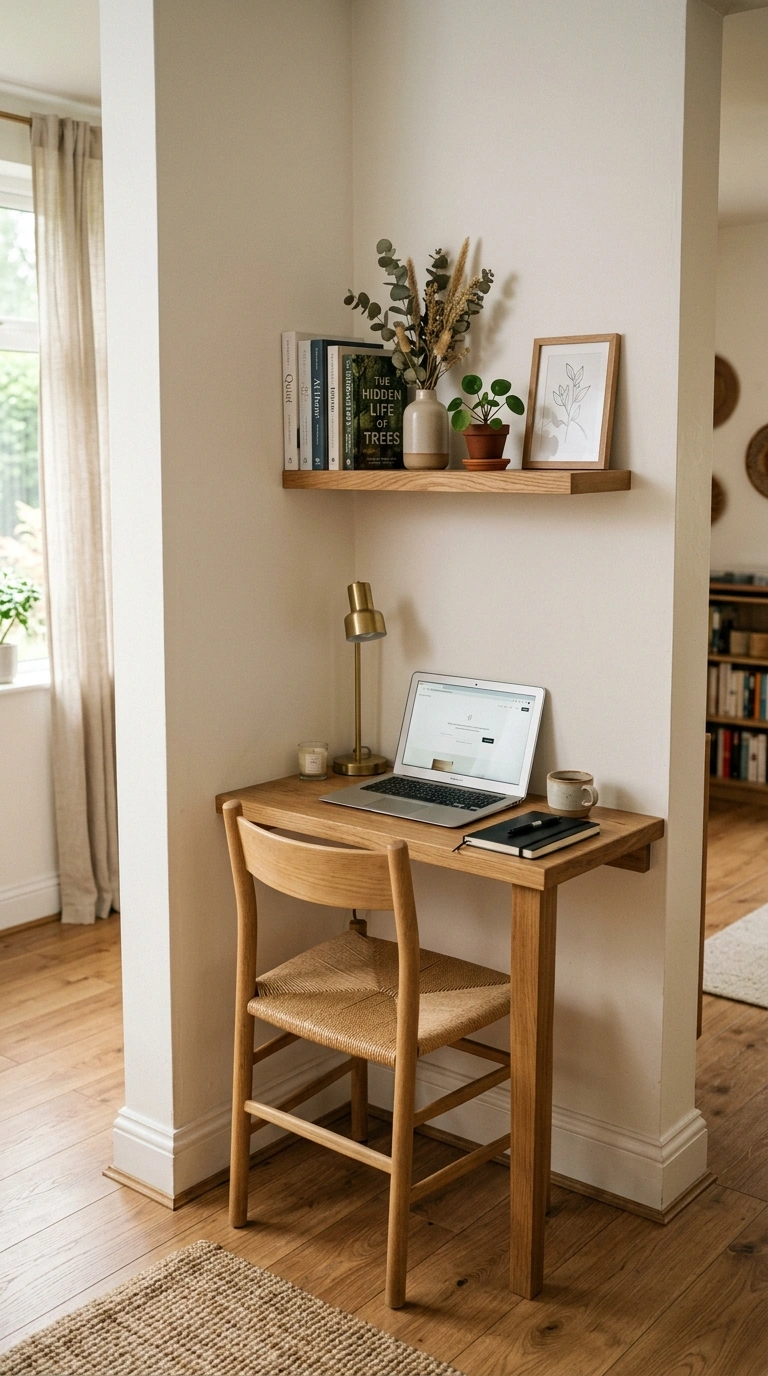
An unused corner of a bedroom or living room is often the easiest spot to carve out a small home office, since it requires no separate room and minimal furniture. Place a narrow desk directly into the corner at an angle, or flush against one wall, paired with a slim chair that tucks fully underneath when not in use. Mount a small shelf above the desk for supplies, keeping the footprint of the whole setup as compact as possible. This approach works especially well for anyone without a spare room, since it turns an otherwise wasted corner into a functional workspace without disrupting the rest of the room. Style the corner with a plant and a small piece of art so it reads as an intentional part of the room rather than an afterthought.
8. Floating Wall Shelves
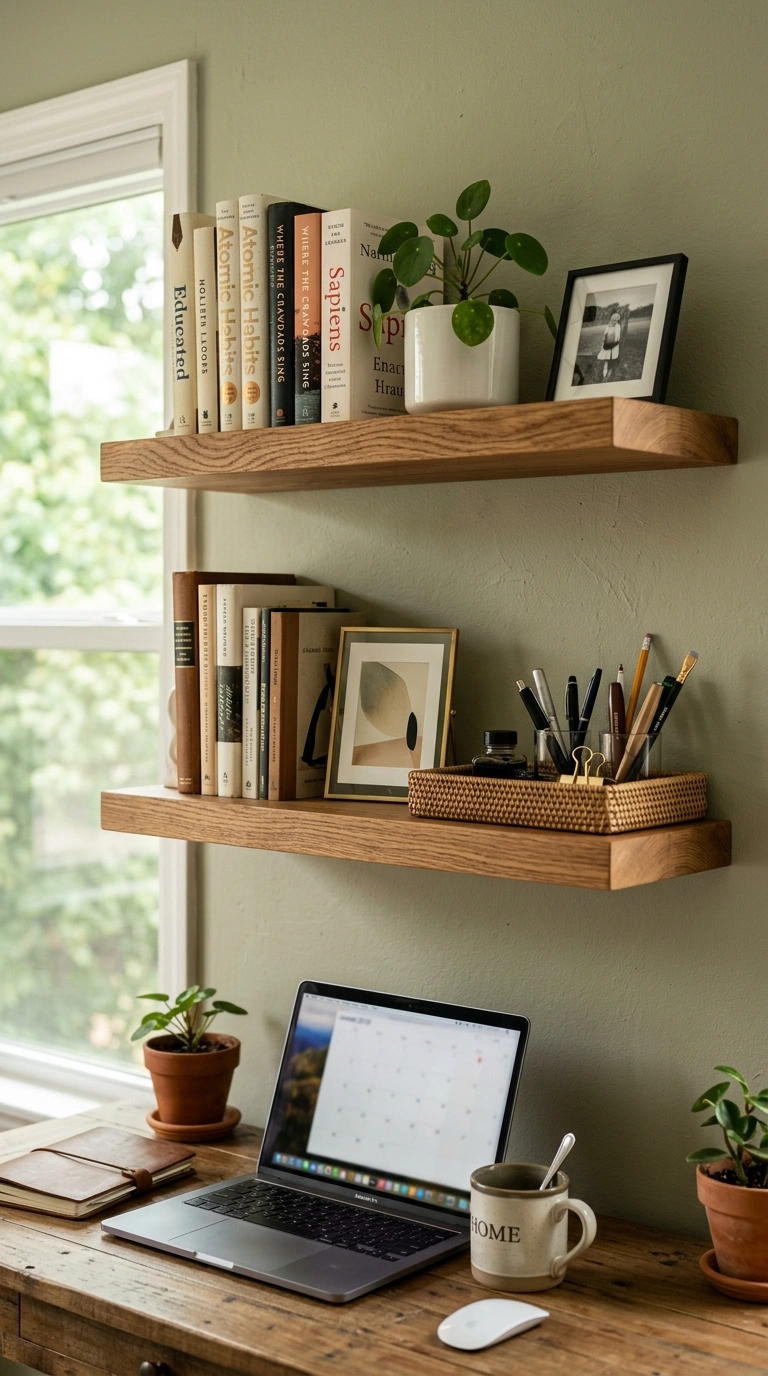
Mounting one or two floating shelves above a desk gives you extra storage and display space without taking up any additional floor area, which matters most in a small home office. Use the lower shelf for items you reach for often, like notebooks or a small tray of pens, and the upper shelf for more decorative items like a plant or a stack of books. Choose a wood tone that matches your desk so the shelves feel like a natural extension of the setup rather than a separate addition. Keep the styling on each shelf simple, leaving some open space between items so the wall does not start to feel cluttered or overwhelming. This is one of the most space efficient ways to add both function and personality to a small desk setup.
9. Soft Area Rug
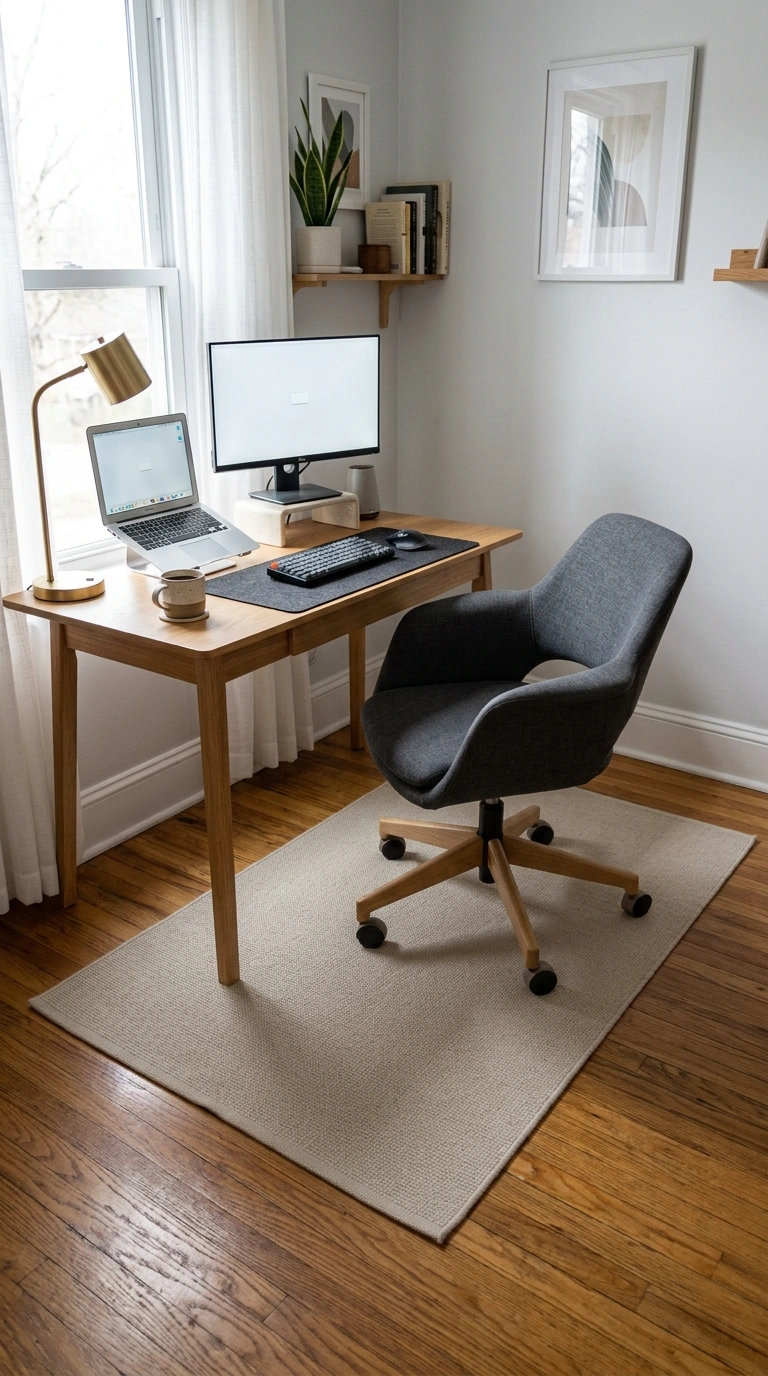
Placing a small area rug under your desk chair adds warmth and softness to what is often a hard, cold floor in an office corner. Choose a rug with a low pile so your chair can still roll smoothly across it, in a neutral tone like oatmeal or soft gray that grounds the workspace visually. This works especially well when the desk sits on tile, hardwood, or laminate flooring, since the rug immediately makes the corner feel more like a considered part of the room instead of just where the desk happens to be. A rug also helps define the workspace as its own zone, even when it sits inside a larger room like a bedroom or living area, giving the eye a clear boundary for where the office corner begins.
10. Ceramic Desk Organizer
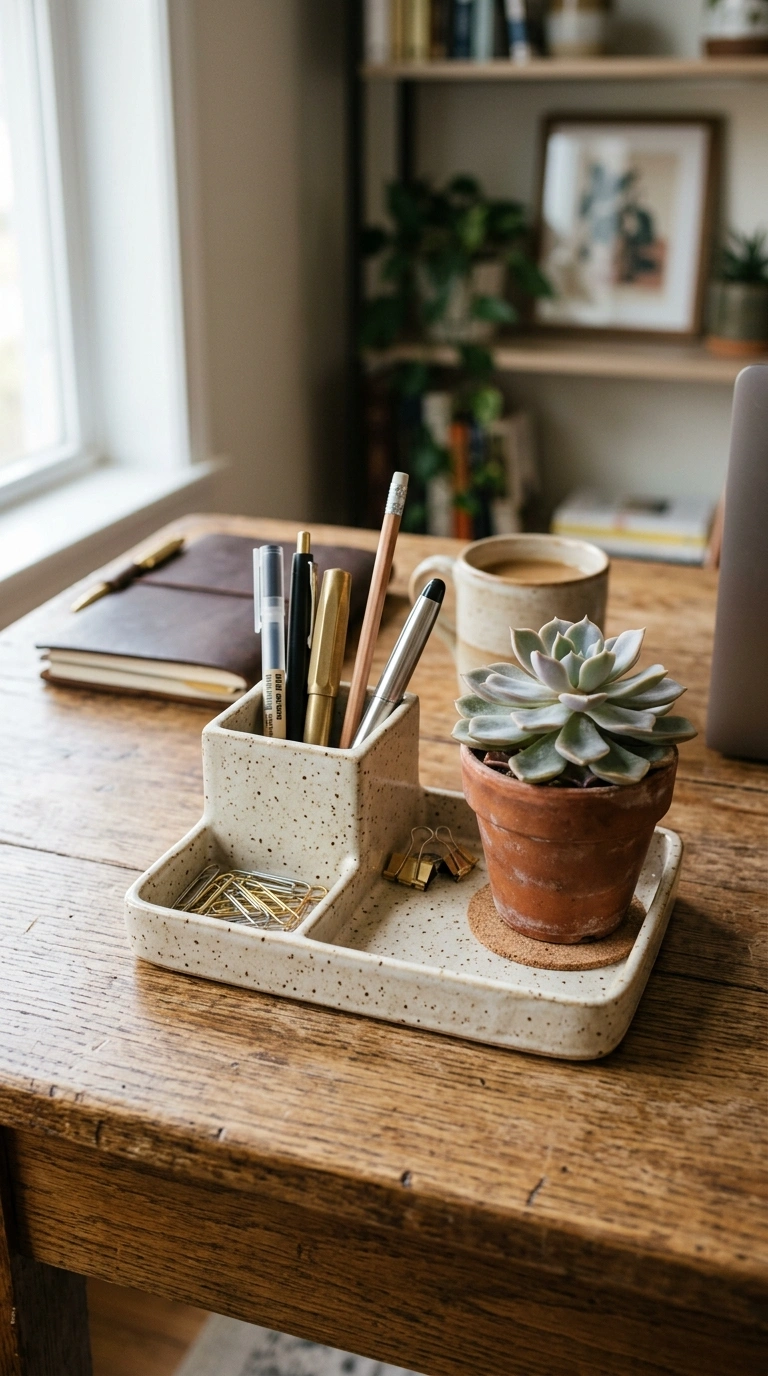
A ceramic tray or cup used to organize pens, paperclips, and small supplies adds a decorative touch to a desk that plastic organizers usually cannot offer. Choose pieces in a warm neutral glaze that matches your other desk accessories, and group two or three together rather than scattering loose items across the surface. This small styling choice keeps the desk looking tidy throughout a busy work day, since everything has an obvious, attractive home rather than getting shoved into a drawer at the end of the day. Ceramic pieces also tend to have a slightly imperfect, handmade look that adds warmth to a desk surface, especially when placed near a plant or a small stack of books for added texture.
11. Linen Curtain Backdrop
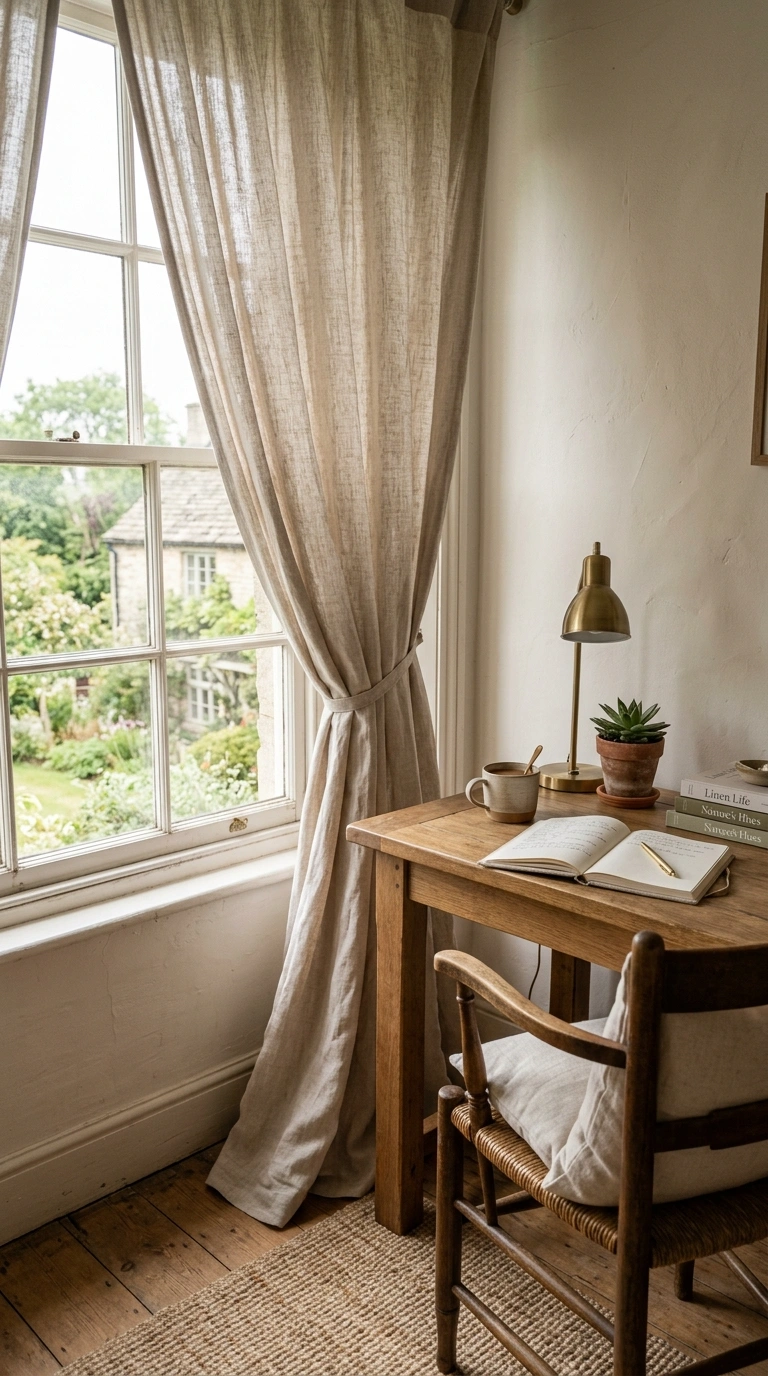
If your desk sits near a window, a soft linen curtain panel adds texture to the background of your workspace, especially useful if you spend time on video calls throughout the day. Choose an off white or oatmeal linen curtain and hang the rod slightly wider than the window frame, letting the fabric fall in soft, loose folds on either side. This creates a warmer, more finished backdrop than a bare window or blinds alone, both in person and on camera. During the day, natural light filtering through the linen adds a soft glow to the desk area, while the fabric itself adds a layer of texture that a plain wall behind the desk often lacks.
12. Gallery Wall Above Desk

A small gallery wall above the desk gives a home office personality without needing a full room redesign. Use removable adhesive strips to hang a mix of two or three small frames, along with maybe a piece of art or a favorite postcard, keeping the total footprint modest so it does not overwhelm a compact wall. Choose a consistent color palette across the pieces, sticking to warm neutrals or soft greens, so the grouping reads as intentional rather than randomly assembled. Position the arrangement slightly above eye level when seated, so it remains visible while working without requiring you to look up sharply. This is one of the simplest ways to make a plain wall behind a small desk feel finished and personal.
13. Table Lamp Glow
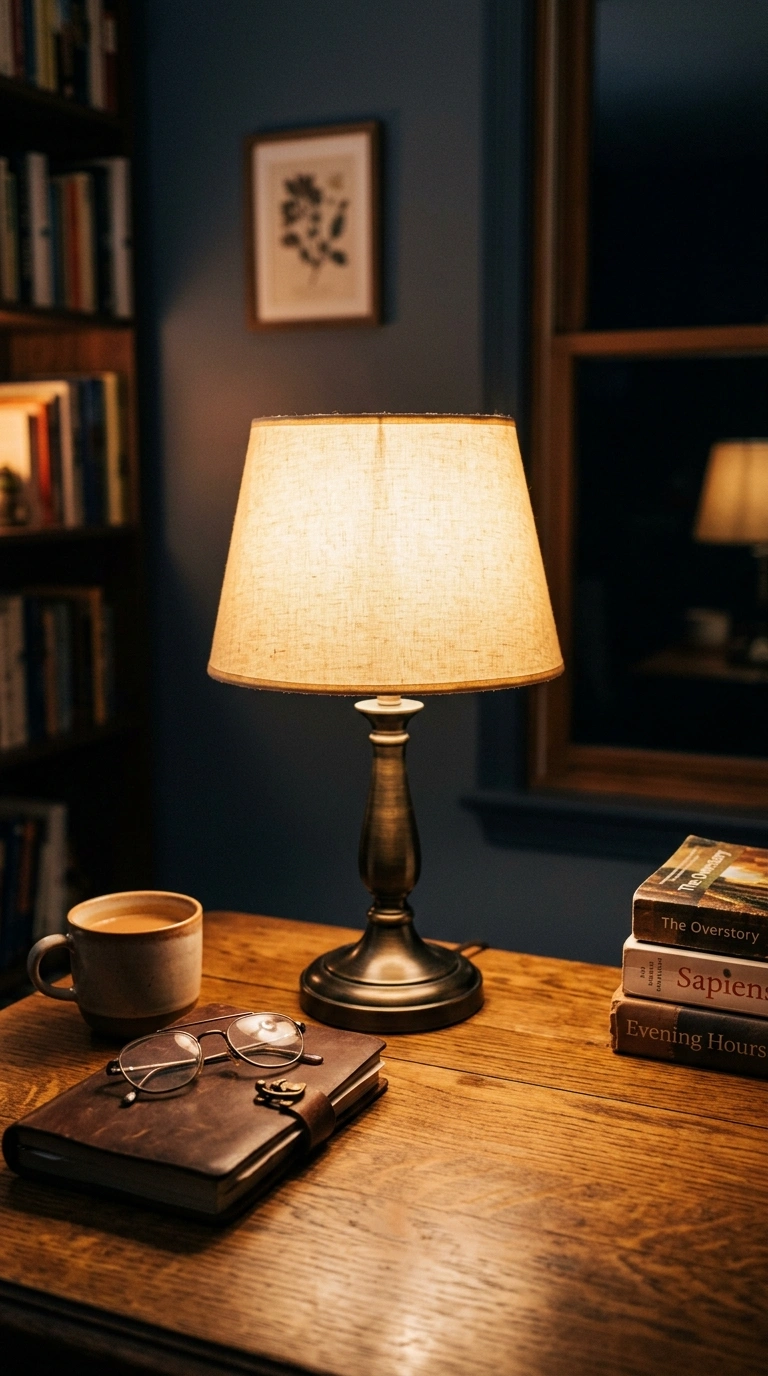
A single warm toned table lamp on the corner of the desk does more than just provide task lighting, it also sets the overall mood of the workspace once the sun goes down. Choose a lamp with a fabric or linen shade rather than an exposed bulb, since the shade diffuses the light into a softer glow across the desk surface. Position it on the side opposite your writing hand so it does not cast a shadow across your notes or keyboard. In the evening, this lamp alone can replace the need for a bright overhead light, giving the whole corner a calmer, more relaxed feeling that makes it easier to wind down work for the day. This is one of the simplest and most affordable upgrades on this entire list.
Frequently Asked Questions
How do I make a small home office feel cozy?
Focus on warm lighting, a soft area rug, and natural materials like wood and woven baskets. These small changes add texture and warmth without requiring a full room or a large budget.
How do I make a small home office feel cozy?
Focus on warm lighting, a soft area rug, and natural materials like wood and woven baskets. These small changes add texture and warmth without requiring a full room or a large budget.
Can I set up a home office without a spare room?
Yes, a corner of a bedroom or living room works well for a small desk setup. A narrow desk, a slim chair, and a shelf above are usually enough to create a functional workspace in an unused corner.
What lighting works best for a small desk setup?
A warm toned desk lamp positioned to the side of your writing hand gives the best task lighting without shadows or glare. Pairing it with natural daylight during the day and turning off overhead lights in the evening creates a cozier feel.
How do I keep a small desk from looking cluttered?
Use woven baskets, a ceramic organizer, and floating shelves to give everyday items a specific place instead of letting them pile up on the surface. Spending a minute tidying the desk at the end of each day also helps keep it looking calm.
Final Thoughts
A cozy home office does not need extra square footage or a big renovation. It usually comes down to a warm lamp, a comfortable chair, and a few small details like a plant or a woven basket that make the corner feel like part of your home instead of a leftover space. Start with whichever idea feels easiest to try today, and build the rest of the setup slowly from there

Leave a Reply